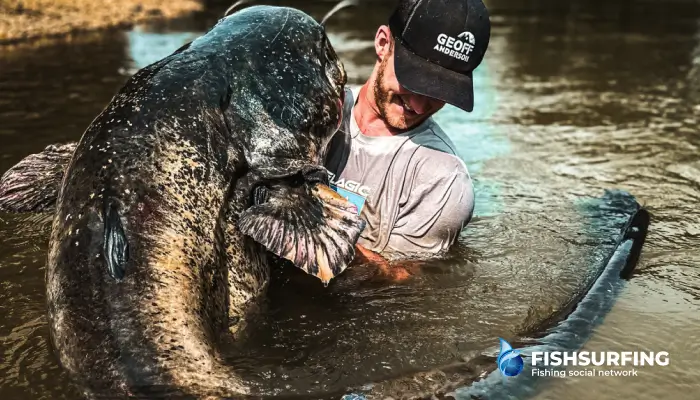


Catfish fishing is one of the greatest challenges that Czech fishing has to offer. It requires a combination of strength, endurance, and experience, which the catfish will test during a relentless battle. And every bite can mean a fish you will never forget. Czech waters offer surprisingly good conditions. Catfish are found in rivers and reservoirs, often growing to trophy size, and with the right technique, catching them is not just a matter of luck. In this article, we will look at the most effective techniques for catching catfish, explain when and where you have the best chance of getting a bite, and also introduce the most famous Czech catfish fishing grounds.

When is the best time to fish for catfish?
You probably know that catfish are typically nocturnal predators. However, their behavior changes significantly throughout the year. Successful fishing is therefore not only about the right technique, but mainly about timing. Those who adapt to the season and the daily activity of the fish have a significantly better chance of getting a bite.
Catfish are best caught in summer
The best season begins in late spring, as soon as the water warms up to around 15 °C. At that point, catfish begin to move actively and go out in search of food. The peak season comes in summer, when the fish are most active (specifically in the evening, at night, and early in the morning). During the day, they usually rest in hiding places such as flooded trees, stone embankments, or the edges of the riverbed.
Preparing catfish for winter? Your chance to catch them
In autumn, activity is mainly concentrated in the period before the water cools significantly. Catfish feed intensively at this time and prepare for winter, which can result in very good catches. With the arrival of winter, their activity slows down significantly and fishing moves to deeper, quieter sections where the fish wait out the cold season. Catches are rarer, but all the more valuable.
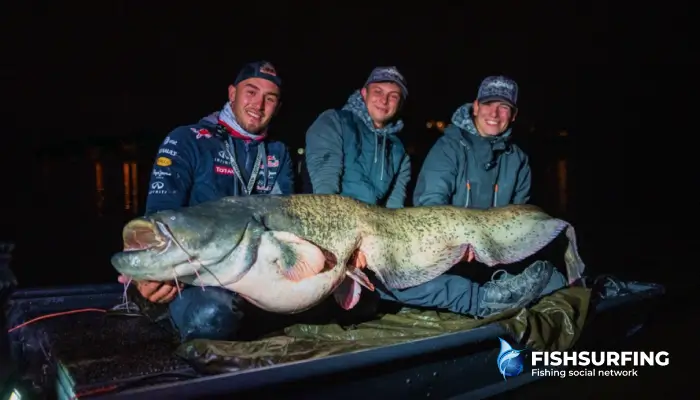
Catfish behavior: why it's not a random catch
Catfish are not fish that wander aimlessly and take whatever comes their way. They have clearly defined habitats, hiding places, and migration routes, which they often repeat day after day. That is why catfish fishing is more about understanding the water than about chance. Those who know where catfish are during the day and where they go for food have a huge advantage.
Typically, catfish move along the same routes between their hiding places and hunting grounds. They follow the structure of the bottom, the current, and the availability of food. It makes sense to place your bait or rig in these specific locations.
Where catfish stay in rivers
In flowing waters, catfish primarily seek out places that provide them with peace, shelter, and the possibility of a surprise attack:
- deep pools – ideal shelter during the day, especially at higher temperatures
- edges of the riverbed and current breaks – natural migration routes for fish
- the vicinity of bridge piers and weirs – a combination of shelter and food
- sunken trees and obstacles – a safe place to rest and hunt
Where to look for catfish on dams
In stagnant waters, catfish mainly orient themselves according to the structure of the bottom and old river routes:
- old flooded riverbeds – main migration routes
- bottom breaks and steep depth transitions – places where fish often stop
- submerged trees and vegetation – shelter during the day
- quiet bays with plenty of white fish – typical night fishing grounds
The best catfish fishing techniques in Czechia
There is no single universal method for catfish fishing. Each technique has its place, time, and type of water where it works best. Successful catfish anglers often combine multiple approaches depending on the season, depth, and activity of the fish.
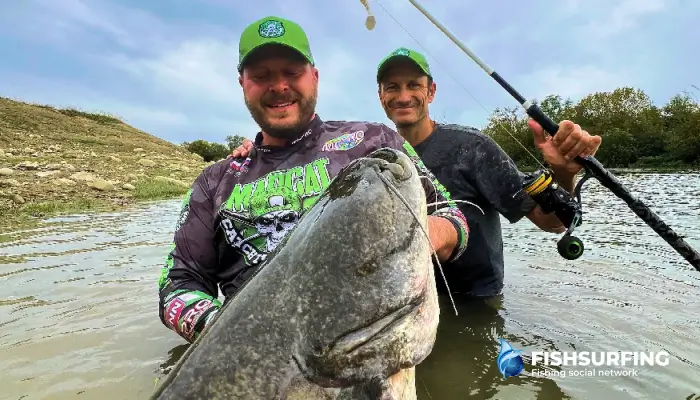
Bottom fishing for catfish: a classic you can rely on
Bottom fishing is the ideal choice if you are just starting out with catfish or want to fish systematically and without unnecessary stress. You offer the bait directly on the bottom, or just above it, which is exactly where catfish move most often.
The key is correct placement. Don't just cast "somewhere in the water." Focus on the edges of deep pools, the vicinity of sunken trees, stone embankments, or migration routes between hiding places and hunting grounds. This is where bottom fishing is most effective.
Use sufficiently strong equipment, as the bite is usually hard and without warning. Live or dead fish, roach, leeches, or bundles of worms work as bait. You have the best chance of success in the evening and at night, when catfish leave their hiding places and go out in search of food.
Tear buoy: when you want to fish accurately and purposefully
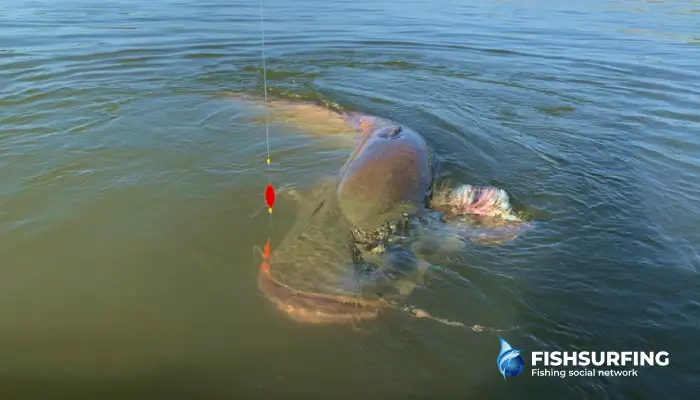
A tear buoy allows you to get your bait exactly where it is difficult to reach with a classic rig. Typically, this is near trees, in deep holes, or close to obstacles where catfish stay during the day.
The bait is suspended above the bottom using a buoy or float and remains exactly in the fishing spot, which is a huge advantage, especially on rivers and large dams. This technique is often used specifically for large catfish that stick to a particular structure.
Keep in mind that a tear buoy requires a boat, experience, and good water reading skills. But when you get a bite, it's usually hard and the fight is long. That's exactly why people go catfish fishing.
Calling device (quack): active fishing for more experienced anglers
Fishing for catfish with a call is one of the most iconic methods of all. You don't wait for the fish to come to the bait. Instead, you actively provoke it to leave its hiding place and follow the sound.
The lure creates specific sounds and vibrations that catfish respond to. From the boat, you lower the bait vertically below you and watch as the fish rises from the bottom. The bite often comes directly under the boat and is usually unexpectedly violent.
This technique requires sensitivity, the right rhythm, and knowledge of the terrain. It is not ideal for complete beginners, but once you learn it, it is one of the most effective ways to catch catfish.
Casting for catfish: active and physically demanding
Casting for catfish is about movement, patience, and strength. You cast large rubber lures, heavy wobblers, or spoons and guide them slowly along the bottom or along edges and obstacles.
It works best at dusk, at night, or in cloudy weather when catfish are more active. Don't be discouraged by longer periods without a bite. Catfish often attack after a long pause or close to an obstacle. The reward for your patience is an extremely powerful fight that will test both your equipment and your physical fitness. If you enjoy active fishing, trolling for catfish will not disappoint you.
Vertical catfish fishing: maximum control over the lure
Vertical fishing is a technique that gives you complete control over the lure. You lower it vertically from the boat and guide it directly to the area where the catfish is actually located. You don't cast blindly, but instead work specifically with the location, depth, and reaction of the fish.
Sonar plays a big role here, letting you know where the catfish is and in which layer of water it is moving. With gentle movements, you then "bring the lure to life" directly above it and wait for a reaction. The bite often comes without warning and is usually very vigorous.
This technique is very precise and effective, but it requires experience and technical equipment. Once you master it, you have full control over the lure and can respond precisely to the fish's behavior.
Which catfish fishing technique to choose?
- Beginners are most often successful with bottom fishing.
- More experienced anglers will opt for buoy or trolling.
- Specialists use a lure or vertical fishing.
The best catfish fishing grounds in Czechia
The Czech Republic is one of the countries where catfish fishing has a long tradition and excellent conditions. You will find rivers with a natural occurrence of giant fish and dams where catfish grow to trophy sizes. However, each type of fishing ground has its own specifics and requires a slightly different approach.
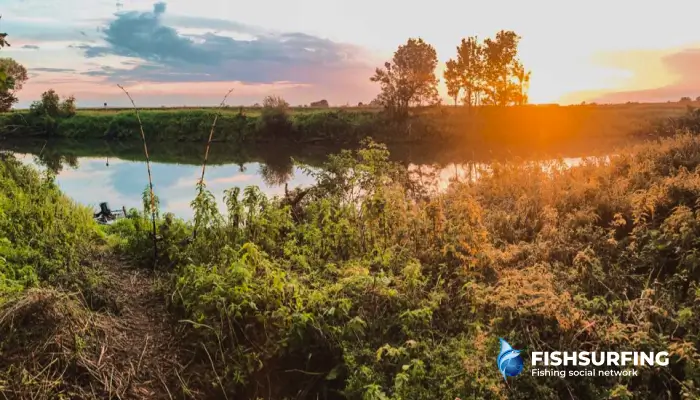
The Elbe: a classic catfish spot with enormous potential
The lower reaches of the Labe are among the best catfish waters in the country. The wide riverbed, deep pools, strong current, and numerous hiding places create an ideal environment for large fish. Catfish are mainly found here near weirs, bridge piers, and in deeper pools under the edges.
A big advantage of the Elbe is its natural stock and high potential for really large specimens. However, be aware that this is a technically demanding waterway. The local current, boat traffic, and changing water conditions require experience and respect.
Vltava: river and dams in one
The Vltava offers catfish anglers several different faces. The lower sections of the river and dams such as Slapy or Orlík are among the most sought-after locations. Catfish have plenty of food, space, and shelter here and grow to very respectable sizes.
Fixed and tear-off buoys and lures work well here. At dams, it is worth looking for old river beds and significant breaks in the bottom, and on the river, pools and places with calmer currents.
Orlická Dam: depth and trophy catches
Of the Vltava dams, Orlík is particularly worth mentioning, as it is one of the largest dams in Czechia and offers a huge area for catfish. The depths, flooded trees, and old riverbed are an ideal combination for the occurrence of really large fish.
Fishing here is more demanding and often requires a boat, sonar, and patience. However, you may be rewarded with catfish that are among the absolute best in Czechia.
Morava: calmer waters with surprises
The Morava River is often underestimated, but it offers very interesting catfish fishing. Meanders, deeper pools, and numerous natural obstacles provide ideal conditions for catfish, especially in the middle and lower reaches.
These waters are suitable for systematic fishing, where observation and long-term work with the location pay off. Bites are not frequent, but the fish are all the bigger for it.
Dyje: catfish combined with beautiful nature
The lower reaches of the Dyje and the areas below the Novomlýnské reservoirs are known for their large catfish population. Warmer water and plenty of food mean that the fish grow quickly here and tend to be very active (especially in the summer months).
The Dyje is ideal for bottom fishing and spinning, especially in the evening and at night. At the same time, it offers a pleasant environment and fewer disturbances than large navigable rivers.
Catfish fishing as a challenge and an experience
Catfish fishing is not about chance or quick catches. It is a type of fishing that requires patience, respect for the water, and a willingness to learn to read the fishing grounds. But once you understand catfish behavior, choose the right technique, and find the right time and place, you will be rewarded with a battle you will never forget.
Czech waters offer more opportunities for catfish fishing than many anglers realize. Whether you head to a large river, dam, or calmer stream, success always depends on a combination of knowledge, observation, and experience. And every trip will take you one step further—even if you don't get a bite.