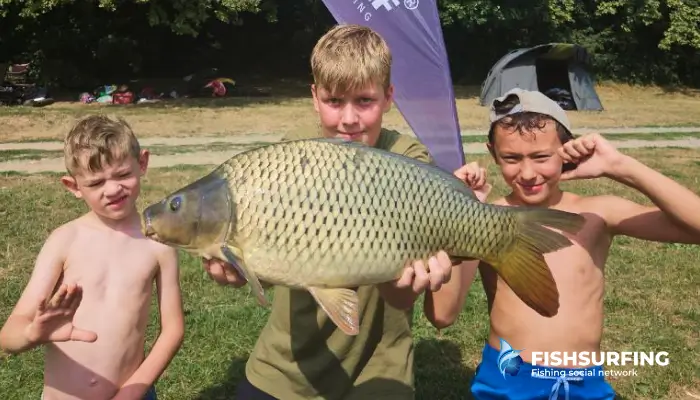


Fishing competitions are not just for "pros" with lots of equipment and years of experience. They are for anyone who wants to try fishing in a slightly different way. If you are attracted by the competitive atmosphere but don't know where to start, this article will help you figure it out.
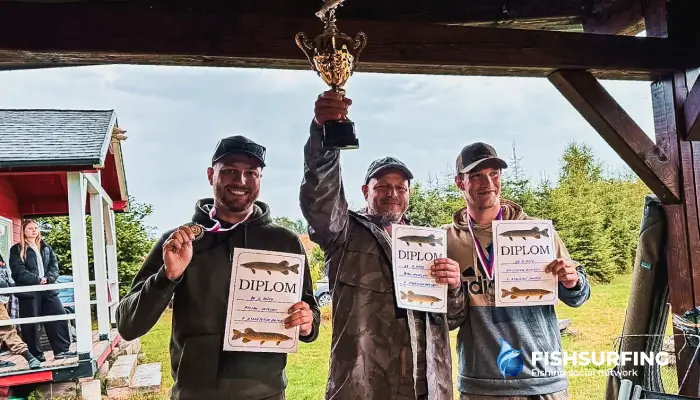
What to expect (and what not to expect) from fishing competitions
Fishing competitions have rods, water, and fish in common with regular fishing. But that's where the similarities often end. While recreational fishing gives you time to think, wait, and try, competitions are faster-paced and more high-pressure. It's not about one dream catch, but about smooth, efficient fishing that earns you points throughout the competition.
What fishing competitions usually look like in practice
At the water, you will be given:
- a precisely defined spot (often assigned by lottery)
- a specific time period for fishing
- clear rules about what you can and cannot use
What this means compared to regular fishing
Competitions are different from a regular leisurely outing:
- You don't wait for one big fish, but collect points gradually.
- You don't experiment for long minutes, you make changes quickly.
- You don't fish according to your mood, but according to a plan.
- You don't just focus on the fish, but also on time, rhythm, and pace.
Points are typically scored based on the number of fish, the total weight, and sometimes a combination of both. Every fish caught has value, even if it is small. Conversely, a long pause without a bite can move you down several places.
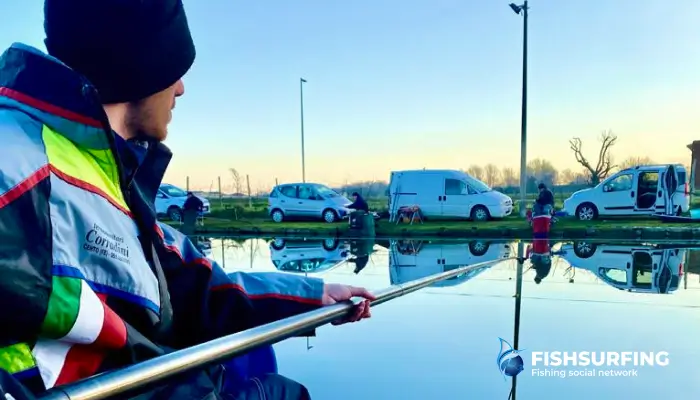
What not to expect from competitions
It is also good to be clear about what competitions are not. They are not about peace and quiet and long contemplation by the water, and certainly not about waiting for "the right moment" that may or may not come. Nor are they a showcase for the most expensive equipment.
Competitive fishing is mainly about concentration, a simple system, and the ability to react quickly to changes. It is also important to be willing to make mistakes and learn from them, often directly during the competition. This is what makes competitions an intense and demanding experience, but one that will always take you a long way forward.
What type of competition to choose at the beginning
Before you start preparing, it is worth clarifying what type of fishing competition suits you best. Fishing competitions differ not only in their rules, but also in their pace, technical requirements, and style of thinking on the water. Some are very dynamic, while others are more about patience and long-term strategy.
Float fishing competitions
Float fishing is characterized by its fast pace and emphasis on precision. It involves gentle fishing, often at short distances, and details such as the correct depth, a sensitive setup, and the ability to keep the fish in place are crucial. It is ideal for those who enjoy active fishing and frequent bites.
Feeder competitions
Feeder competitions are based on feeding and rhythm. It's not just a matter of casting and waiting, but systematically building a spot, responding to bites, and adjusting the length of casts and the composition of the feed. Feeder is a very readable and logical style that is often easy for beginners to grasp in competitions.
Spinning competitions
Spinning competitions are more physically and mentally demanding. Expect to move around, change locations frequently, and constantly decide where and how to fish. Here, it is very important to be able to read the water and react quickly to what is happening around you.
Carp competitions
Carp fishing competitions are usually multi-day and often team-based. It's not about speed, but about strategy, planning, and long-term work with the location. They are more suitable for those who already have experience with carp fishing and want to try it in a competitive setting.
For your first competition, there is a simple rule: choose the style you normally fish with. Learning a completely new technique while coping with the pressure of competition is unnecessarily demanding. If you focus only on the difference between recreational and competitive fishing, you will get much more out of your first competitions.
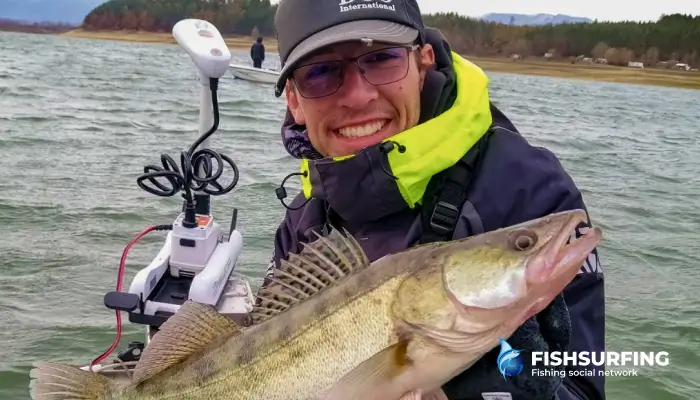
Rules: the first thing you need to study
The rules of the competition are not just a formality. Quite the contrary. They are the boundaries within which the entire competition takes place, and those who do not know them unnecessarily complicate the situation even before they cast their line.
What rules to know before you go to a fishing competition
Each competition has its own specifics and minor differences that can have a big impact on the result. You should be clear in advance about how you are actually allowed to fish and what is considered a violation of the rules. It's not just about fishing techniques, but also about details that you don't normally deal with at the water's edge.
Typically, you need to know:
- which fishing techniques are allowed and which are not
- what restrictions apply to feeding and lures (quantity, types, possible bans)
- how points are scored – whether it is the number of fish, their weight, or a combination of both
- how long the competition lasts and whether it is divided into several rounds or sections
- how many rods you are allowed to cast and how you can work with them
All of this affects your tactics even before you arrive at the venue. Otherwise, you will fish a competition where every fish counts differently than one where only selected species or total weight are decisive.
Preparation at home: half the battle won
The competition doesn't actually start with the draw for places, but at home at your desk. How well you prepare will have a greater impact on your performance than you think. At competitions, there is no time to improvise, think about where things are, or come up with last-minute solutions. Every minute you don't have your rod in the water and aren't focused costs you points.
Prepare your equipment in advance
Everything that can be prepared in advance should be done at home. Then, at the water, you can just reach for the things that have their place and you don't have to search for anything in a stressful situation.
Make sure you have the following ready:
- a sufficient number of rigs
- bait mixed or at least prepared in advance according to the rules of the competition
- lures clearly organized so you can quickly switch between options
- spare rigs and small items at hand for immediate replacement
The goal is not to have as much as possible, but to have what you will actually use, ready so that you don't have to think about it. The less energy you spend looking for things, the more you have left for reading the water, reacting to bites, and making the right decisions. And that's what matters in competitions.
What to have with you on race day
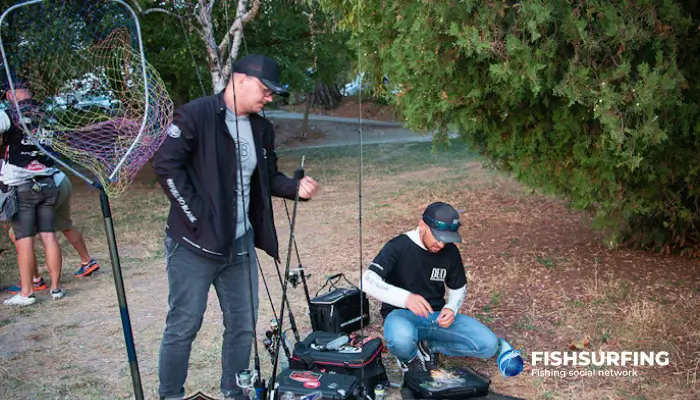
In addition to your prepared equipment, it is important to have things ready that you will use continuously during the race. Things you reach for automatically and without thinking. Things that will help you maintain your pace, overview, and concentration throughout the race.
The basics you can't do without
The rod(s) you will be competing with should be prepared at home. The reel should be adjusted, the line checked, and the tips or floats prepared according to the conditions. There is no room for technical details during the race.
Tools for smooth work with fish
A landing net, net, forceps, or tape measure should always be ready. Quick and calm retrieval of the fish, gentle handling, and immediate return to fishing are exactly the moments that make a difference in the overall result.
Equipment for all-day comfort
Clothing adapted to the weather, drinks within reach, and the ability to sit down for a moment or change position help you stay focused even after a long time. When the body functions without distractions, the mind can focus solely on tactics and responding to the fish.
A reserve for your peace of mind
Having a small reserve of spare line, a dry layer of clothing, or a raincoat on hand brings peace of mind. You don't have to deal with minor complications, but can continue fishing according to plan.
Tactics at the drawn spot
Your drawn spot is set and there is no time to waste. The first few minutes after arriving at the water are crucial, because this is where you lay the foundation for the entire competition.
Quickly assessing the spot
First, look around before you start preparing your rods. Notice the depth near the shore, the structure of the bottom, any currents, wind, and what your neighbors are doing. Not to copy them, but to have context. Every spot has its limitations and advantages, and it's better to understand them right away than to discover them after an hour without a bite.
A basic plan to start from
It is important to choose a simple plan A. One main direction of fishing, one distance, one basic setup. In competitions, it does not pay to start with something complicated. If the fish are responding, you have something to build on. If not, changes are made gradually and purposefully, not chaotically.
Competition tactics are not about getting it right the first time, but about giving the fish a chance to respond as soon as possible and getting the first points, which will give you some peace of mind.
Working with feed during a fishing competition
Feeding in competitions works completely differently than in normal fishing. The goal is not to feed the fish, but to keep them moving and willing to bite. Each feed should have a clear purpose and immediate feedback.
Less, more often, precisely
The basic rule is simple: start cautiously. The initial feeding should create a point of interest, not a full table. If the fish respond, add small doses. If they don't respond, adding more feed will usually not save the situation (and will likely make it worse).
During the competition, it is important to watch what happens immediately after the feed hits the water:
- Are the bites coming quickly? The pace and quantity are probably right.
- Are the bites slowing down? The fish may be oversaturated or more cautious.
- Do the bites disappear completely? Either there is too much feed, or the fish are responding elsewhere.
Adjust the amount, structure, or rhythm of feeding accordingly. There is one important rule in competitions: the feed responds to the fish, not the fish to the feed. Those who understand this have a significant advantage. Feeding is a tool, not an automatic recipe for success.
The most common mistakes made by beginners in fishing competitions
Most mistakes in competitions are not caused by a lack of skill, but by a poor mindset. The good news is that they can be avoided relatively easily.
- One of the most common mistakes is making too many changes at once. When there are no bites, beginners often change the bait, depth, feed, and location within a few minutes. The result is chaos and no feedback on what actually worked or didn't work.
- Another common problem is overfeeding. For fear that the fish will not come, more bait than necessary ends up in the water. The fish then appear, but stop biting.
- Another mistake is waiting instead of reacting. There are no comfortable breaks in competitions. If nothing happens for a long time, something needs to be changed. But always one thing at a time, not everything at once.
- And finally: too much pressure to get results. The first competitions are not about placement, but about experience. Those who try to win right away often freeze up unnecessarily and stop reading the water. Paradoxically, a more relaxed approach leads to better decisions.
Competitions are an experience, not a test
Fishing competitions are not about delivering a perfect performance or taking home the trophy right away. They are mainly about experiencing fishing in a slightly different way. More focused, faster, and with a clear goal. It forces you to think about the water, react to changes, and make decisions that you might not even think of when fishing normally. And no matter how you place in the competition, you will always take away valuable experience that you can draw on during your regular outings.