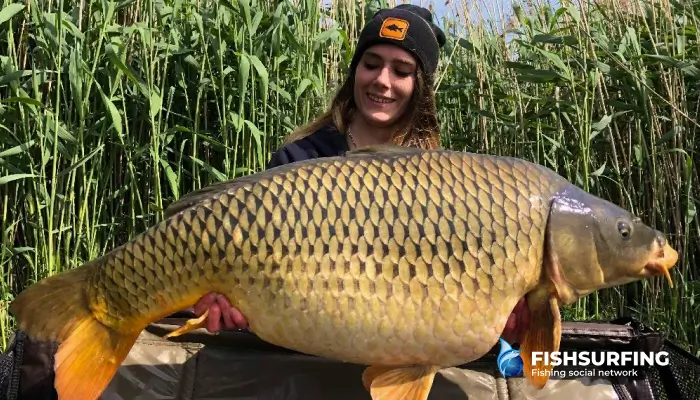


A multi-day fishing trip is a completely different discipline than a quick outing after work. It's not just about casting your rods and waiting. Suddenly, you have to figure out where you're going to sleep, what you're going to eat, how to protect your equipment, how to respond to changes in the weather, and, most importantly, how to plan the whole trip so that you'll still be enjoying it on the third or fourth day.
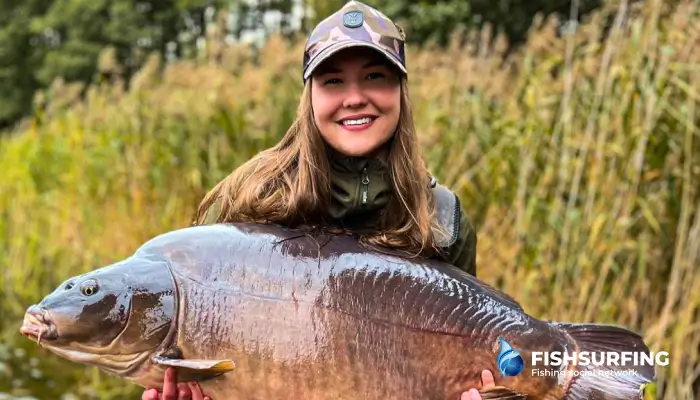
Fortunately, multi-day fishing trips don't have to be complicated or expensive. If you plan your trip well, you will avoid unnecessary stress, forgotten items, and improvisation, which often ends up with you worrying more about logistics than the fishing itself. This article will guide you through the planning process step by step, from choosing a fishing spot to the little things that will prove to be essential once you are at the water.
Choosing a spot for multi-day fishing
Choosing the right location is more important for a multi-day trip than for a short outing. What is "acceptable" for a few hours can be more of a hardship during a longer stay.
What to check about the fishing spot at home
- Possibility of long-term fishing – Not every fishing spot is suitable for multi-day sessions, even if it seems so at first glance. Check the local regulations, permitted fishing times, and any camping bans or restrictions that could unnecessarily complicate your trip in advance.
- Access to water – Just because you can get to the water "somehow" doesn't mean it's practical. Carrying your equipment across fields, forests, or dams for a long time is manageable on the first day, but during a multi-day stay, it will quickly affect your comfort and desire to fish.
- Nature of the water – A large dam, a river with a current, or a smaller pond place completely different demands on your equipment and tactics. When planning, it is good to know whether you will need heavier weights, longer rods, more lures, or perhaps a boat.
- Fishing pressure – Fishing grounds full of anglers can be productive, but for a multi-day trip, they often mean less peace and more compromises. If you are looking for peace and quiet and the opportunity to fish without constant hustle and bustle, it may be better to choose quieter places, even at the cost of smaller catches.
When fishing for several days, a spot you know well has a big advantage. If you are going somewhere for the first time, expect the first day to be more about searching than catching.
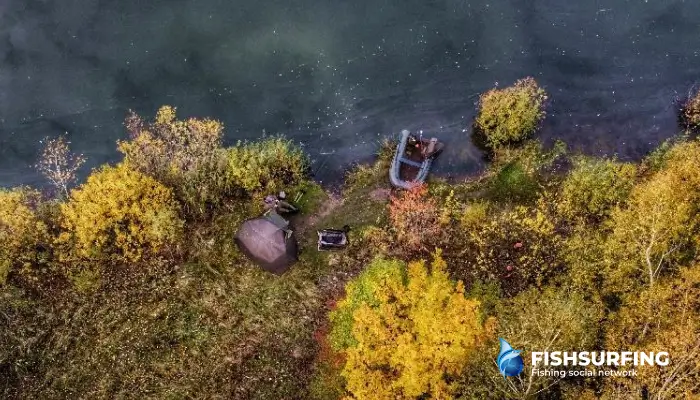
One spot or multiple spots?
Whether you spend the entire trip in one spot or move around over several days is not a question of right or wrong. It mainly depends on what style of fishing you enjoy and what you expect from the trip.
When does it make sense to stay in one spot?
Staying in one place for several days is typical for more "sedentary" styles of fishing. If you are planning to fish for carp or catfish, it makes sense to choose one spot and devote your time to it. Fish need a while to get used to the feed, and you will get a better idea of when and where they are feeding.
When is it better to move around
On the other hand, with more active techniques such as spinning, feeder fishing, or fly fishing, moving between fishing spots is quite common. If the fish are not responding, there is no point in waiting several days in the same place. Light equipment allows you to change the water, depth, and character of the fishing spot and increase your chances of success.
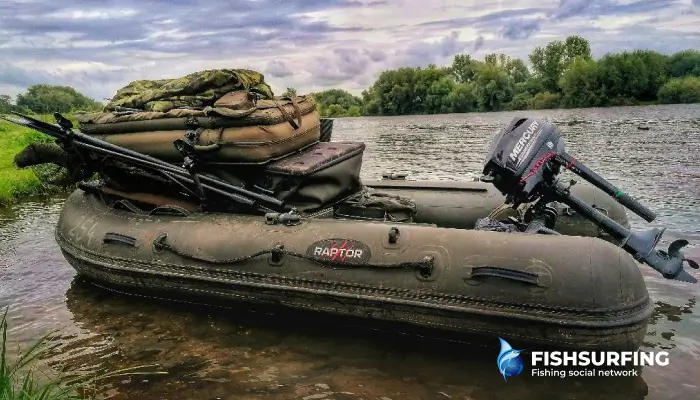
How long to go (and why not to overdo it)
Beginners often tend to plan a "proper" trip for five or seven days right away. In reality, however, it is better to start with a shorter stay.
Ideal length based on experience
- 1–2 nights – The ideal choice for your first multi-day trip. You don't have to worry about complicated facilities, food, or long-term planning, and at the same time, you can try out what it's like to stay by the water overnight. You'll gain a lot of experience without unnecessary stress and pressure to perform.
- 3–4 nights – This is the golden mean. You have enough time to react to changes in the weather, adjust your tactics, and change locations or lures. If one day doesn't work out, you still have room to turn it around in your favor, and the trip doesn't feel rushed.
- 5+ nights – Long trips require a system. You have to consider comfort, sleep, food, and mental well-being. If you have everything figured out and know what you need by the water, it can be a great experience. Without preparation, however, fatigue will quickly affect your desire to fish and your concentration.
The longer the trip, the more important the details become. Uncomfortable sleeping, poorly planned meals, or unnecessary chaos in your equipment can ruin even a great location. A shorter trip will help you figure out what works for you without putting you off fishing unnecessarily.
What equipment do you need for a multi-day fishing trip?
For a multi-day trip, there is a simple rule: don't pack everything, but pack correctly. Every extra item means more carrying, more clutter, and less peace by the water. When you have your equipment well thought out, you can focus on the essentials: the fish, the location, and the current conditions, not searching for things or a sore back from an uncomfortable sleeping pad.
Reliable shelter
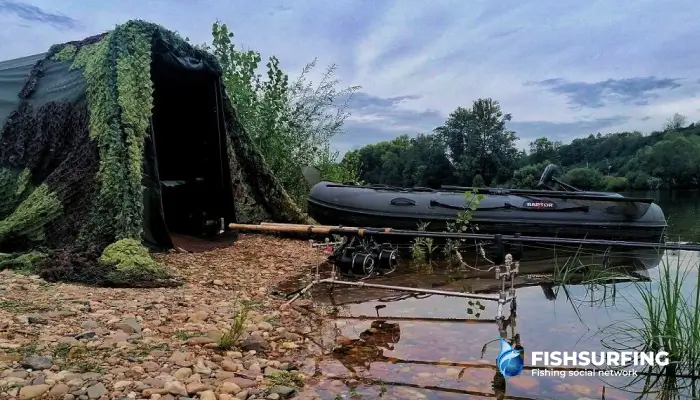
You can't influence the weather, but you can prepare for it. Choose a bivouac, umbrella with side panels, or small tent according to your fishing style and the season. It is important that it protects you from rain, wind, and morning dew, and at the same time can be quickly set up and taken down. On a multi-day trip, there is nothing worse than wet equipment and no shelter.
Quality sleep
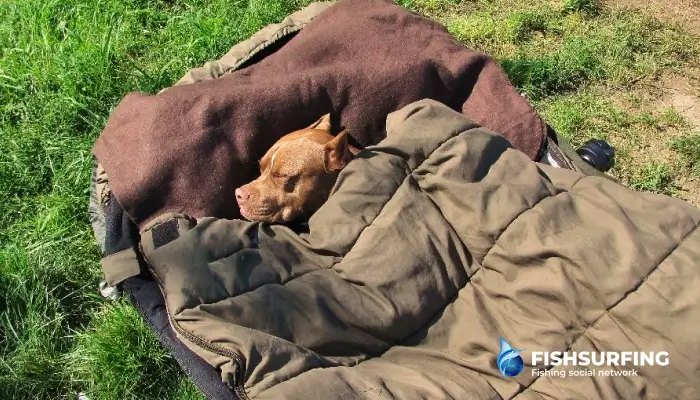
Sleep determines whether you enjoy your trip or just "sit it out." A deck chair or sleeping mat should insulate you from the cold ground, and your sleeping bag must be suitable for the current outdoor temperature. A fisherman who has slept poorly has slower reactions, less patience, and often makes unnecessary mistakes... but above all, he does not enjoy fishing, which is a shame.
Light
A headlamp is an absolute must. It leaves your hands free for casting, reeling in, and landing fish, which you will appreciate at night and in the dark. The ideal model is one with a longer battery life and a dimmer setting so that the light does not unnecessarily dazzle you at night.
Organization of equipment
When everything has its place, you save a lot of time and unnecessary searching. Bags, boxes, and cases help you keep track of your equipment and, most importantly, allow you to react quickly when you really need to. For multi-day trips, organization is an absolute necessity.
How to pack fishing equipment for several days
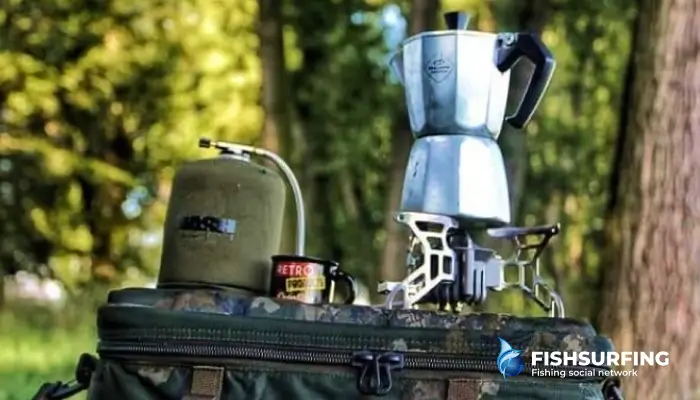
For multi-day trips, people often pack "just in case." Just in case you need this, just in case you need that... and in the end, you find that you didn't even take half of the things you packed. But packing isn't about being prepared for every scenario. It's about having the essentials at hand and not having to search for them.
Divide your equipment according to use, not randomly
A simple division will help: things for catching, sleeping, eating, clothing, and small items. Each group has its own place, ideally its own bag (if you are staying in one area) or at least a clearly designated part of your backpack. When you are looking for something, you know exactly where to reach, and you don't have to take out half of your gear.
Keep the things you use all the time close at hand
Leaders, lures, pliers, headlamp, or tape measure belong on top or in a pocket you can find even blindfolded. Things you take out once a day can be stored deeper inside. When you're by the water, you'll appreciate not having to think about where everything is.
Don't take three things when one is enough
More pliers, knives, or flashlights usually don't bring more certainty, just more weight and clutter. For a multi-day trip, it's better to have one reliable thing that you know and can rely on. You'll save space and your nerves.
Keep in mind that you will be moving around
If you know you will be moving around during your trip, it is worth packing your equipment into one sturdy fishing backpack or a few sturdy bags. The fewer separate items you carry, the better. Each additional "free" bag means more carrying, watching, and unnecessary stress.
Daily routine by the water: when to fish, when to rest
A multi-day trip is not about fishing non-stop. Those who try this usually find that by the second day they are tired, unfocused, and making unnecessary mistakes. A good routine is half the battle. Multi-day fishing has a few simple rules:
- Morning and evening offer the greatest potential. Early morning and dusk tend to be the most active parts of the day, especially in the warmer months. It pays to be prepared, have your rods cast, and not be running around the camp at that moment. This is often when the best bites come.
- Slow down during the day. Noon is usually the ideal time to rest, adjust your rigs, make minor tactical changes, or eat. If the fish aren't active, there's no point in rushing. Feel free to take a nap so you have energy for the evening bites.
- Set up a simple routine. Same feeding times, rig checks, meals, and rest. You don't need a strict schedule, but a basic routine will help you stay focused on the third or fourth day. Chaos is more tiring than the fishing itself.
- Listen to your body. When you feel that you are reacting slowly or making mistakes, it is better to take a break. The fish will wait. An exhausted angler catches much less than one who knows how to take a break.
How to respond to weather changes during a trip
During a multi-day trip, changes in weather are the rule rather than the exception, and the ability to adapt is key if you want to really enjoy fishing. You can't control the weather, but you can control how you react to it.
Rain does not mean the end of fishing
Light rain often stimulates fish, especially in the warmer months. The water becomes oxygenated, the pressure changes, and the fish tend to be more active. The key is to have dry clothes, a functional shelter, and the feeling that you are in control of the situation. When you know you won't get wet and have somewhere to hide, fishing is completely different—more relaxed and focused.
Wind changes the behavior of water
Wind is not just a nuisance, but also an important signal. It can drive food to one bank, and fish often follow it. If conditions allow, it is worth changing the direction of your cast or even moving to another location. At dams and larger bodies of water, the right response to the wind can bring bites that would not otherwise come.
Cooling means slowing down
A sudden drop in temperature usually slows fish down. They bite more cautiously, move less, and often prefer smaller bites. At that moment, try to reduce the amount of feed, make the bait smaller, and slow down the pace. Trying to "force" it usually doesn't work, but patience and a gentler approach do.
Prepare in advance
The key is to expect the weather to change. A change of dry clothes, a warmer layer, a functional shelter, and at least a rough plan B (another location, another tactic) should be a given. On a multi-day trip, it's not a question of whether the weather will turn bad, but how quickly you can adapt to it.
A multi-day trip is a real experience
When going on a multi-day fishing trip, it is not important to have everything perfectly planned. If you choose the right place, don't overdo the length of your stay, pack your gear sensibly, and are able to respond to what the water and weather bring, you can look forward to a pleasant time and peace of mind that you won't enjoy on a quick outing.
Not every trip will end with the catch of your dreams. But each one will teach you something – about the water, the fish, and yourself. And it is precisely that feeling of having been fully immersed in the water that is the reason why so many anglers swear by multi-day trips.