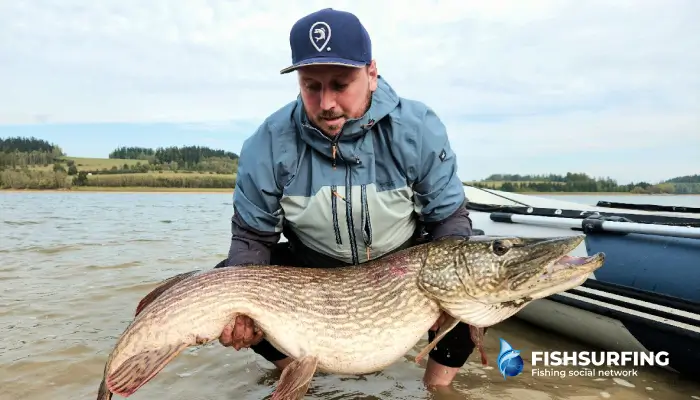


Spinning for pike is all about movement, tension, and that unexpected strike from the depths. You don’t just stand by your rod; you actively search for a predator that can strike at any moment, even just a few meters from the shore. Every cast is an opportunity; every change in pace can be decisive. Once you understand where to look for pike and how to present the lure to them, spinning fishing transforms from random trial and error into a targeted, adrenaline-fueled hunt.
How the pike behaves (and why it matters)
The pike is a typical ambush hunter. It doesn’t chase prey over long distances like the asp, for example; instead, it prefers to lie in wait, blending into its surroundings and waiting for the moment when something resembling easy prey swims by. At that moment, it strikes with a quick and violent lunge. It is precisely this behavior that fundamentally influences how you should approach spinning.
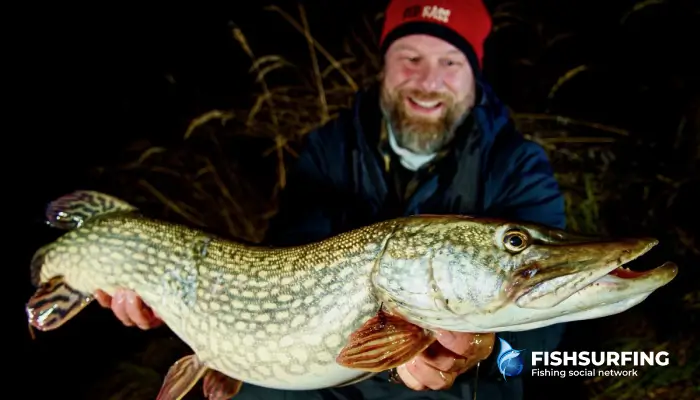
Typical for the pike is that:
- It stays close to cover. Reeds, submerged branches, rocks, or aquatic vegetation provide it with camouflage and security.
- It seeks out transitions between shallow and deep water, where it can stay safe while keeping an eye on the area ahead.
- They often stay in calmer water, such as behind an obstacle or off the main current, from where they strike out toward areas where whitefish are moving.
- It reacts mainly to silhouette and vibration, not so much to specific color. It is important that the lure appears to be a living object.
This leads to a simple rule: don’t cast blindly into empty water. You’ll find pike much more often where there’s structure. They’re attracted to changes in the bottom, shadows, the edge of vegetation, or a sunken tree. Each of these elements is a potential habitat.
Once you start reading the water this way, your lure fishing changes. You no longer cast randomly, but instead target specific spots where the presence of pike makes sense.
Where to Look for Pike
With pike, it’s not chance that plays the main role, but location. You may have the perfect lure and technique, but if you don’t cast where the pike’s presence makes sense, you won’t get a bite. The key is to look for structure, cover, and transitions—that is, places where the predator can lie in wait and watch for an opportunity.
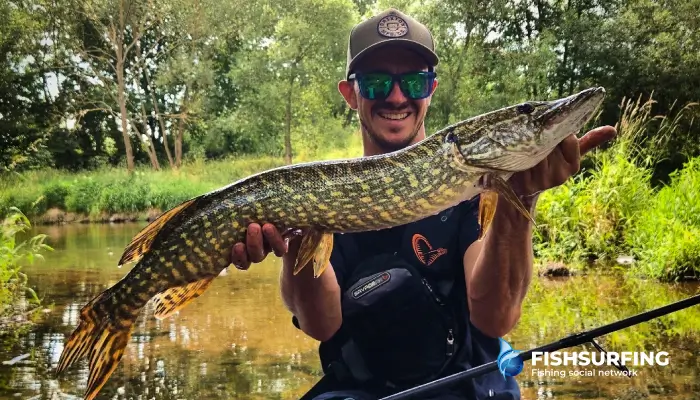
In still water (ponds, reservoirs, sand pits)
In still waters, pike are often much closer than most anglers think. It’s not uncommon for them to be just a few meters from the shore, hidden in the grass or near the reeds. That’s exactly why it pays to systematically fish the shoreline first before casting further out.
Focus mainly on:
- reed beds and grassy areas where small fish gather
- coves and shallows, which warm up more quickly
- transitions from 1–2 meters to greater depths, i.e., typical drop-offs
- sunken trees, branches, or stumps that provide cover
In spring and fall, pike often move into shallower areas where there is more food and a more pleasant water temperature. In summer, especially during warmer weather, they may retreat slightly deeper or to shadier spots. This doesn’t mean you won’t find them in the shallows at all; you just need to look harder for active fish.
On the river
In rivers, pike usually avoid strong currents. They don’t want to waste energy. They therefore seek out calmer spots from which they can strike at prey that the current brings almost right to their mouths.
Look primarily for:
- deeper pools where it has plenty of space and cover
- blind arms and calmer sections away from the main current
- calm pockets behind obstacles, such as a fallen tree or rock
- current edges where faster and slower water meet
Pike often stand at the boundary between these zones. This gives them a clear view of their prey’s movements while allowing them to avoid fighting the current. If you find a spot where the current carries small fish into a calmer area, it’s a very promising spot.
On a river, reading the current is key. Where the water changes speed or direction, that’s where the pike is most likely to be.
The Best Lures for Pike
Choosing a lure for pike isn’t about a single secret weapon. Pike react to silhouette, vibration, and movement, so it’s important that the lure appears to be vulnerable prey. However, certain types have proven effective over the long term and work across different fishing spots.
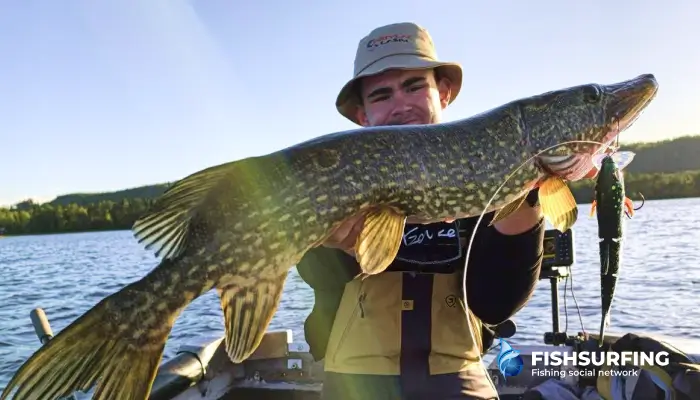
Soft plastics (shads, twisters)
Soft plastics are among the most versatile lures for pike. They allow you to fish at various depths and adjust the retrieve speed to the fish’s current activity. They work well with a slower retrieve but also respond to changes in pace. It is precisely the combination of a smooth retrieve and short pauses that tends to be very effective.
Sizes 8–15 cm are ideal for standard conditions. Smaller models work well when activity is low, while larger ones can target bigger fish. In clear water, natural shades like pearl, silver, and greenish work best. In murky water or under overcast skies, contrasting colors that create a distinct silhouette often work better.
Wobblers
Wobblers are great for fishing specific spots, such as shallows, edges, or vegetation belts. Compared to soft plastics, they have a more pronounced natural action that can provoke a pike even without complex rod work.
- Floating models are suitable for overgrown areas and shallows, where you can stop the lure and let it rise.
- Sinking or deep-diving wobblers are suitable for edges, deeper spots, or along sunken obstacles.
It is often the wobbler that triggers a short, aggressive strike. Especially when changing the rhythm or pausing the retrieve, a pike can strike very suddenly.
Spinners (spinners and spoons)
Spinners are a classic in pike fishing that has worked for decades and still holds its own. They’re great for beginners too, as they forgive minor mistakes in retrieval. All you need is a steady pace and contact with the lure.
- Spinners create strong vibrations and pressure waves that pike can detect well even in poor conditions. They are excellent when retrieved at a steady pace and work even in murky water.
- Wobblers are particularly suitable for shallow waters or slower retrieves. Their wobbling motion mimics an injured fish and often provokes an attack even from less active pike.
Equipment for pike spinning
Pike are strong fish with hard mouths and sharp teeth, so compromises usually don’t pay off here. Therefore, take care when selecting your fishing gear.
Rod
For standard pike spinning, the following is suitable:
- rod length 2.1–2.7 m (depending on the fishing spot)
- casting weight of approximately 15–50 g (for most standard lures)
A shorter rod is sufficient for smaller waters and when fishing from a boat. From the shore, where you need a longer cast, a length of around 2.4–2.7 m makes sense.
The rod’s action should be faster to medium-fast to allow for good contact with the lure and a decisive hookset. A rod that is too soft may result in the hook failing to penetrate the pike’s hard mouth.
Reel
The reel should be reliable and smooth. The ideal size is 2500–4000, depending on the brand and model. However, a high-quality drag is more important than the size itself. A pike can generate considerable force and make jerky movements when striking, so the drag should operate smoothly, without jerking.
The gear ratio isn’t critical, but a universal speed will allow you to change the retrieve pace without excessive effort.
Monofilament or braided line?
Most anglers today use braided line because:
- it has minimal stretch
- it allows for better contact with the lure
- it helps with the hookset
A diameter of around 0.12–0.18 mm (depending on strength and type of fishing) is sufficient for a typical pike.
Monofilament line can also be used, but expect greater stretch and slightly poorer contact transmission.
Wire is a must
When fishing for pike, a leader should be a given. Its teeth can easily cut through standard monofilament and braided line. Without a leader, you risk not only losing the fish but also needlessly injuring the pike with a torn lure.
You can use:
- steel wire
- titanium wire
- thick fluorocarbon (at least 0.60–0.80 mm)
How to Present the Lure to a Pike
When fishing for pike, presentation is often more important than the choice of lure itself. You may have the right color and size, but if the lure doesn’t look like easy prey, you won’t get a bite. Pike react to movement, changes in rhythm, and the element of surprise.
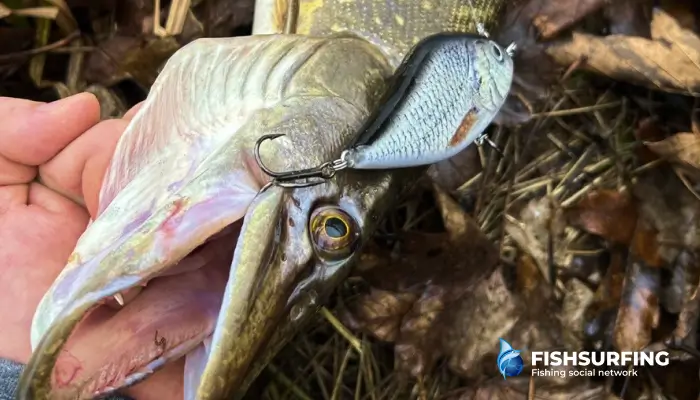
Basic Rules for Pike Fishing
The basic principles are simple but very effective:
- Vary your pace. A steady, monotonous retrieve only works sometimes. Try reeling in faster for a moment, then slowing down. A change in speed often provokes an attack.
- Incorporate short pauses. A pause simulates an injured or exhausted fish. It is precisely when the lure stops or slows down for a moment that many strikes occur.
- Vary the depth. Pike don’t always stay near the bottom. Sometimes they strike in the middle of the water column, other times just below the surface. It pays to vary the depth during a single cast.
- Vary the speed during a single cast. Start smoothly, pick up speed, slow down, and pause. Let the lure “come alive.” Pike often react precisely to the moment when something changes.
Pike attack impulsively. A short pause, a slight jerk, or a slowdown can be exactly the trigger that prompts them to strike.
And one more important thing: many strikes happen right near the shore. Pike often follow the lure right up to the last meter. So never reel in the lure too early. Before reeling it in, feel free to speed it up one more time or change direction. That’s exactly where the hardest strike of the whole day might happen.
You have to search for the pike
Pike on a spinning lure won’t let you just stand still. It forces you to think, experiment, and change your casting speed and angle. Sometimes it reacts to a slow retrieve near the bottom; other times it strikes just below the surface. Those who learn to read the water and aren’t afraid to adjust their tactics will get bites more regularly.
It’s not about the perfect lure or the most expensive gear. It’s about being attentive, focusing on the water’s structure, and giving the lure a movement that won’t leave the pike indifferent. And then all it takes is one strike from the reeds—and you’ll immediately realize that you’ll be returning to pike spinning time and time again.