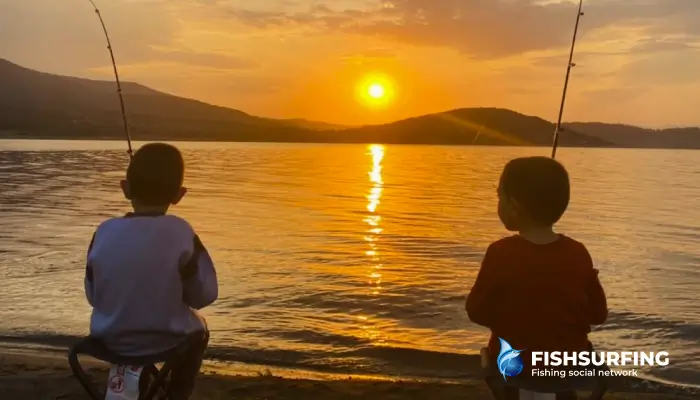


Fishing with children has a completely different rhythm than "adult" expeditions. It's not about records, trophies, or complex tactics. The important thing is that children enjoy themselves, learn something, and ideally take away an experience from the water that they will want to return to. And choosing the right fishing spot plays a key role in this.
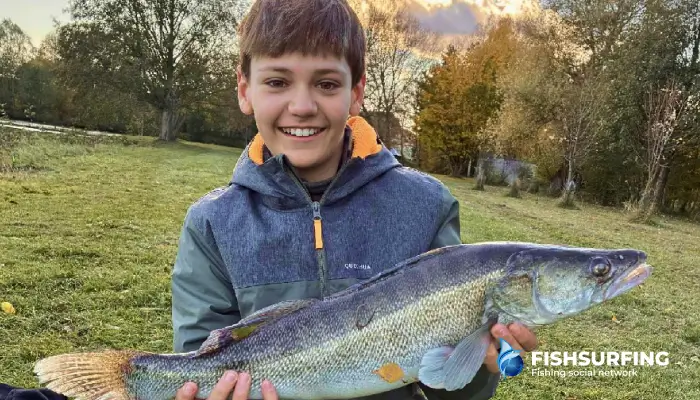
What makes a fishing spot suitable for children
When fishing with children, the choice of fishing spot often plays a bigger role than the equipment itself. A good spot can make a lot of things easier and forgive minor mistakes, while a poorly chosen spot can spoil the fun right from the start.
- The ideal family fishing spot should be safe and easy to navigate. The shore should allow for free movement without steep drops right at the water's edge, and the current should be calm and free of busy boat traffic.
- Another big advantage is the abundance of smaller fish, which bite more often and keep children's attention.
- Access to the water is also important. If you have to climb over rocks, push through bushes, or carry your equipment half a kilometer, it quickly ceases to be fun (which, incidentally, applies not only to children but also to many adult anglers).
- For young anglers, it is crucial to feel that there are "really" fish in the water. Long waits without a single bite are much harder for them than for adults and often determine whether they will want to return to the water next time.
What types of fishing grounds are best for families
Not every fishing spot is equally suitable for family fishing. A place that adult anglers find interesting and challenging may be unnecessarily complicated, frustrating, or even dangerous for children. When choosing a fishing spot, it is therefore not about catching the biggest fish, but about finding an environment where children will see the point in what they are doing and, ideally, get a bite.
Smaller ponds and pools
Smaller stagnant waters are often the ideal first stop for children. They are easy to navigate, calm, and the fish usually stay closer to the shore, so there is no need for long casts or complicated rigs. Children quickly grasp the basic principles of fishing and have a real chance of getting a bite in a short time.
The best way to fish here is with a float or a light bottom rig, where everything is clearly visible and easy to understand. In the Czech Republic, these are often:
- local association ponds
- smaller municipal reservoirs
- quiet pools without much fishing pressure
Sand pits and other stagnant waters
Sand pits are very pleasant for family fishing, especially if they have gentle banks and good access to the water. They often contain a lot of white fish, crucian carp, or smaller carp, so bites are not uncommon. The beautiful surroundings around the water are also a big advantage.
Sand pits usually have:
- plenty of space, so you don't feel cramped by other anglers
- a calmer atmosphere without busy traffic
- the opportunity to sit further away from the water, take a break, or have a snack
Private fishing grounds and children's ponds
If you want to give your children a truly positive first experience, private fishing grounds are a great choice. Their number is gradually increasing in the Czech Republic, and many of them are specifically tailored to families with children.
They typically offer:
- a high fish stock
- simple and understandable rules
- a high chance that your child will actually catch a fish
- often basic facilities (toilets, refreshments, sometimes a playground)
Rivers: when yes and when no
Rivers are not automatically a bad choice for children, but they require more careful selection of the location. The following are particularly suitable:
- calm sections without strong currents
- dead arms, bays, and quiet side parts of the stream
- smaller rivers with a clear riverbed and safe banks
On the other hand, strong currents, deep water close to the shore, or boat traffic make rivers more stressful than fun for children. If you are unsure, it is better to choose still water and return to the river later, when the children have more experience.
What fish are ideal for children's fishing
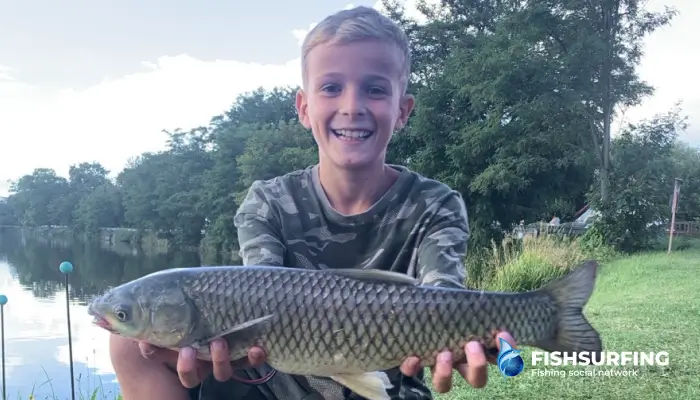
For children, it is not the size of the fish that counts, but the frequency of bites. The ideal fish is one that bites relatively often, is not too strong, and can be caught without stress, even with light equipment. This gives the child a quick sense of achievement and the desire to continue.
White fish: the ideal start for young anglers
White fish species work very well. Roach, rudd, and bream occur in large schools, respond to simple lures, and bites come relatively quickly. In addition, children can learn the basics of working with a rod, reel, and landing a fish.
Crucian carp and tench: a calm, stress-free battle
Crucian carp and tench are also excellent choices. Crucian carp are resilient, bite readily, and their bites are easy to read. Tench are a little more cautious, but that's why they can be a nice next step as children learn patience and gentleness.
Smaller carp: when you want a "real" catch
Smaller carp require a little more caution, but they can also be very attractive to children. The bite is more pronounced, the fish fights harder, and the catch feels more "adult." It is important to choose a more delicate setup and not to overdo it with the size of the bait so that the battle is manageable and safe for the child.
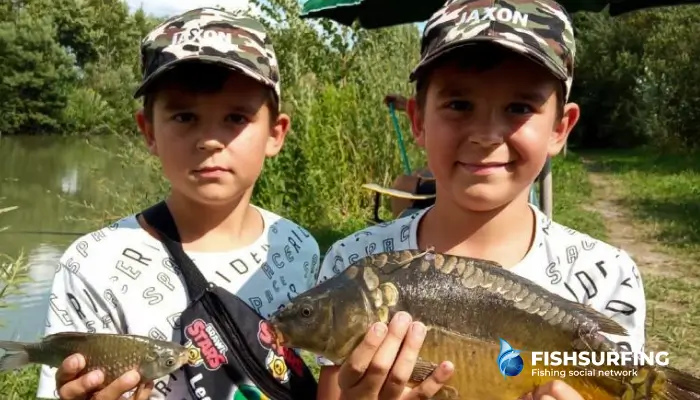
Simple fishing techniques that children enjoy
Techniques that allow children to see something and where something happens quickly work best with children. They don't enjoy long waits without movement, and complicated setups confuse them unnecessarily. The clearer and more action-packed the fishing, the more fun they have by the water.
Float fishing, or when something is always moving
Float fishing is a classic for children and often the best choice. The float moves, sinks, and jerks, and the child constantly feels like they are watching the action. The bite is immediately visible and the reaction is quick, which naturally draws children into the catch.
In addition, float fishing makes it easy to explain the basics, such as what a bite is, when to strike, or why the float disappeared. The child can see the fishing right before their eyes and understands it better.
Light tackle brings simplicity and calm
Light tackle is ideal where float fishing does not work so well or where you need to cast a little further. The setup should be as simple and clear as possible: one hook, a smaller weight, and a clearly visible bite.
The advantage for children is that they do not have to concentrate on complicated lure handling. All they have to do is wait, watch the tip or a simple indicator, and react. It is a calmer style, but still action-packed enough when the fish are biting.
A simple feeder when the fish stay in one place
A feeder can also be great for children if you keep it simple. The feeder helps keep the fish in one place, so bites come more often. There is no need to deal with complicated rigs or fine tuning; a basic feeder setup is all you need.
Children often enjoy the feeding and casting itself. They see that with each cast they are doing "something to make the fish come," and this gives them the feeling that they are really involved in fishing.
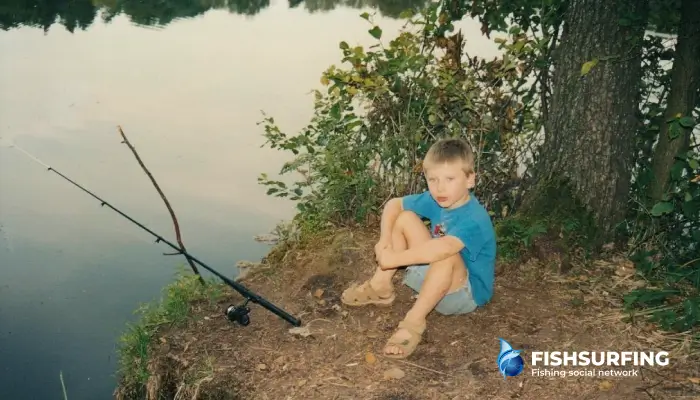
How to make fishing a real experience for children
For children, it is not important how many fish they catch, but how they feel by the water. If they take away a feeling of well-being, joy, and time spent together, you have won. The fish will come in time. But the desire to return to the water arises right here.
Shorter trips work better than a whole day by the water
When it comes to children, there is a simple rule: less is more. An hour or two of activity will make a better impression than five hours of waiting. If you finish while the child is still enthusiastic, they will want to come back again. And that is exactly the goal.
Breaks are not failures, but part of the trip
Children cannot stay focused all the time. A break for a snack, playing on the shore, or just watching the fish is perfectly fine. Often, it is after a break that the fish start biting. And even if they don't, the child feels that the trip was not just about waiting.
Every catch deserves praise
For a child, every bite, every fish, even the smallest one, is a success. Don't downplay them. On the contrary. Joy, a photo, praise, and a short story about the fish will leave a much stronger impression than the catch itself.
Don't push for performance or rules
Fishing with children is not training for a competition. If your child doesn't hold the rod correctly for a while, forgets to watch the float, or just wants to sit down, let them. The more freedom you give them, the more natural their relationship with fishing will be.
Fishing with children is not about raising little successful fishermen. It's about showing them the water, nature, and the joy of the little things. When you give them space, peace, and time, you will often be surprised at how quickly they find their own way to fishing.