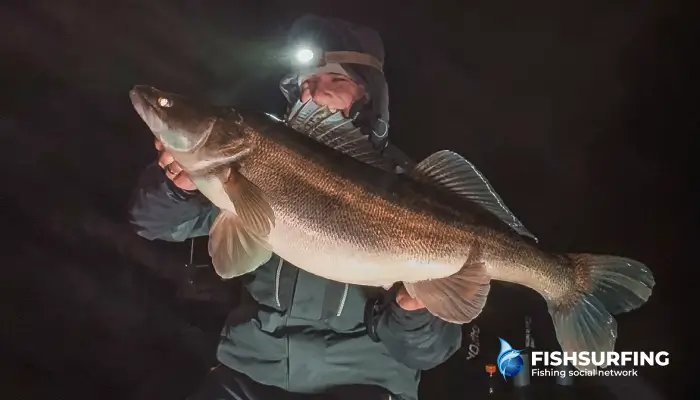


The zander is one of the most sought-after predatory fish in our country. It is cautious, often strikes discreetly, and its behavior changes significantly throughout the year. What works guaranteed in the summer may be completely useless in the winter. So if you want to be successful, you need to adapt your fishing spot, depth, lure type, retrieve, and pace. And we’ll take a look at all of that now.
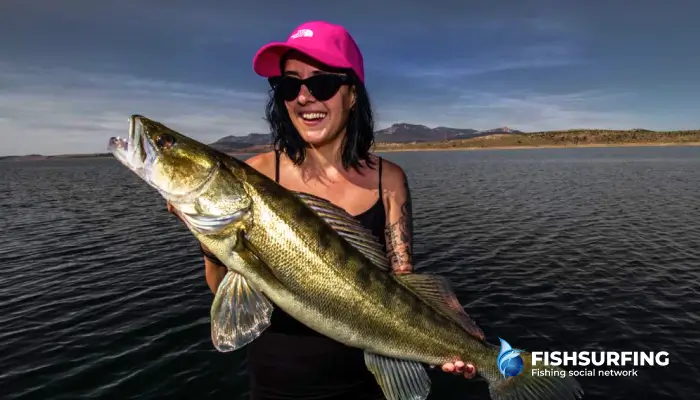
How zander behaves in summer
Summer is a specific season for zander. The water is warm, this whitefish is active, and there is plenty of food. But that doesn’t mean zander bite indiscriminately. On the contrary, in warm water they are often more selective and react much more to subtle cues.
During the day, the zander usually retreats to deeper waters, where it seeks a calmer and more stable spot. In summer, it doesn’t like harsh light or completely overheated shallows, so you’ll often find it where the bottom drops off and where it’s a bit cooler.
Typically, these are places such as:
- deeper pits and pools
- edges between shallow and deep water
- old riverbeds at dams
- areas around rocks, sunken trees, or bridge piers
The zander is a predator that likes to stay near the bottom or just above it. It often waits at the edge of a drop-off, from where it can strike at its prey. These very transitions act as natural routes along which whitefish move, and the zander knows this very well.
Zander activity during the day in summer
In summer, timing is crucial. Zander does not tolerate bright light and strong sun well. That is why it is most active:
- early in the morning, before full daylight
- in the evening at dusk
- at night, when they emerge from the depths in search of food
In twilight and darkness, they often venture into shallower areas where you wouldn’t look for them during the day. That’s why it pays to stay by the water until evening or, conversely, get up early in the summer.
During the day, the zander tends to be more cautious. It often stays near the bottom, strikes discreetly, and responds more to a lure that “tickles its nose” than to aggressive retrieving. On hot days, zander activity can be significantly lower, especially when the air pressure is stable and there is no wind.
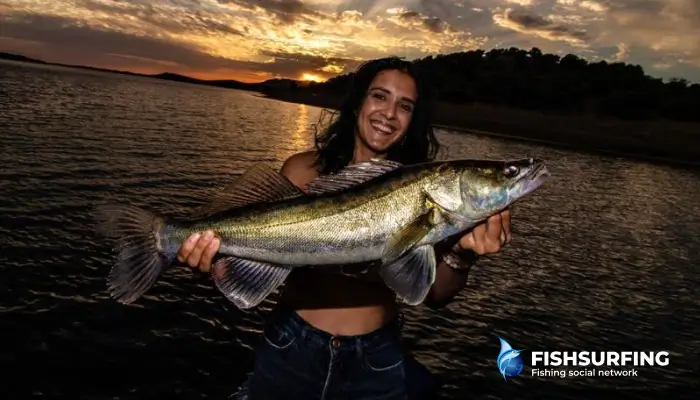
Where to Find Zander in Summer
In summer, zander prefer spots that offer depth, calm, and the chance to pursue prey. They love transitions—between light and shadow, current and still water, shallows and deeps. If you find a spot where a hard bottom meets deeper water, you’re very close.
Focus mainly on:
- steep drops in depth, where shallow water breaks into deeper water
- old river channels at dams, which serve as natural migration routes for whitefish
- the areas around bridge piers and larger obstacles, where calmer pockets form
- hard bottoms with rocks or gravel, which zander prefer over mud
- edges between shallow and deep water, where they can stay close to the bottom and wait
Best Lures for Zander in Summer
In summer, zander are often cautious and stay near the bottom, so the lure must look natural and be at the right depth. During the day, they stay near the bottom and react rather cautiously; in the evening and at night, they are more willing to go out in search of food. This should be reflected not only in the choice of lure, but also in its size, color, and presentation.
Soft Plastics
If there’s one sure bet for zander in the summer, it’s soft plastics. Sizes around 7–12 cm work best, as they realistically mimic smaller whitefish.
In clear water, it pays to opt for natural shades such as pearl, gray, or a subtle greenish tint. In murkier water or at dusk, zander are more likely to notice contrasting colors, such as chartreuse or a combination of a dark back and a light belly.
However, it’s not just how the lure looks that matters, but how you work it. Zander usually strike the lure near the bottom, so controlling the depth is crucial.
Wobblers
Wobblers are most effective in the evening, at night, and early in the morning, when zander move from deeper waters closer to shallows. Sinking or deep-diving wobblers that run just above the bottom are ideal.
In summer, zander tend to be more active at dusk, and a wobbler retrieved slowly over a drop-off or around an obstacle can provoke even an otherwise cautious fish. With zander, it’s often not an aggressive strike but a quick suck of the lure. That’s why it’s good to maintain contact with the lure at all times.
Dead Fish
A dead fish works excellently when fishing with it on the bottom, especially in the evening and at night, when zander are more active in search of food. The key is the right spot—an edge, a break, or an old riverbed is ideal. If you place the fish in an area where zander commonly pass through, a bite often comes without a long wait. Here, the location matters more than the presentation itself.
How to Work the Lure in Summer
In summer, zander rarely attack frantically. They often respond to a simple rhythm:
- slowly lifting the lure off the bottom
- a short pause
- letting it fall back to the bottom
The moment of impact is often the key. The strike often doesn’t come as a sharp blow, but rather as a gentle tap, a loss of contact, or a feeling that the lure has grown heavier. You then need to set the hook quickly and firmly. Zander have a hard mouth, and a hesitant hookset can easily miss the mark.
How to Catch Zander in Winter
Winter zander fishing is a completely different discipline than summer evening trolling. The water is cold, the fish conserve energy, and they think carefully about every move. But that doesn’t mean zander stop feeding. They just change their pace and the way they react to prey.
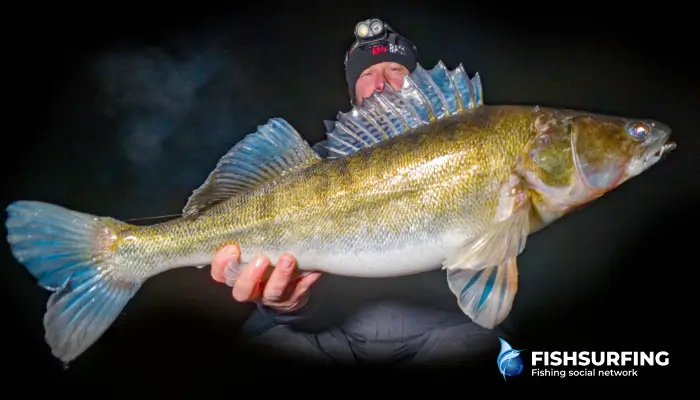
How zander behave in winter
In winter, zander usually stay in deeper areas where the temperature is more stable. They don’t venture out into shallower waters as much and avoid unnecessary movement. They often hover near the bottom, sometimes almost motionless, waiting for an opportunity.
Typically, zander gather in small groups in cold water. If you find one, there’s a good chance there are others nearby.
Bites come more from reaction than from hunger. Zander rarely chases a fast-moving lure. Instead, they’ll strike at something you present right under their nose or that briefly provokes them with movement. That’s exactly why winter fishing is mainly about patience, precision, and a slow presentation.
Where to Find Zander in Winter
In winter, zander usually retreat to more stable conditions and stick to spots where they don’t have to waste energy unnecessarily.
It’s worth focusing mainly on:
- the deepest parts of the fishing area, where the water temperature is most stable
- old river channels at dams, which serve as natural winter migration routes for fish
- whitefish wintering grounds, because zander stay where the food is
- hard bottoms with minimal current, where they can remain almost motionless
In winter, it’s often not about finding an active predator, but about locating where the zander is holding. Once you discover such a spot, it pays to fish it thoroughly and slowly.
If you have a fish finder, it’s a huge advantage when winter fishing for zander. It will help you quickly locate depth, a drop-off, or a school of whitefish, which significantly shortens the search time. Of course, you can do it without a fish finder too; you just need more patience and systematic fishing.
The Best Lures for Zander in Winter
Winter fishing isn’t about aggressive fishing. Zander rarely go after a lure that’s moved quickly. Instead, they respond to something that moves slowly and stays within their reach for a longer time. Your choice of lure should reflect this.
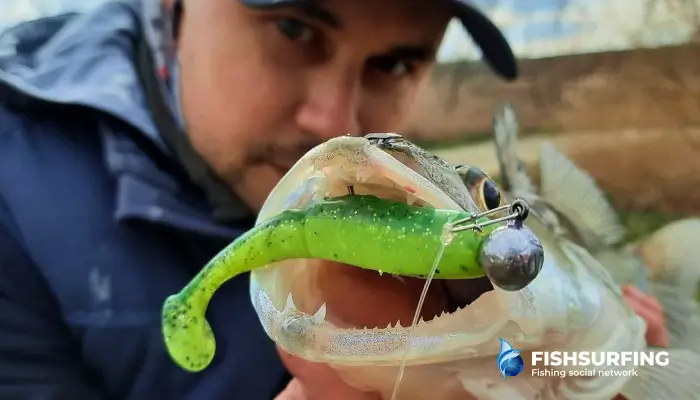
Smaller soft plastics
In cold water, it pays to use smaller lures. Instead of the 10–12 cm models used in summer, 5–8 cm soft plastics often work better, as they appear more inconspicuous and natural. Stick to more subdued colors; pearl, gray, a subtle greenish tint, or a darker silhouette work well. In winter, there’s no need to go for flashy colors; what’s more important is presenting the lure near the bottom and maintaining sensitive contact with it.
Vertical Fishing
If you’re fishing from a boat, winter vertical fishing is extremely effective. The lure works right below you, at the depth where the fish are actually holding.
Minimal movement, a gentle lift, and a long pause often work better than any aggressive style. The advantage is precision. You know exactly where the lure is and keep it in the strike zone for as long as possible.
Dead Fish
A classic that often outperforms artificial lures in winter. Zander respond to both the scent and the natural silhouette.
When fishing with a dead bait, a properly placed fish on the edge or in a deeper part of the fishing spot is enough. Here, location and patience are key. If you’re standing in the right spot, a bite can come even without significant movement of the bait.
How to work the lure in winter
Winter lure presentation for zander can be summed up in three words: slowly, calmly, patiently.
- an extremely slow lift off the bottom
- long pause
- gentle drop back
Often, it is the pause that makes the difference. The moment the lure lies almost motionless, the zander strikes. There is no sudden jerk, but rather a subtle change. You will only feel the lure stop, become heavier, or lose contact with the bottom. That is the moment to set the hook.
The most common mistakes when fishing for zander
Zander can be unpredictable, but failure is often due to minor mistakes in approach. Just a few details that don’t add up, and you won’t get any bites—or you won’t convert them into a catch. Here are the most common ones.
- Retrieving the lure too quickly – Zander rarely responds to an aggressive and hurried style, especially in colder water. If the lure passes through its zone too quickly, it often just watches it and doesn’t strike.
- Fishing away from edges and bottom breaks – Zander usually stay near the transitions between shallow and deep water or on hard bottoms. If you’re fishing in an area without structure, your chances of a bite drop significantly.
- Lures that are too large in winter – In cold water, fish conserve energy and prefer smaller, easier-to-swallow bites. A large, conspicuous lure can look unnatural and unnecessarily scare the zander away.
- Insufficiently quick or weak hookset – Zander have a hard mouth, and the bite is often subtle. If you don’t react quickly and decisively, they’ll easily spit out the lure, leaving you with nothing but a sense of a missed opportunity.
Zander demands precision, not chance
Fishing for zander, whether in summer or winter, isn’t about luck. It’s about finding the right depth, keeping the lure where it should be, and adjusting your pace to the conditions. Sometimes color is the deciding factor, other times size, but most often it’s the location and presentation.
The one thing zander never forgives is rushing. But when you slow down, start reading the bottom more, and focus on the details, the bites will come. And this combination makes zander fishing one of the most interesting disciplines on the water.