

Fishing is more than just waiting for the float to move. It's a way to slow down, be outdoors, focus on the present moment, and experience both calm and excitement at the same time. Water has a special ability to calm us down. Add to that the excitement of your first catch, and an inconspicuous hobby can become a lifelong passion. If you are just starting out with fishing, this article will guide you through the first steps, help you choose the basic equipment, and show you that getting started with fishing is not difficult. You just need to know where and how to start.
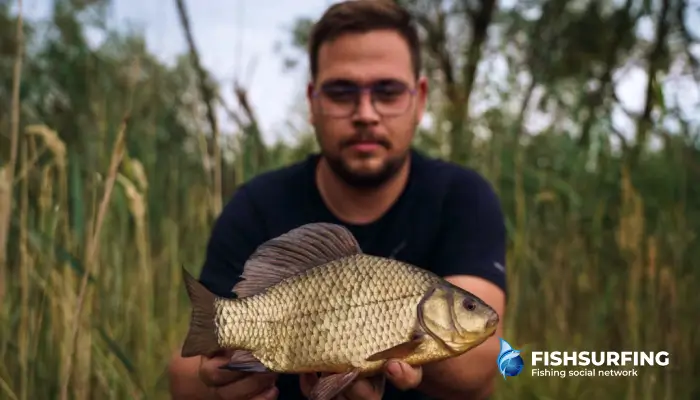
What type of fishing appeals to you?
Fishing is not just about throwing a hook into the water and waiting. There are several basic techniques. Each has its own charm, and it is up to you to decide which one appeals to you the most.
Float fishing
A classic that most of us are familiar with. A float is used to catch smaller fish such as roach or bream. It is an ideal technique for beginners, as it teaches you to perceive the water and the reactions of the fish.
Feeder
Fishing at the bottom, where the bait is left on the bottom along with a feeder that slowly releases a mixture of food around it, attracting fish to the hook. The advantage is that you can attract fish to a specific spot and watch for subtle bites using a sensitive rod tip. Feeder fishing is a great choice if you want to catch larger fish such as carp or bream while enjoying the excitement of every twitch of the rod.
Spinning
An active style of fishing in which you repeatedly cast and reel in an artificial lure to mimic the movement of a small fish. This provokes predators such as pike, perch, or zander, which respond by attacking. This technique requires more patience, practice, and a bit of movement. Spinning is therefore ideal for those who can't sit still by the water.
Fly fishing
The royal discipline of fishing, in which trout and grayling are mainly caught using delicate artificial flies that imitate insects. Instead of a classic weight, a special fly line is used, which allows for accurate and easy casting even over longer distances.
This style emphasizes technique, precision, and elegance of movement. Fly fishing is a bit like a fishing dance, where you learn to read the water current, observe insects, and respond to the behavior of fish. The reward is a truly unique experience with every catch and a peaceful connection with nature.
The best fishing technique for beginners
Beginners are most recommended to use float or bottom fishing. With both methods, you will learn how to work with a rod, react to bites, and recognize different situations on the water. You will gain a feel for the movement of the lure and the behavior of fish, which is the basis of every successful fisherman. These styles also make it easy to see whether you enjoy the calm waiting by the float or the strategy and excitement of bottom fishing more.
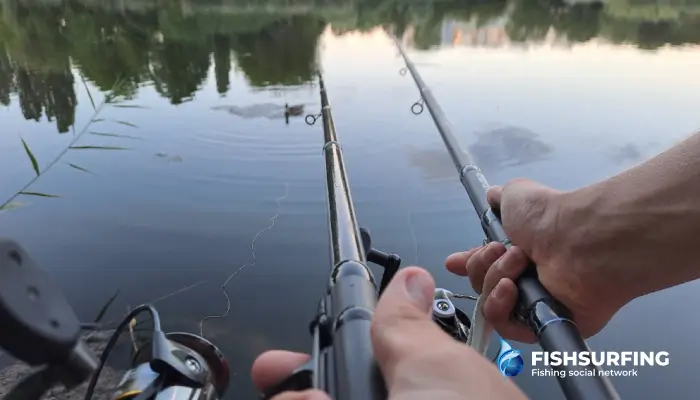
Fishing license and permit: how to obtain them?
In the Czech Republic, you need two documents for legal fishing: a fishing license and a fishing permit. Here is a step-by-step guide on how to obtain them:
- Visit your nearest branch of the Czech or Moravian Fishing Association and submit a membership application.
- At the association branch, take a test on basic knowledge of fish and fishing rules. After passing the test, you will become a member of the association.
- Take your test certificate and membership card to your local municipal office or city hall. There you can purchase a fishing license (valid for 1, 3, 5, 10 years, or indefinitely).
- Finally, purchase a permit at the association branch, which is valid for a maximum of one year and is purchased according to where you want to fish. The most extensive permits are the nationwide and association-wide permits, followed by the territorial permits of the individual territorial associations of the Czech Fishing Union and local permits for specific fishing grounds.
Basic fishing equipment for beginners
Fishing can be approached simply or professionally, but basic equipment is really all you need to get started. You don't have to spend thousands. It is more important to understand how the equipment works and learn how to use it. Once you have gained some experience, you can gradually add to and improve your equipment according to the style that suits you best.
Rod, reel, and line
The basis of any fishing equipment is a rod, reel, and line. This "holy" fishing trinity determines how comfortable you will be fishing and whether your first fish will end up on the hook or swim away.
Rod
For beginners, a universal rod 2.7 to 3.3 meters long is ideal. It is important that it is neither too hard nor too soft. The so-called medium action is the ideal compromise. Such a rod can handle both smaller ponds and slow-flowing rivers. In addition, it will forgive minor mistakes when casting.
Reel
When choosing a reel, focus mainly on smooth operation, a high-quality brake, and sufficient spool capacity. For regular fishing in still water, a smaller reel of size 2000–3000 will suffice. If you are later tempted to fish for larger fish, you can purchase a more powerful model.
Line
The right line is often what makes the difference between success and disappointment. For white fish, a diameter of 0.18-0.25 mm is sufficient, while for carp and larger fish, choose 0.25-0.30 mm. Nylon lines are flexible, inexpensive, and forgiving of mistakes when landing fish, making them ideal for beginners. Over time, you can also try braided lines, which are stronger and more sensitive.
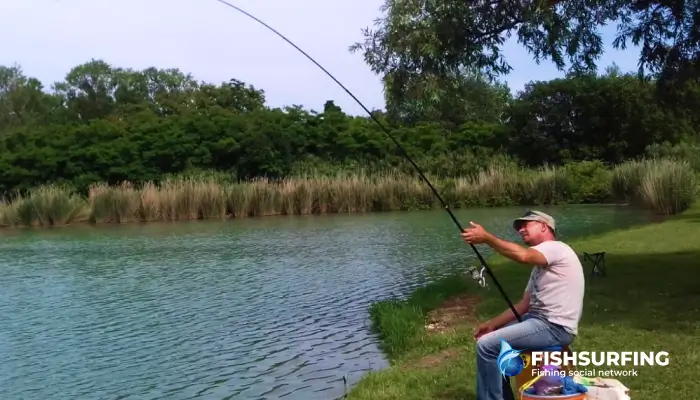
Hooks, floats, sinkers, and other small items
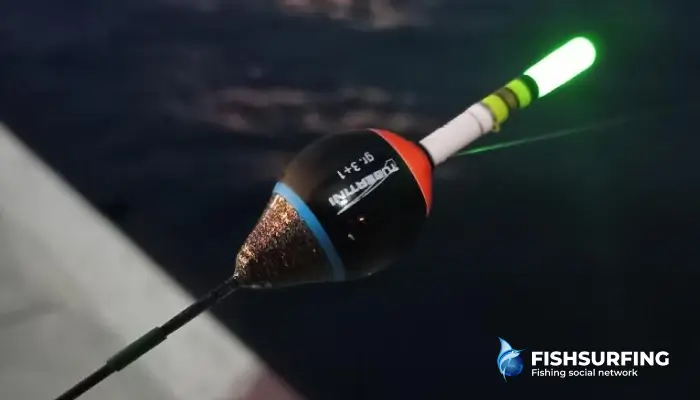
You can't do without small items when fishing. Your equipment should include hooks of various sizes, a few floats of different shapes, and several sinkers to help you get your bait to the right depth. It is worth getting a small box with compartments to store these small items neatly. When fishing, you will appreciate having everything at hand.
Fishing shops often sell starter kits that contain all the basic equipment you need. They also include accessories such as swivels, carabiners, stoppers, and feeders, so you can be sure that you have everything you need.
When it comes to bait, the classics never disappoint. Worms, corn, dough, or small boilies are a sure bet for most common fish species. Over time, you will find that each fishing spot has its own specifics and that sometimes fish "take" something completely different than you expect. Experimentation is simply part of fishing.
What to pack for fishing
A successful trip to the water is not just about a rod and a hook. The right equipment and comfort can turn an ordinary day into a real experience.
- A landing net is an indispensable aid when landing fish. It allows you to safely and gently pull the fish out of the water.
- Pliers or forceps are useful for removing hooks, especially if you are using the "catch and release" method.
- You will definitely appreciate a fishing stool or folding chair. Fishing is often about patience, so comfortable seating pays off.
- A box or bag for accessories will help you keep all your small items, lures, and documents neatly organized.
- Bring insect repellent and sunscreen so that mosquitoes and the sun don't spoil your mood before you even catch your first fish.
- Always carry your documents, permit, and fishing license with you. Checks at the water are common, and this will help you avoid unnecessary complications.
First trip to the water
And now, finally, the most interesting part: your first fishing trip. This is where everything you have learned will come together.
How to choose a suitable location
For your first trip, choose smaller and quieter areas, such as ponds, flooded sand pits, or slower-moving streams. Avoid crowded places where there is a lot of noise and commotion. The ideal spot is one with natural shade and access to the water. Watch the water surface, which will tell you a lot. Where there are bubbles, fish movement, or ripples, there is often fish activity.
If you're not sure where to start, the Fishsurfing app can help. It features thousands of fishing spots, maps, angler reviews, and photos of catches. Just select a location, check the conditions, and you're ready to go.
What to expect on your first fishing trip
Your first fishing trip can be a mixture of excitement and uncertainty. You may not get a bite right away, and that's perfectly fine. The important thing is to observe, try, and learn. Every angler knows that patience is the key to success. Watch the float, observe the water, and try to relax. The moment when the float slowly begins to sink is the reward for all those minutes of calm.
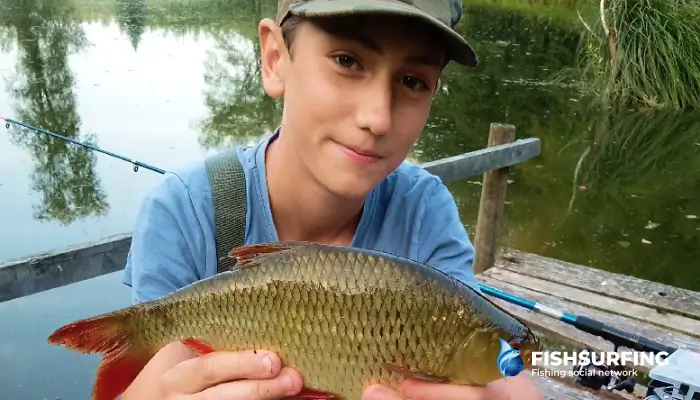
And when you get your first catch? Enjoy it to the fullest. And don't forget to take a picture and show it off to the Fishsurfing community.
Fishing ethics and respect for nature
A good fisherman is not only someone who knows how to catch fish, but also someone who behaves with respect for fish, nature, and other people when out on the water. Fishing has a long tradition, and it is up to us to ensure that it remains an enjoyable activity for future generations. So what basic principles should every fisherman know?
Catch and release
This principle means that after catching a fish, you release it back into the water instead of keeping it. This is done either out of consideration or because fish of a certain species or size are protected. Many anglers also release their first catch of the season. For luck and out of respect for the water. It is an unwritten tradition that reminds us that fishing is not about the number of fish caught, but about the experience, patience, and respect for nature.
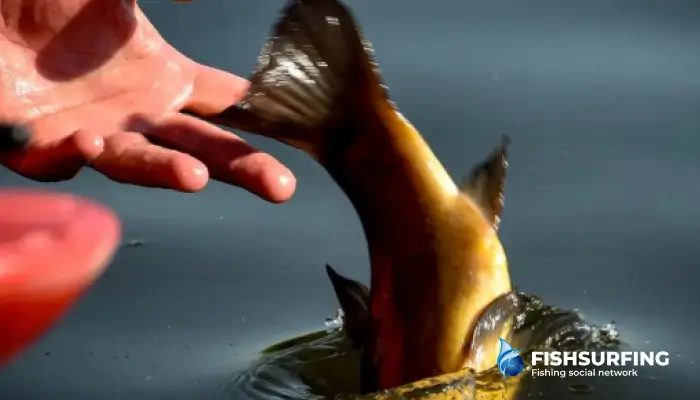
When releasing a fish, do so gently: ideally with wet hands so as not to damage its protective scales, and as quickly as possible so that it does not suffer. If possible, do not pull it ashore at all, but release the hook directly in the water.
Keep the water clean
When you leave, your fishing spot should look the same (or ideally better) than when you arrived. Litter, bait residues, or fishing line in the water are dangerous to nature. They can endanger fish and other animals. Many experienced anglers therefore carry a small bag for litter and clean up not only after themselves but also after others.
Respect for other anglers
We are not alone by the water. Keep your distance between fishing spots, do not talk too loudly, and avoid places where someone else is already fishing. Fish are disturbed by noise and sudden movements, so being quiet and considerate is not only polite, but also practical. If you behave considerately, others will behave the same way towards you.
Protection of nature and fish
Every fisherman should be aware of closed seasons and minimum catch sizes, which determine when and what fish can be caught. For example, brown trout are protected from September 1 to April 15, so they cannot be caught during this period. Also, be mindful of how you behave around water. Do not destroy plants, do not light fires outside designated areas, and do not disturb the animals that live there.
Learn, share, and enjoy every catch
No one becomes an experienced angler overnight. Every trip to the water is an opportunity to learn something new—how to read the water, recognize suitable weather, improve your casting technique, or try different lures.
A great way to improve is through the fishing community. Watch videos, read articles, join online groups, and share your catches and experiences on the Fishsurfing app. The inspiration of others will push you forward, and you will soon discover that fishing is not just about fish, but also about people who share the same passion.