

For many anglers, summer is the favorite time of year. Long days, warm nights by the water, and nature in full bloom create the perfect setting. However, fishing in extreme temperatures presents specific challenges. While fish conserve energy in winter, their metabolism is at its peak in summer. They are active and aggressive, but also very sensitive to oxygen deficiency and sudden changes in pressure. If you want to be successful in the summer, you must forget the universal techniques from spring. The key to success is understanding how high water temperatures affect fish behavior and where to look for them during this season.
The Impact of Metabolism and Oxygen Deficiency on Fish Activity
In summer, two factors determine the rules of the game: water temperature and dissolved oxygen content. Fish are cold-blooded animals, which means their body temperature depends on their surroundings. The warmer the water, the faster their metabolism works and the more food they need to survive. This is great news for anglers. An active fish means more bites.
There’s a catch, though. Warm water can hold much less oxygen than cold water. When the surface temperature exceeds a critical threshold, fish become lethargic. It’s not because they aren’t hungry, but essentially because they’re “out of breath.” A successful angler therefore isn’t just looking for fish, but above all for water that breathes.
Where to find oxygen oases?
When fishing in still waters, focus on tributaries where falling water oxygenates the surface. Areas with abundant underwater vegetation, which produces oxygen during the day, are also excellent spots.
On rivers, look for fish in rapids, below weirs, and in the main current, where the water is constantly churning. In calm coves with rotting leaves in the summer, you’ll rarely find fish; the environment there is uninhabitable for them in the heat.
The best times for summer fishing
In summer, more than ever, the time spent by the water must be effective. Sitting in direct sunlight at noon may yield an occasional bite, but the real action takes place at other times.
Morning and evening peaks
The best time for fishing begins an hour before dawn and ends shortly after the sun starts to beat down. The water is coldest and most oxygenated after a night’s rest. The second wave comes with the twilight of early evening. Fish that have been hiding in the depths or shade during the day head out to the shallows in search of food. For predator anglers, this period is a veritable bonanza, as the surface comes alive with strikes from asp, perch, and pike.
Night fishing is a discipline for the persistent
Many fishing spots allow nonstop fishing in the summer, an opportunity you shouldn’t miss. At night, even the largest and most cautious fish, including trophy carp and catfish, move closer to the shore. The quiet of the night and the absence of noise on the shore make the fish much more trusting. If you’re targeting big fish, night fishing is your best bet in the summer.
Strategies for Fishing Active Fish
In summer, you don’t need to coax fish with a subtle presentation like you do in winter. The fish are on the move, and so must you be. Here are the three most successful techniques for the summer season:
Adrenaline-Fueled Fishing Right at the Surface
When you see fish feeding right at the surface in the summer heat, it would be a sin not to send a lure there. For carp anglers, the legendary “munch-bait fishing” is an absolute classic during this period. All you need is a piece of fresh pastry or a bread crust, which you let float freely on the surface.
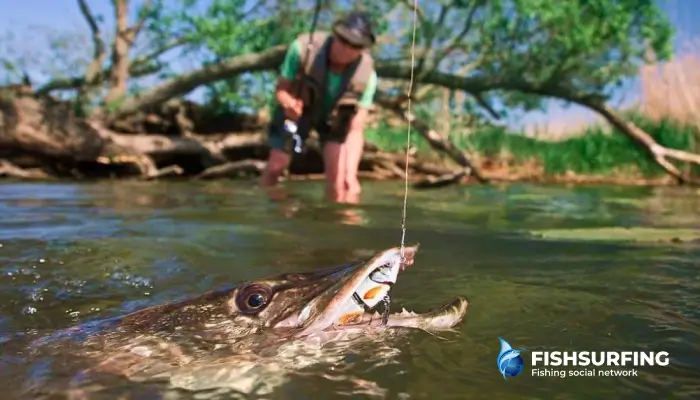
For spinning, surface lures such as poppers or stickbaits come into play. That feeling when a wave suddenly rises behind your lure, followed by an explosive strike accompanied by a loud splash, is an indescribable rush of adrenaline.
The most important rule of this type of fishing is to be as quiet and inconspicuous as possible. Fish near the surface are extremely wary, and any sudden movement on the bank or a careless stomp will immediately scare them away.
Zig rig for fishing in the water column
In summer, carp often spend most of the day in the water column, where they seek the ideal temperature and sufficient oxygen. In such moments, the classic method of placing the bait on the bottom usually fails completely, because the fish simply aren’t interested in food at deeper depths. This is where the zig rig method comes in, allowing you to present the bait at any depth.
Usually, a small piece of floating foam or a pop-up boilie is used on a very long leader. Don’t be afraid to experiment with the bait’s depth. Sometimes carp feed just a few dozen centimeters below the surface; other times, they stay exactly halfway down. On hot days, the zig rig is often the only way to get carp to bite.
Fast lure retrieval during summer trolling
Predators are full of energy in warm summer water and can reach incredible speeds. Unlike in spring or fall, you don’t have to be afraid to retrieve the lure aggressively and quickly. A fast-spinning spoon or a wobbler with a distinctive action creates strong reflections and vibrations beneath the surface that immediately provoke predators.
It often happens that a fish merely watches the lure curiously but doesn’t strike. In such a situation, paradoxically, the best approach is to speed up even more or jerk the lure sharply. This unexpected movement triggers the fish’s hunting instinct, which won’t let it let the prey get away. In short, in the summer, active fish require an active and brisk approach from the angler.
How to Properly Feed Fish During Hot Summer Days
The summer feeding strategy depends on the type of water and the fish population. Due to rapid digestion, fish consume enormous amounts of feed in the summer. However, this does not mean you should just throw feed into the water without thinking.
Attractiveness vs. Nutritional Value
In warm water, scents and oils spread much faster. Take advantage of this when choosing dips and boosters. Sweet and fruity flavors, which dominate in the summer, work great. If you’re targeting whitefish and smaller carp, feed using the “little and often” method to keep the school active without overfeeding them. If you’re after trophy fish, opt for high-quality boilies with a higher protein content, which fish seek out to replenish their energy.
How to Keep Lures and Bait in Good Condition
High temperatures aren’t just the enemy of fish, but also of your gear and baits. There’s nothing worse than discovering after two hours by the water that your maggots in the box have literally cooked or that the bait in the bucket has gone sour.
- Caring for live bait – Worms and earthworms require maximum attention in the summer. Never leave them in direct sunlight. Ideally, use insulated bags with cooling packs, or wrap the worm box in a wet cloth and place it in the shade. For maggots, it is essential that they have a sufficient amount of moist substrate.
- Storing feed and boilies – Moistened feed in a bucket in the sun will start to ferment incredibly quickly. Therefore, it’s better to prepare smaller batches of feed more often or cover the bucket with a wet towel. Watch out for mold on boilies in the summer – if you have fresh or frozen boilies, use breathable bags instead of sealed ones.
Differences Between Fishing in Rivers and Still Water in Summer
Fishing strategies differ dramatically depending on whether you’re standing on the shore of a calm lake or by a roaring river current. In summer, these differences are accentuated by water temperature and movement.
River Current as a Source of Oxygen
On rivers, the situation is a bit simpler in summer. Flowing water constantly mixes with rocks and the riverbed, ensuring a more stable oxygen level even on hot days. Fish are therefore more active here for a longer part of the day. Your target should be the so-called current line—that is, the main flow of water where oxygenation is strongest.
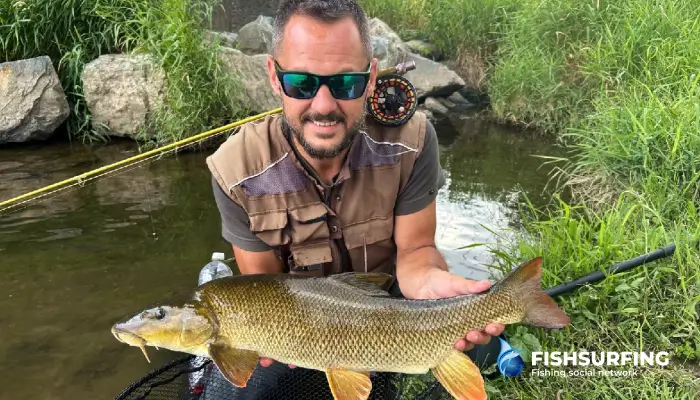
Large fish, such as barbel or chub, can be found in the fastest-flowing sections, where they stand behind rocks and wait for food that the current brings right to their noses. Near the banks in dense grass, look for pike, which take advantage of the shade provided by overhanging branches. On a river in summer, the rule is: where it flows and foams, there is life.
Thermocline and Water Stratification in Lakes
In still waters, a phenomenon called thermal stratification occurs in summer, where the water divides into layers. The upper layer is warm and heated by the sun, while the lower layer near the bottom may be cold but, paradoxically, oxygen-depleted due to decaying organic matter. Between them lies the so-called thermocline—a thin layer where the temperature changes and where fish most often congregate.
For anglers, this means that fishing near the bottom in the deepest parts of the reservoir can be completely unsuccessful in August, because the fish simply cannot breathe there. It is much better to look for fish in the water column or along the edges, where the bottom rises to mid-depths that are still sufficiently oxygenated by wind and waves.
The Phenomenon of Summer Storms and Barometric Pressure
Summer weather is unpredictable, and these very changes are crucial for anglers. Prolonged heat waves with no air movement dampen fish activity, but as soon as something starts to happen, your moment arrives.
The golden window before a storm
Air pressure usually drops sharply before an approaching summer storm. Fish are highly sensitive to this drop and often bite as if their lives depend on it. They want to feed before the water becomes murky and conditions change. This period may last only a few dozen minutes, but it is often the most productive time of the entire season.
However, as soon as the first lightning strikes and a heavy downpour begins, activity often stops abruptly. The fish retreat to safety and wait for the situation to calm down.
Fresh Water After the Rain
After a storm, when the air cools and fresh, oxygenated rainwater flows into the water, a second wave of activity begins. This is especially true on smaller rivers and streams.
The water washes insects, earthworms, and other food off the banks, so the fish leave their hiding spots and start actively scouting the area. At this point, lures with a strong scent trail or aggressively moving wobblers are very effective, as the fish can easily locate them even in slightly murky water.
Fishing Ethics and Care of the Catch in Hot Weather
As anglers, we must prioritize sustainability. High water temperatures combined with low oxygen levels place an enormous strain on a fish’s body, a strain that is further exacerbated during the fight with the angler. And without our help and careful handling, there is a risk that it will not recover. Our goal should therefore be not only to outwit the fish, but above all to return it to the water in such condition that it can continue to grow and bring joy to other anglers as well.
- Use gear that’s strong enough to help you keep the fight with the fish to an absolute minimum. This will prevent your catch from becoming dangerously exhausted in warm water.
- Have your measuring tape and camera ready before pulling the fish ashore. This minimizes the time your catch must spend in the hot air.
- Constantly pour fresh water from the fishing spot over the fish on the mat. This will prevent damage to the protective mucus layer and thermal shock that the fish faces from the hot surface of the mat.
- When releasing the fish, never just toss it back; instead, hold it in the water with its head facing upstream. Wait to release it until you feel it has enough strength to swim away on its own.
Remember that summer by the water isn’t just about the number of catches, but above all about the experience and respect for nature. Hot days require greater patience and responsibility from anglers, especially when handling exhausted fish.
However, if you learn to read the water, monitor barometric pressure, and take advantage of the magical hours around dawn and dusk, summer fishing spots will reward you with unforgettable battles with trophy fish in peak condition.