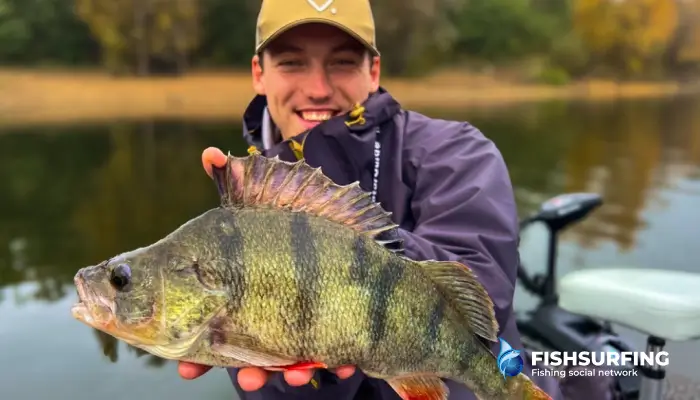


For many anglers, the river perch is the most popular game fish in our waters. It is feisty and beautiful, and even though it sometimes seems to strike at anything that moves in the water, it can also be incredibly moody and picky. It is precisely this unpredictability that makes lure fishing for perch a fascinating discipline. To be successful, an angler must understand not only where the fish is located, but above all what lure to choose for the perch at that moment and how to present it.
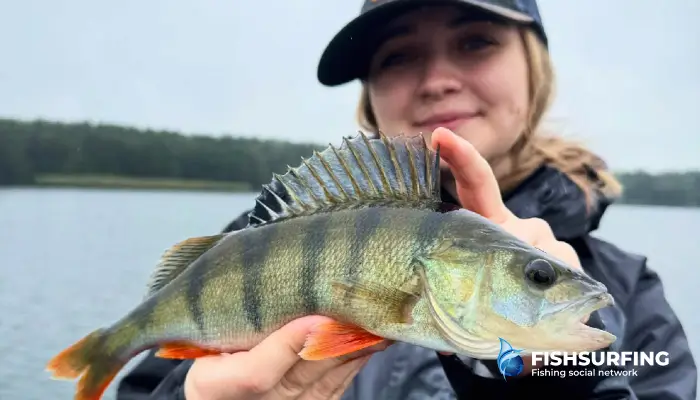
Why is the perch such a unique predator?
Before we dive into specific lure boxes, we need to understand the “psychology” of the perch. Unlike the pike, which often attacks from ambush, the perch is a persistent pursuer and a social creature. It hunts in schools, which plays into the angler’s hands—where there is one, there will be more.
Perch rely primarily on sight and their lateral line, which detects vibrations. This is a key factor in choosing a lure. It must either perfectly mimic natural prey (fry, crustaceans, insects) or provoke the predator enough with its aggressiveness that it attacks out of territorial instinct or sheer curiosity.
Rubber lures as a universal weapon for perch
If you were to take only one type of lure to the fishing spot, it would likely be rubber lures. Their versatility is unlimited, and they allow you to fish the entire water column from the surface all the way to the bottom.
Rippers and spoons for active fishing
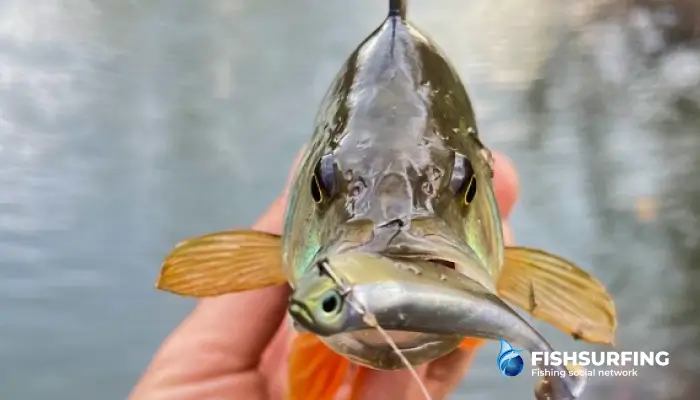
A ripper with a shovel-shaped tail is the foundation for actively seeking out fish thanks to the strong vibrations that perch can sense from a great distance. It works best during classic jigging near the bottom, where the strike comes on the drop, but you can also work it linearly through the water column when quickly covering the fishing spot.
If the fish are cautious, go for the slim version. It looks more natural, creates less resistance, and often convinces even experienced solitary fish that ignore classic jigs.
Twisters that won’t let you down in cold water
This seemingly outdated lure comes alive even with the slowest retrieve, making it the ideal weapon for cold water. The sickle-shaped tail teases lethargic perch even when they’re unwilling to chase faster prey. Twisters are also affordable and highly versatile. They are perfect for fishing spots with many obstacles where snags are common, and they work reliably on small and medium-sized fish.
Soft plastics and spoons can mimic injured prey
Lures without their own action require precise rod tip work but offer incredible effectiveness. They are irreplaceable for drop-shot or jigging, where they faithfully mimic a disoriented fish. It is precisely this uncoordinated movement and the ability to work the lure almost in place that act as magnets for trophy-sized perch. They see such a presentation as easy prey requiring minimal energy expenditure.
Crayfish and nymph imitations for trophy-sized fish
In waters where crustaceans are present, these lures are key for catching large perch. However, they require patience and very slow retrieval with long pauses on the bottom. Perch often strike precisely during moments of stillness, when the lure is just gently swaying in the current. This presentation appears far more convincing than a fluttering rubber lure and can outwit even the most experienced and cautious fish in the area.
Wobblers are the adrenaline-pumping choice for the discerning angler
While wobblers are a more expensive investment, their ability to provoke even lethargic fish into striking is legendary. For perch, we distinguish three main categories that should not be missing from your tackle box.
Twitchbaits and the magic of the pause
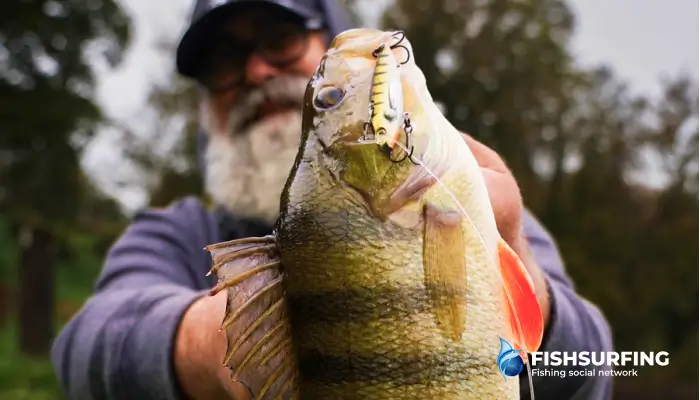
Slim twitchbaits come to life with short jerks of the rod tip. For perch, suspending models are the most successful. The moment you stop reeling, they stop in the water column and remain motionless. It is precisely this second of absolute stillness, when the lure is just floating there, that often triggers the perch to strike.
Crankbaits for quickly exploring depths
Bulky wobblers with large blades have an aggressive, wide action and dive deep on their own. They are ideal for fishing deeper areas near dam walls, in river channels, or along steep bottom breaks. Thanks to their strong vibrations, perch can sense them even when the lure is several meters away.
Surface poppers and stickbaits
Nothing beats the visual spectacle of a school of perch “churning” the water and attacking a surface lure. This technique is most successful during summer evenings when predators drive fry to the surface. The strikes are explosive, and often several follow in a single cast if the fish misses the first one.
Metal lures are old-school but still have a lot to offer
In the era of modern soft plastics, metal lures are somewhat overlooked, which is a strategic mistake. Spinners (sizes 00 to 2) emit specific hydroacoustic waves that soft plastics can never mimic. In murky water, go for fluorescent colors; in clear water, opt for copper or black with dots.
Jigspinners—a combination of a lead body and a spinner blade—are also becoming increasingly popular. Thanks to their weight, they allow for extremely long casts and quick exploration of the entire water column, even in strong currents.
Lure Colors for Perch
The question of color divides anglers into two camps. One claims that color doesn’t matter, while the other has 15 shades of green in their tackle box. The truth lies somewhere in between.
Perch are visual hunters. Their large eyes are adapted to detect even the slightest movement or glint that might signal easy prey. To choose the right color, you must realize that water acts as a filter. The deeper the lure sinks, the more the colors change and gradually fade.
Imitate or provoke?
When choosing a strategy, anglers usually fall into two camps:
- The first is imitation, i.e., the effort to mimic the color of natural prey (minnows, fry, crayfish) as closely as possible.
- The second is provocation, where colors are used that do not occur in nature but, due to their aggressiveness or UV component, trigger a reflexive attack in the bass driven by territorial instinct.
The key to success is correctly assessing the conditions you currently find yourself in. The following table will help you with this.
|
Conditions |
Recommended Colors |
Why? |
|---|---|---|
|
Crystal-clear water |
Motor oil, transparent with glitter, natural fish |
The fish has time to inspect the lure; it must not appear disruptive. |
|
Turbid water |
White, pearlescent, silver |
Good contrast against a dark background. |
|
Muddy or dirty water |
Chartreuse (bright yellow), orange, pink |
Colors that “glow” even in minimal light. |
|
Deep water (over 7 meters) |
UV-active colors |
At depth, colors fade, but the UV component remains visible. |
Modern rigs that will outsmart even experienced pros
In fishing spots where anglers come and go, perch learn incredibly fast. They often recognize the classic jig head like the back of their fins and see it as a warning signal. If you want to succeed even in such heavily fished waters, you need to change your approach and offer them something that doesn’t look like a trap.
Dropshot
The dropshot is great because the lure isn’t firmly attached to the weight. The lead sits on the bottom, while the lure is tied directly to the fluorocarbon line a little higher up. This means you can work the soft plastic in a single spot for a full minute at a time. All you need to do is gently twitch the rod tip without moving the weight.
For perch that hang out near bridge pilings, in sunken branches, or along the edges of the riverbed, this is irresistible. While a jig would just whiz past them, the dropshot lure, with its “dance,” keeps them on edge.
Carolina and Texas Rigs
These techniques came to us from trout fishing, but they work perfectly in our conditions as well. Their magic lies in the use of a sliding weight (often bullet-shaped) and an offset hook hidden inside the soft plastic body. Thanks to this, you can pull the lure right through the worst snags, fallen trees, or dense aquatic vegetation without getting snagged every few moments.
Additionally, the Carolina rig has the weight separated by a longer leader, which gives the lure incredible freedom. After the weight hits the bottom, the rubber jig sinks freely and naturally for a moment—which is precisely the moment when a strike from a large bass most often occurs.
Technique for Fishing for Bass
Having the best lures in your tackle box is a great start, but without the right movement, they’re just a piece of plastic or metal. So now let’s look at how to properly animate a lure in the water.
Perch are curious, but they also get nervous very quickly if something “doesn’t smell right” to them. Many beginners make the mistake of retrieving the lure in a monotonous, repetitive manner. If your soft plastic or wobbler swims at the same pace the whole time, the perch usually gets bored after a few meters and simply turns away.
Aggressive “shooting” for active fish
Especially with soft plastics on a jig head, the technique of two quick turns of the reel followed by a drop on a taut line works well. The lure must look like a fish fighting for its life and trying to escape.
The strike usually comes the moment the rubber lure begins to fall freely to the bottom after an aggressive start. This is a clear signal for the bass to attack. This method is most effective in warmer water, when fish are willing to actively chase the lure.
Slow twitching and “dying” on the bottom
With rigs like the Texas rig or a jig, don’t be afraid to let the lure sit on the bottom for a few seconds. A slight twitch of the rod tip is enough to make the rubber crayfish or nymph roll gently in place and stir up the sediment.
This method is absolutely crucial for catching large, experienced fish in winter or during periods of low activity. An old perch won’t waste energy on chases, but it won’t be able to resist something that looks like easy, half-dead prey right under its nose.
What gear to use for perch
You already have the perfect lures for perch, so let’s wrap up by discussing what gear you’ll need. Spinning for perch is all about finesse, so forget about heavy pike rods. To enjoy the fishing and, most importantly, to feel what’s happening on the other end of the line, you need the right gear.
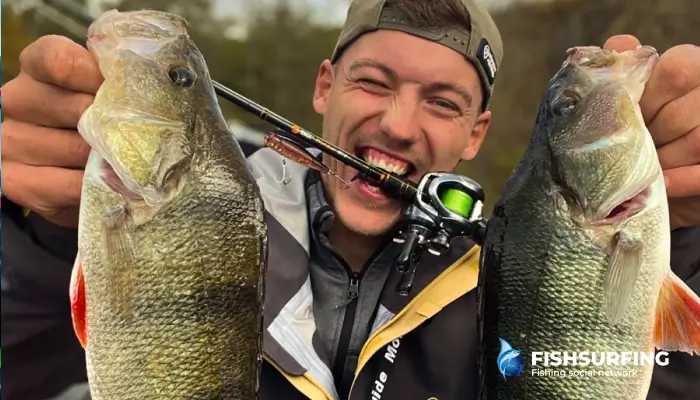
- Rod – The ideal length is around 2.1 to 2.4 meters with a weight rating of up to 7 or 10 grams. A rod with a glued-in tip will let you know even when a perch is just gently “nibbling” at the lure.
- Reel – A smaller model (size 1000–2500) with a precise drag is sufficient. Perch have delicate mouths, and during a sudden strike, you could rip the hook out if the drag doesn’t work smoothly.
- Line – A thin braided line (e.g., 0.06 mm) is essential. Thanks to its zero stretch, you have immediate contact with the lure. But don’t forget a fluorocarbon leader, which makes the line invisible and protects it from sharp rocks.
The quest for striped bandits never ends
Spinning for perch is one of the most beautiful fishing disciplines. It’s a constant game of cat and mouse, where details make all the difference—including the color of the tail, the weight of the jig head, or whether you let the lure sit on the bottom for a second longer. The best lure for perch doesn’t exist as a single specific product, but as the right choice for the given situation, water temperature, and the fish’s mood.
Whether you cast a modern rubber soft plastic on a Texas rig or stick with a classic spinnerbait, remember that the most important thing is the time spent by the water. Every unsuccessful cast teaches you something new about the fishing spot, and every perch you catch gives you experience that will truly take you to the next level.