


Fishing isn’t just about the best bait; above all, it’s about understanding the laws of nature. Fish are part of a complex ecosystem, and their activity depends directly on a wide range of external factors. Once you learn to read these signals, you’ll stop going to the water just to “try your luck” and start going with confidence.
The Influence of Time of Day on Fish Activity and Fishing Success
The daily cycle is the most basic guide for every angler. The alternation of light and darkness determines fish’s biological clocks, their need to feed, and their sense of safety. Generally speaking, the transitional phases of the day tend to be the most productive, but this isn’t a hard-and-fast rule for all fish species.
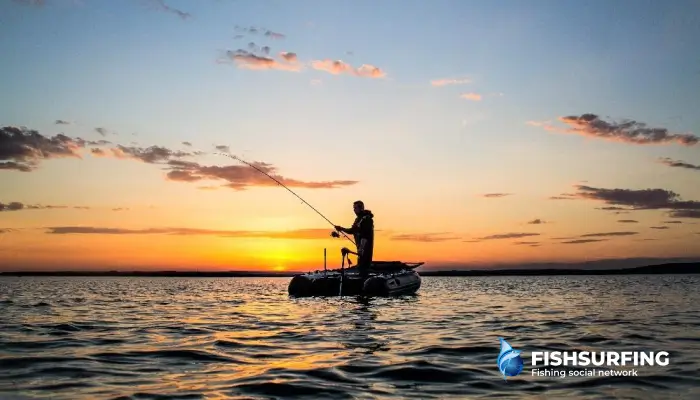
Magical Dawn and Morning Activity
The early morning hours are the favorite part of the day for many anglers thanks to nature waking up and high oxygen levels in the water. After a night when the water has cooled slightly, fish begin to move from the depths to shallower areas in search of food. At this time, fish tend to be less wary and more aggressive, which is especially true for predators that take advantage of poor light conditions to launch surprise attacks on fry.
The midday lull and specifics of daytime fishing
At midday, when the sun is at its highest and water temperatures rise, the activity of most fish naturally decreases. Fish retreat to the shade, deeper pools, or under overhanging banks, where they seek protection from direct light and predators. Fishing at midday requires patience and precise presentation of the lure directly into hiding spots, but it can be very successful for thermophilic fish such as grass carp or chub.
The Evening Peak and Dusk by the Water
The evening hours are often considered the peak of the day, when fish activity increases sharply again. As soon as the sun begins to set, fish lose their wariness and start feeding more intensely before the coming night. At this time, you can often observe ripples on the surface from feeding fish or the leaps of predators, which clearly indicate where the best fishing spot is at that moment.
Night Fishing and Catching Trophy Fish
Nighttime is one of the best times to catch the largest and most cautious fish, which won’t even approach the shore during the day. Under the cover of darkness, trophy carp, catfish, and walleye gather near the shores, taking advantage of the calm waters to feed undisturbed. Night fishing requires special equipment and a good knowledge of the fishing grounds, but the reward is often catches that daytime anglers can only dream of at that time.
How barometric pressure and weather changes affect fish behavior
Weather is probably the most discussed topic among anglers, and it’s no wonder. Fish perceive changes in pressure and temperature much more sensitively than humans thanks to their swim bladders and lateral lines. While stable weather is pleasant for anglers, for fish it can mean monotony that fails to stimulate their activity.
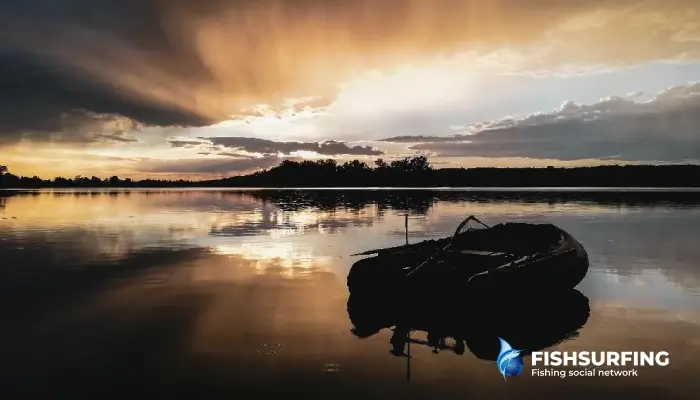
When planning a fishing trip, keep an eye on the barometer, as it is often the key to whether the fish will keep their mouths shut or bite on every cast.
- Stable and slightly falling pressure is usually the best time for fishing, as the fish feel comfortable and actively seek food.
- A sharp rise in pressure usually signals the end of activity, and in such cases, fish often retreat to the bottom and stop feeding.
- Before a storm arrives, there is a significant drop in pressure, which triggers an instinctive urge in many fish to feed quickly.
- Overcast skies and light rain are ideal for catching predators, as they reduce visibility and fish are much less wary in such conditions.
- Wind blowing toward your shore is a great sign, as it carries food and warmer water, and fish naturally follow it.
The ideal season for fishing different species
Each season requires a different approach to timing your fishing, as water temperature directly affects fish metabolism. In winter, everything slows down, while in summer, fish need a huge amount of energy. Understanding seasonality will help you choose the right fishing spot and the right target fish for the given month.
Spring awakening and the search for the first food
Spring is a season of hope for anglers, when the water begins to warm up and fish awaken to activity after a long winter. The best time for fishing is usually sunny afternoons, when the shallows are warmest and the fish gather there for their first natural food. It is the ideal time to fish for whitefish, tench, and carp, which are preparing for the upcoming spawning season and need to build up their strength.
Summer Heat and Fishing Strategies in Warm Water
In summer, fishing becomes a game of hide-and-seek with high temperatures and low oxygen levels. The best results come early in the morning, late in the evening, or at night, when the water is most oxygenated. During the day, it pays to focus on areas with flowing water, rapids, or tributaries, where fish activity is higher than in stagnant reservoirs due to the constant mixing of the water.
Autumn Feasting Before Winter Hibernation
Autumn is considered by many experts to be the absolute best time of year for fishing. As water temperatures drop, fish know that winter is approaching and begin to feed intensively to build up fat reserves. Autumn days with a gentle breeze and overcast skies are ideal for catching trophy carp and predators, which are in peak condition during this period.
Winter Patience and Fishing in Ice Holes or Open Water
In winter, fishing is all about minimalism and immense patience, as the fish’s metabolism slows to a minimum. Paradoxically, the best time for winter fishing is between 11 a.m. and 3 p.m., when light intensity is highest and the water may be a fraction of a degree warmer. Bites tend to be very subtle, and fish feed only for a very short time, so it’s crucial to catch exactly the right window of activity.
Solunary Theory and the Influence of Lunar Phases on Fish Activity
Many anglers swear by the so-called solunar theory, which links the movement of the moon and sun to animal activity. Although it may seem like quackery, scientific studies confirm that the moon’s gravitational pull affects not only ocean tides but also the behavior of freshwater fish. The moon affects tiny plankton and aquatic insects, which in turn triggers the food chain for larger fish.
Full Moon and New Moon as Key Points of Activity
Experienced anglers know that the period around the full moon and new moon tends to be either a slump or, conversely, extremely successful. During a full moon, the night is brighter, allowing predators to hunt more effectively for longer periods, which can result in lower activity during the following day. The new moon, on the other hand, brings absolute darkness, when fish rely more on their sense of smell and lateral line.
Solunar calendars work with so-called primary and secondary activity periods, which last several hours a day. If these periods coincide with dawn or dusk, the chances of landing the catch of a lifetime multiply.
The influence of water flow and water level on successful fishing in rivers
In flowing waters, the current hydrological situation plays a crucial role. While the water level in a reservoir is relatively stable, a river is a living organism that reacts to precipitation throughout the entire watershed. If you want to know when to head out to the river, you need to monitor water levels and flow rates, which are now easily accessible via mobile apps (such as the official ČHMÚ+ app).
Fishing During Rising and Falling Water
Generally speaking, the beginning of a rising water level is absolutely ideal for fishing. The water begins to cloud slightly and washes new food from the banks, which triggers the fish to feed intensively. At this point, they lose their natural wariness and often take lures they would ignore in clear water.
However, once the water is very high and “murky,” activity drops because the fish have trouble visually locating the lure. Conversely, the phase when the water begins to slowly recede and clear up is again an excellent time to fish for predators, which take advantage of the residual turbidity to hunt for fry.
Ideal fishing times for specific fish species
Every fish has its own biorhythm, and what works for carp may not work for zander. If you specialize in a specific species, you must plan your outings according to their biological preferences and habits, which change with water temperature and light intensity.
When to go after trophy carp and grass carp
Carp are most active at night and early in the morning during the summer, when the water temperature remains at a comfortable level. In the spring and fall, however, their peak activity shifts to the warmer parts of the day, specifically between 10 a.m. and 4 p.m.
Grasper carp are unique in this regard—they love the sun and warmth. The best time to fish for grasper carp is therefore often right at noon, when these fish “sunbathe” near the surface or under overhanging branches and actively seek out plant-based food.
The right time to fish for zander and pike
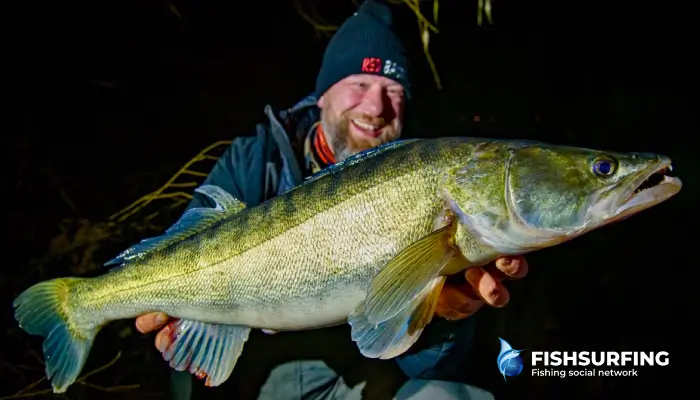
The zander is a typical “twilight” hunter. Its eyes are extremely sensitive to light, so the best time to fish for it is the so-called “golden hour”—that is, the short period just before and just after sunset.
Pike, on the other hand, are diurnal predators that rely on their eyesight. Most pike strikes occur during changes in light conditions, such as when the sky suddenly clouds over or it begins to rain lightly. Pike love days with low cloud cover, when their prey has a harder time seeing their silhouette against the bright water surface.
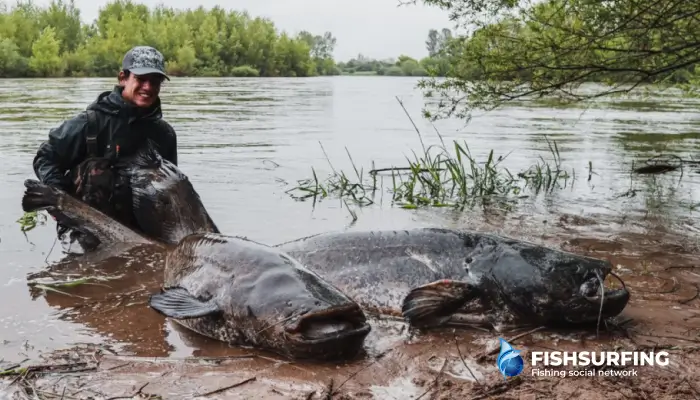
Catfish Fishing During Warm Nights and Thunderstorms
The northern catfish is the king of summer nights, and its activity is directly linked to water temperature. The best time to fish for it begins at dusk and lasts until the early morning hours, when catfish leave their deep holes and head out to hunt in the shallows or near the surface.
Summer thunderstorms are the absolute highlight. When the air becomes charged with electricity and the pressure begins to drop sharply, catfish often fall into a “feeding frenzy” and strike very aggressively even during the day. If you see a heavy downpour approaching, that’s the best moment to have your lure in the water.
Timing Perch Fishing During the Shift Between Light and Shadow
While the river perch is active throughout the day, it has clearly defined peak periods. As a visual predator, the perch loves the early morning dawn and the twilight of early evening, when schools of fry gather near the surface. At these times, you can observe what is known as “boiling water,” which is an unmistakable sign that the perch are actively hunting.
On sunny days, their activity shifts to shaded areas under bridges, overhanging branches, or deep pools, where they wait for prey, sheltered from direct sunlight.
The Magical Morning Hours for Catching Cautious Tench
For many anglers, the common tench is a symbol of patience, and its feeding patterns are very specific. You have the best chance of success very early in the morning, often even before the sun rises. At this time, tench leave their hiding spots in dense vegetation and head out to muddy shallows in search of food, which is revealed by tiny chains of bubbles rising to the surface.
As soon as the sun hits the water’s surface, tench activity usually drops sharply, and they retreat back into the impenetrable vegetation, where they spend the rest of the day in peace.
Activity of chub and barbel in the currents during the day
If you head to the river, the biorhythm of barbel and chub may surprise you. The chub is active practically all the time and loves sunny days, when it gathers insects from the surface or hunts in rapids, showing the greatest activity during the afternoon.
The common barbel, on the other hand, is a stream fish that feeds most intensively in the early evening and at night, but its “window” also opens after rain, when the river water becomes slightly turbid. At such times, barbel lose their wariness and actively forage along the bottom even in full daylight.
Keeping a fishing log as a way to discover the best times
Although there is plenty of general advice, every fishing spot is unique. What works at one reservoir may be completely different at a neighboring pond. The best way to find out when the perfect time for fishing is in your area is to keep a detailed fishing log. It’s not about complicated paperwork, but about collecting valuable data that will save you hundreds of hours of sitting idly by the water in a few years.
In your log, record not only your catches but, above all, the surrounding conditions:
- The exact time of the bite and the time of day
- Current air and water temperature
- Atmospheric pressure (rising, falling, stable)
- Wind direction and strength
- The phase of the moon and water clarity
Over time, you’ll notice that certain situations repeat themselves. You might find that on your favorite stretch of river, the biggest fish always bite two days after rain, when the water level drops by ten centimeters. This personal experience is unique to you and makes you a true expert on that particular stretch of water.
Finding the ideal time to fish is a lifelong process of learning and observing nature. There is no single universal time that guarantees success for everyone, everywhere. However, if you combine your knowledge of daily cycles with current weather conditions and barometric pressure, your chances of success will increase dramatically. Fishing is beautiful precisely because of its unpredictability, but with the information you’ve just gained, you’ll understand this unpredictability much better.