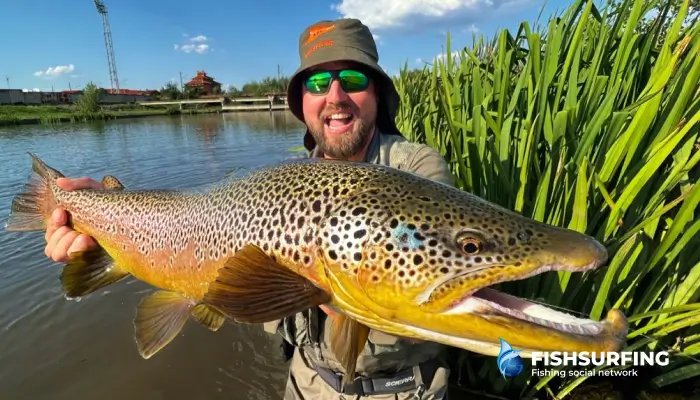


Choosing the right bait is one of the most important things in fishing. You can have the perfect spot, good equipment, and ideal weather, but if you don't offer the fish what it's looking for at that moment, you won't get a bite. Fortunately, choosing baits and lures doesn't have to be as complicated as it may seem. All you need to do is understand a few basic principles and know what works for specific species of fish. And that's exactly what we'll explain in this article.

Bait vs. lure: a quick clarification of terms
In fishing, we commonly talk about bait and lures. And although the two terms are often confused and interchanged, each refers to something slightly different. So let's start by clarifying them:
- Bait is used to attract fish to the fishing spot. Typically, it is food that keeps the fish in the area where you are fishing.
- Lure is what you have directly on the hook. That is, what the fish actually bites on.
It is important to realize that one usually does not work without the other. The fish must first swim to the spot and only then decide what to take into its mouth. In this article, we will therefore focus mainly on the selection of lures according to individual fish species, because they are the ones that determine the bite itself. At the same time, we will always mention the role of bait and feeding, without which the fish would often not even stay in the fishing spot.
Basic types of fishing lures (and when to use them)
Before we move on to specific fish species, it is useful to have a basic overview of lures. Not so that you know everything that exists, but so that you know when it makes sense to go for a simple classic and when to go for a more targeted solution.
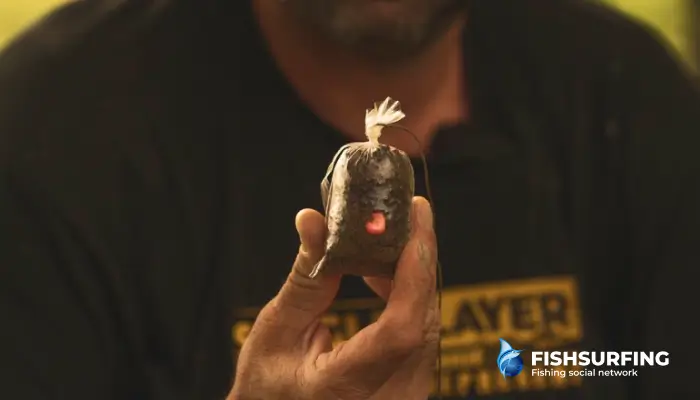
Natural lures: reliability in sensitive conditions
Natural lures are based on the natural food of fish, which is why they work reliably across different fishing grounds and seasons. They often save the day at the water's edge, even when the fish are biting cautiously or just "tasting."
Typical examples are worms, roach, maggots, corn, dough, or bread. Their main advantage is their natural smell and structure, to which fish react instinctively, without hesitation.
Best suited for:
- for beginners
- for cold water
- for areas with higher fishing pressure
- on days when fish are very hesitant to bite
Artificial lures: when you want to control your fishing more
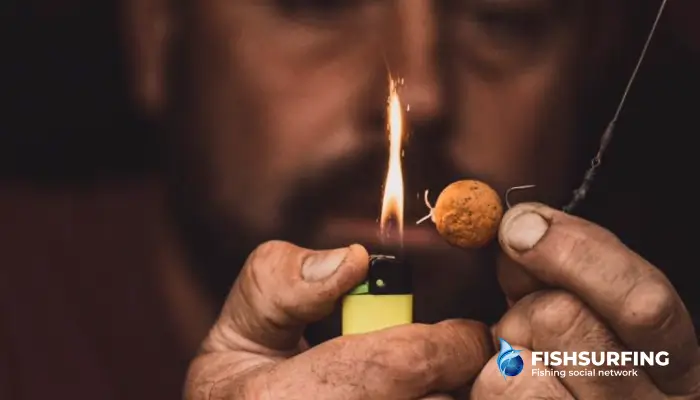
Artificial lures give you more control over what you offer the fish. You can choose the size, color, buoyancy, and behavior of the lure, allowing you to target specific species or larger fish. These mainly include boilies, pellets, pop-up lures, but also artificial lures for predators, such as rubber lures, wobblers, or spinners.
They work best:
- when targeting carp or predators
- in warmer water
- on longer trips
- when you want to limit bites from smaller fish
Lure and bait: how they work together
In practice, a combination of both is most often used. Baiting helps attract fish and keep them in place, while the lure on the hook determines the bite itself.
One cannot really do without the other. The same lure may work great one day and not at all the next if the rest of the puzzle, such as location, depth, fish activity, or amount of feeding, does not fit. The lure is the final impulse, but it must be given a chance to work.
How to choose lures (and bait) according to the type of fish
Each species of fish behaves differently, feeds differently, and reacts differently to what you offer it. Therefore, there is no one "miracle" lure that works everywhere and always. However, once you understand how a given fish thinks and why it bites, choosing a lure (and possibly bait) suddenly becomes much easier and more logical.
Carp: when the whole puzzle matters
Carp fishing is characterized by the fact that the lure on the hook never works entirely on its own. Carp usually move around in an area that they gradually map out, and if they like a particular spot, they stay there longer. That is why feeding is so often used when fishing for carp.
Lures for carp
Boilies, pellets, corn, or dough are most commonly used on hooks. However, it is not just about what you use, but how it fits into the whole. Smaller, inconspicuous bait often works better in colder water or in heavily fished areas where fish are cautious. On the other hand, in summer and during longer fishing trips, you can afford to use larger, more selective bait, which will limit bites from small fish.
Bait for carp
Feeding (bait) has a clear purpose for carp: to keep the fish in place, not to feed it. A little is enough, such as a few pellets, a handful of corn, or a few boilies. If the feed and the lure "match," the carp has no reason to be suspicious, and the bite will come much easier.
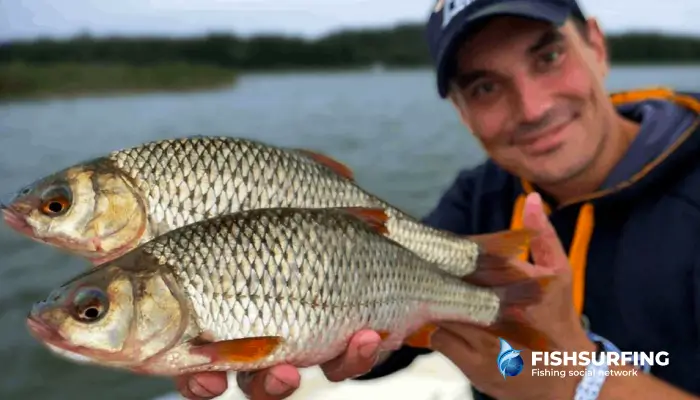
Bream, roach, and white fish: regularity and delicacy are key
With white fish, the secret to success lies mainly in the details. These fish bite often, but very cautiously, and as soon as something is wrong, they quickly disappear from the spot. This is where feeding is of great importance.
Lures for white fish
Lures tend to be simple: worms, maggots, corn, or small pellets. Often, the usual classics win, especially when the fish are just "tasting." Hook size and natural presentation play a big role. Too large a lure or a hard leader can completely stop the bites.
Bait for white fish
Feeding is basically a necessity for white fish. It's not about feeding the fish, but creating a point of interest that they will return to. A fine feed mixture, an appropriate amount, and regular casting often make a bigger difference than changing the bait.
Predators: movement is more important than taste
With predatory fish, it's all about the bait, movement, and reaction. Feeding is pointless in this case. Predators are not driven by hunger, but by instinct: they attack when something looks like prey.
Lures for predators
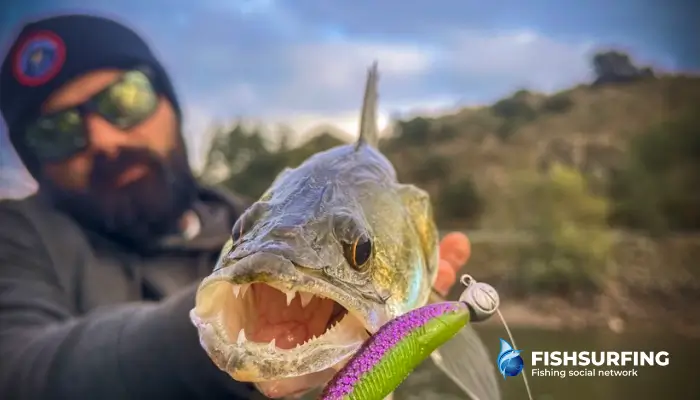
The choice of lure depends mainly on the type of fish and the conditions. Perch respond to smaller, livelier lures, zander often prefer slow movement near the bottom, and pike like larger bites. However, more important than the type of lure itself is how it is moved, the speed, pauses, and depth.
Trout and grayling: naturalness above all else
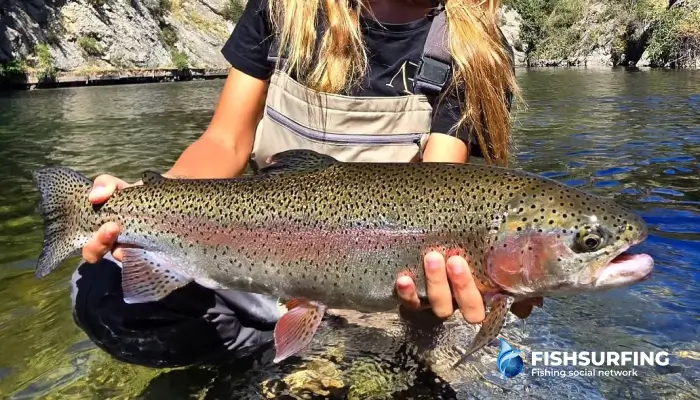
With salmonids, it's all about how believably the lure fits into the environment. These fish are extremely sensitive to movement, shadows, and line resistance. Bait is not used with them, as it could scare them away rather than attract them.
Lures for trout
When fishing for trout or grayling, fly fishing makes sense because it can mimic natural food almost perfectly. In colder water, trout feed at the bottom, so nymphs work well, while in summer it is time for dry flies and surface feeding. The same applies to spinning: smaller, inconspicuous lures and a natural action are more important than bright colors.
Catfish: strong lure, right spot
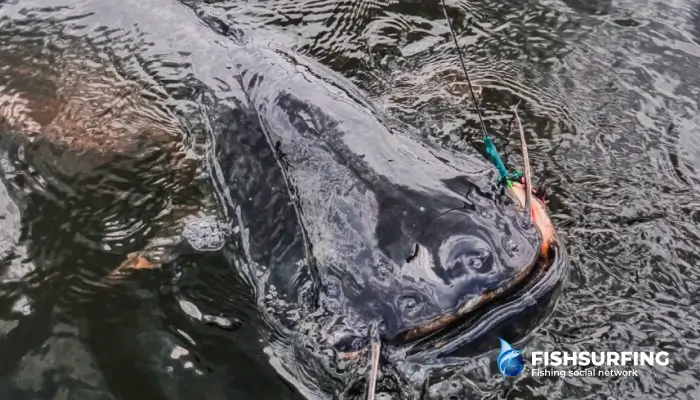
Catfish are unique in that they respond mainly to smell, vibration, and bite size. That is why distinctive lures such as fish, roach, leeches, or bundles of worms are used.
The bait itself usually plays no role here. Catfish move along their routes between their hiding places and hunting grounds, and if you offer them the right bait, they will bite. If not, no amount of feeding will save the day. With catfish, location and timing are the most important factors.
Lures according to the season
What fish bite on changes significantly throughout the year, as do water temperature, available food, and their activity. If you match your bait to the season, you will save yourself a lot of wasted hours by the water.
Spring: a cautious start to the season
In spring, the water gradually warms up and the fish slowly start to move after winter. However, their metabolism is still slow, they bite cautiously and often only take smaller bites.
- White fish and carp respond best to smaller, natural baits such as worms, maggots, small pieces of corn, or fine pellets.
- Predators often stay at the bottom or in calmer areas. Smaller rubber lures, slow retrieval, and inconspicuous colors work well for them.
Summer: activity and selection
Fish are active in warm water, but they also have plenty of food. This means more bites, but also greater selectivity. In summer, don't be afraid to switch and test different lures, as fish react quickly to changes.
- Carp and bream respond well to corn, pellets, boilies, and combinations thereof. In warmer water, you can use larger lures.
- Predators hunt more aggressively. Wobblers, spinners, larger rubber lures, and often more distinctive colors work well for them.
- In summer, trout mainly bite in the morning and evening, when dry flies or light spinning are effective.
Autumn: time for bigger bites
Autumn is a time when fish feed intensively and prepare for winter. Activity is high, but also more targeted. This season favors those who are not afraid to increase the size of their bait and focus on quality fish rather than quantity.
- Carp often take more nutritious and larger lures, such as boilies, larger pellets, and combinations with meat components.
- Predators are in top condition. Larger lures work best, with slower but pronounced movement. Try a wobbler, large rubber lure, or dead fish.
Winter: subtlety is key
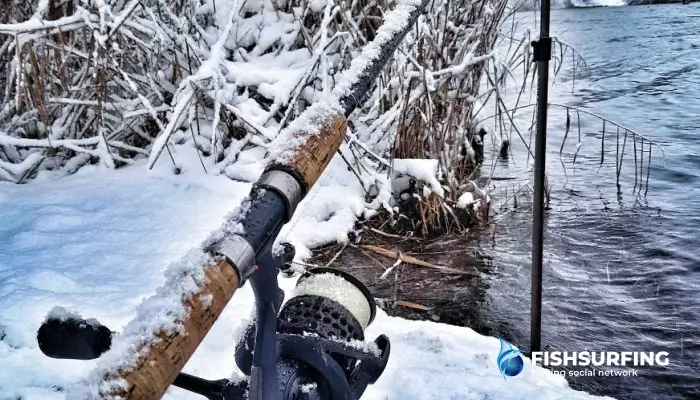
In cold water, fish conserve their energy. This does not mean that they do not hunt, but they react much more selectively. The rule here is: less movement, less feeding, maximum patience.
- White fish are mainly attracted to animal lures. That means worms, maggots, small bites.
- Predators often stay at the bottom and take slowly led rubber lures or dead fish.
- Large, distinctive lures usually do not work (with the exception of techniques targeting large predators).
How to tell if your lure isn't working
Just because the lure isn't "working" doesn't mean you won't catch anything. Fish often give you signals that you're close, but not quite right. Once you learn to read them, you'll save yourself a lot of blind waiting.
There is activity in the water, but not for you
You see fish on the surface, schools, white fish moving, others catching... but your rod is silent. This usually means that the fish are there, but they are not interested in your lure (whether it is the size, color, type, or presentation). At that moment, it makes sense to change the lure, not the spot.
Only "taps" or cautious touches
This is typical mainly for feeder, float, or carp fishing. The bite shows up, but the fish does not take the bait fully. This often means that:
- the bait is too big
- it has an unnatural shape
- or it is suspicious to the fish
Try a smaller version, a different combination (e.g., worm + corn instead of corn alone) or a finer hook.
Long wait without a single bite
If you are in a proven spot, the weather is reasonable, the bait is right, and yet nothing happens for 30-60 minutes, it is very often a sign that the bait does not suit the current mood of the fish. Especially with active techniques (spinning, feeder), it is better to react sooner rather than later.
Only small fish are biting, larger ones are not showing up
You may be familiar with this: the tip is constantly moving, the bait is disappearing, but only small fish end up in the landing net. Larger fish are somewhere nearby, but they are not biting. This usually means that the bait is too tempting and easy for small fish. Large carp or bream don't even have time to notice it because smaller fish eat it first.
At such times, it helps to make the bait more selective. Increase the size of the bite, choose a harder option, or switch to bait that is less appealing to small fish. Try larger pellets, boilies, or a combination that smaller fish won't dare to touch. This will often reduce the number of bites, but you'll get the ones you want.
What to take to the water
The right bait is not about having a box full of options, but knowing when and why to reach for which one. When the fish are biting, almost anything works. But when they are cautious, details such as the size of the bait, movement, structure, or timing of the change are decisive. The more you perceive bait as a tool rather than a miracle, the more often you will get bites that are not just a matter of chance. And it is these that will take you further as an angler.