


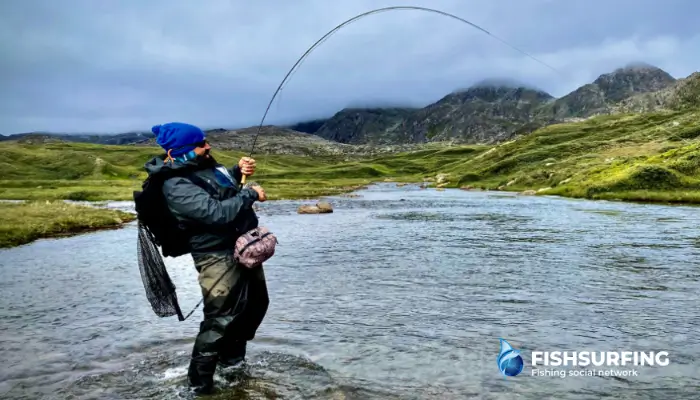
Choosing the right fly is the cornerstone of successful fly fishing. In this article, we’ll take a detailed look at when to rely on the visual appeal of a dry fly, when to effectively fish the bottom with a nymph, and when to use an aggressive streamer for large river predators. We’ll teach you how to read subtle signals on the surface and in the current so you can react quickly to the fish’s current activity and the conditions at the water’s edge.
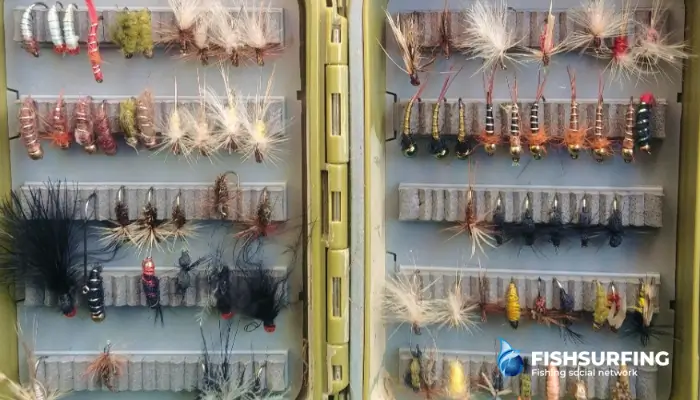
Dry Fly: When Fish Are Looking Up
For many anglers, dry fly fishing is the most beautiful part of fly fishing. The fly floats on the surface; you can see it the whole time, and the strike happens right before your eyes. That’s exactly why dry fly fishing is so addictive. It works when fish are feeding on the surface or just below it and reacting to adult insects.
Drag-free drift as the foundation of success
The basic principle is to mimic an adult insect that is either just leaving the water’s surface or has fallen onto it from the surrounding vegetation. For your efforts to be successful, the fly must behave completely naturally on the surface.
This is where the most important rule of this technique comes into play: the so-called drag-free drift. In practice, this means that the fly must drift with the current completely freely, without the line or leader pulling or slowing it down in any unnatural way. As soon as the fly begins to “plow” through the surface and create ripples behind it, a more experienced fish will immediately recognize the trick and lose interest in the lure.
When to Use a Dry Fly
There are clear signs that indicate fish are currently feeding at the surface and your chances of success are high. Reach for a dry fly in these situations:
- Visible fish activity on the surface—If you see the typical ripples or fish leaping on the water, that’s the clearest signal to use a dry fly. The fish are actively searching for food on the surface, and ignoring this signal would be a mistake.
- Massive insect hatches – If mayflies, caddisflies, or other aquatic insects are flying around you and the surface is literally dotted with them, a dry fly is clearly the number one choice.
- Calmer trout waters – On smaller streams and in calm, meandering stretches where you have room for a subtle presentation, the elegance of a dry fly shines through best.
- Summer evenings by the water – The typical “evening rise” is a legendary time for the dry fly. As the light fades and the air cools, the activity of both insects and fish at the surface often spikes sharply.
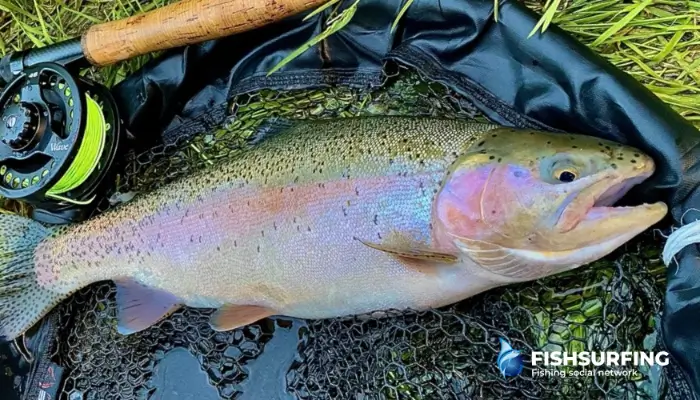
Situations Where Dry Flies Tend to Fail
If the fish aren’t feeding, the surface is dead, and you see no interest in insects on the surface, there’s no point in sticking with a dry fly just because it’s beautiful. Similarly, dry flies tend to be less effective in higher or murky water, when fish are more likely to take bait lower down and focus on what the current brings them beneath the surface.
Nymph fishing and the secrets of fishing below the surface
While a dry fly is visual poetry, nymph fishing represents the most practical—and often the most effective—path to success in fly fishing. The statistics speak for themselves—fish consume up to 80% of their food below the water’s surface in the form of insect larvae and developmental stages. A nymph is therefore a safe bet when nothing is happening on the surface and trout or grayling are holding near the bottom.
The basic principle of this method is to get the artificial fly to the correct depth and guide it with the current so that it precisely mimics the movement of natural prey. With nymphs, depth, drift control, and the ability to quickly recognize a strike are often the deciding factors.
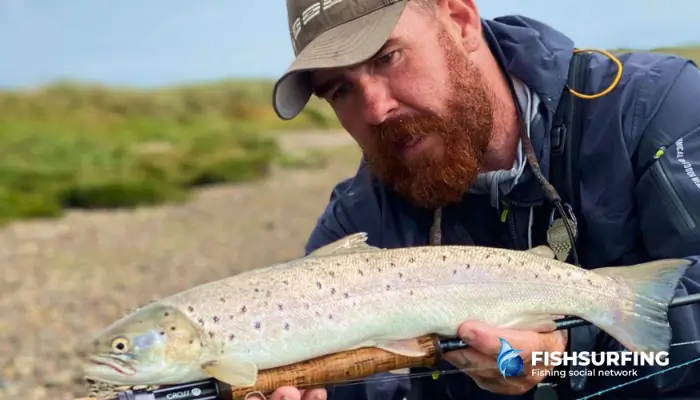
When Is the Best Time to Fish with a Nymph?
The nymph is a very versatile tool that can save a fishing trip when other techniques fail. There are several typical situations where nymph fishing should be your first choice.
- A surface showing no signs of activity – If you see no feeding and the fish clearly show no interest in insects on the surface, a nymph is the logical solution. The fish are feeding near the bottom, where they pick up larvae carried by the current.
- Cooler or murky water – In early spring, late fall, or after rains, when the water is cold and less clear, fish are reluctant to rise to the surface. They need the fly to be presented directly into their field of vision.
- Fast currents and deep pools—In areas where the current is too strong for a dry fly to float, a nymph, with its weight (often thanks to a tungsten head), is ideal for exploring deeper pockets and edges.
- Systematic exploration of the fishing area – When you arrive at unfamiliar waters, a nymph allows you to “check out” the bottom and determine where the fish are holding much faster than any other technique.
What to Watch Out for with Nymphs
Beginners often make two mistakes: they either fish too high or guide the nymph unnaturally. If the fly doesn’t reach deep enough, it will miss the prime strike zone. And if the current pulls it unnaturally or you lose contact with it, you’ll easily miss a strike. With nymphs, proper presentation is often more important than the fly pattern itself.
Streamers for active fishing and enticing larger fish
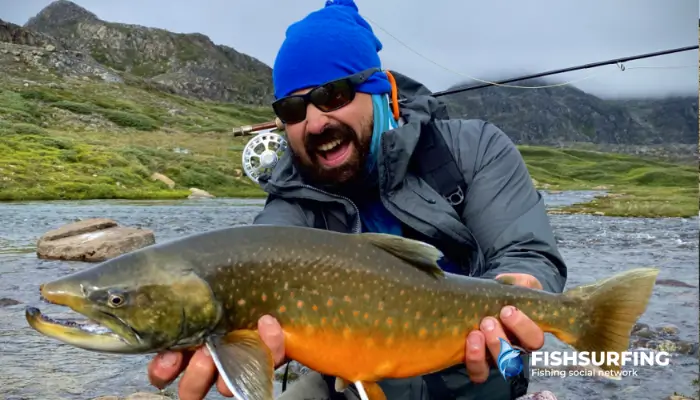
While dry flies and nymphs aim to mimic small insects as accurately as possible, streamers represent a completely different philosophy in the world of fly fishing. It’s “heavy artillery” that doesn’t imitate larvae or mayflies, but focuses on larger and more nutritious bites. Streamers mimic small fish, leeches, crayfish, or even larger insects and mice.
The main difference lies in how the fish reacts to the lure. With a streamer, it’s not just about deceiving the fish with a faithful replica of its food, but often about pure provocation and triggering an attack reflex. A predator that would let a tiny nymph float by unnoticed will often attack an aggressively presented, brightly colored streamer simply because it’s intruding on its territory or looks like easy prey in a tight spot.
When to Use a Streamer
There are situations where subtle techniques are practically unusable, and a streamer becomes your only chance for success. A typical example is high, murky water—such as after rain. In such conditions, fish have difficulty seeing, and small flies are easily lost in the murky current. A large, dark, or—conversely—reflective streamer creates stronger vibrations and is much easier for predators to detect.
You should also reach for a streamer when you want to actively search a large area of water. This technique allows you to cover much more ground than nymphing under the rod tip. It’s the ideal choice for large river pools or lakes where you need to actively seek out fish.
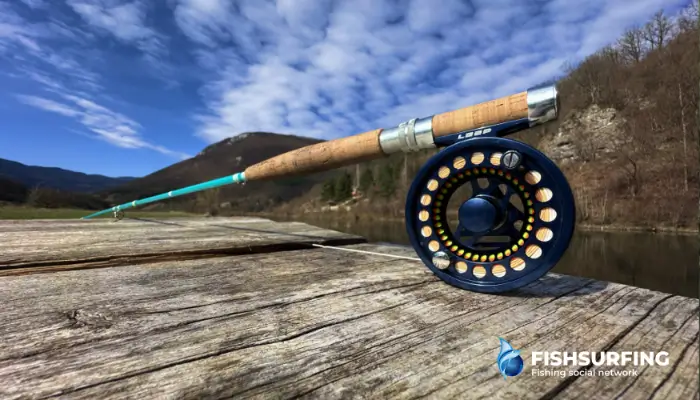
Technique for Retrieving and Animating a Streamer
Unlike a dry fly, where we aim for the smoothest possible drift, a streamer requires constant action from the angler. You animate the lure using a technique called “stripping”—that is, pulling the line in with your free hand in short or longer bursts. It is precisely the change in rhythm, occasional pauses, and sudden accelerations that make the lure appear realistic in the water. The streamer then acts like a disoriented or injured fish, which is an irresistible signal to predators.
You can fish at various depths within the water column. Sometimes it works to retrieve the streamer just below the surface with quick movements; other times, you need to let it sink all the way to the bottom and then lift it with slow, jerky movements.
When a Streamer Isn’t Ideal
Despite its high effectiveness, the streamer has its limits. If you arrive at the water and see that trout are gently and regularly skimming small insects from the surface, the impact of a large streamer can be too disruptive. Similarly, on small streams with very clear water and cautious fish, a streamer can signal the fish to take immediate cover.
How to Choose Between a Dry Fly, a Nymph, and a Streamer
The simplest and most effective rule you can adopt as a fly fisherman is this: first, watch the water closely, and only then reach into your box for a specific fly. Many beginners and even advanced anglers make the mistake of arriving at the river with a preconceived idea of how they’ll fish that day. But the reality beneath the surface is ever-changing, and the fish may be feeding in a completely different way than you planned at home. A successful fly fisherman is, above all, a keen observer who can decipher subtle signals on the surface and in the current.
- If the fish are feeding on the surface, start with a dry fly.
- If nothing is happening on the surface but the water looks “lively” and it makes sense to fish below it, reach for a nymph.
- If you want to cover more water, attract a larger fish, or the fish aren’t responding to a more subtle presentation, try a streamer.
Don’t be stubborn
One of the biggest pitfalls in fly fishing is being too loyal to a single method. If one approach isn’t working for a long time, the problem often isn’t that the fish in the area “aren’t biting.” The problem is that you’re presenting the fly in the wrong water column or in a way that doesn’t match their current feeding window.
Many anglers spend hours futilely casting dry flies on the surface, while the fish are a meter below and actively feeding on nymphs. So don’t be afraid to experiment and switch techniques. If nothing happens with the nymph within fifteen minutes, try changing the depth or switch to a streamer.
Fly fishing isn’t just about casting; it’s a constant dialogue with nature. The sooner you learn to listen to what the water is telling you, the faster you’ll see the results that are the reason you spend your time by the water.