


Good fishing etiquette isn’t a sign of excessive politeness or needless adherence to rules. Rather, it’s proof that you take fishing seriously and understand that the water doesn’t belong just to you, but also to other people, nature, and the fish themselves. And that’s exactly what turns an ordinary angler into a truly good one.
What exactly is fishing etiquette?
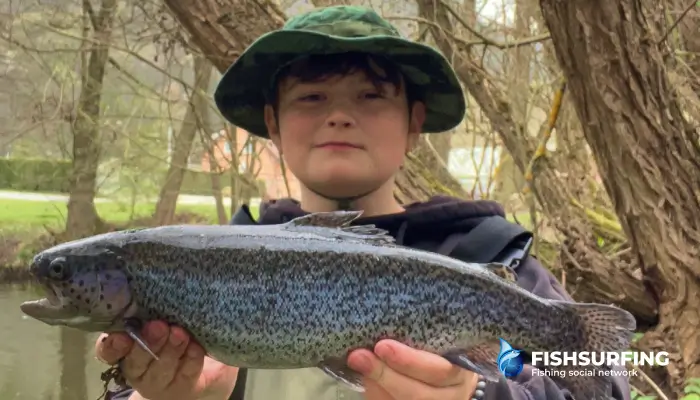
Fishing etiquette is a set of unwritten yet entirely practical rules that ensure time spent by the water proceeds without unnecessary conflicts or damage. It’s not just about politeness in the ordinary sense of the word, but about your overall approach to fishing. It involves respect for the fishing grounds, consideration for other anglers, treating fish with care, and the ability to read the situation and behave in a way that ensures your presence by the water doesn’t cause problems for anyone else.
Why simply following fishing regulations isn’t enough
While many things are regulated by fishing regulations or local rules, etiquette goes a step further. It doesn’t just tell you what you must do. It also tells you what you should do. In other words, how to behave so that fishing remains a pleasant, fair, and sustainable sport.
Moreover, right by the water, you can very quickly see the difference between a fisherman who thinks only of himself and one who considers the bigger picture. For the former, it’s enough that they’re fishing according to the rules; they don’t worry about the rest. The latter also considers whether they’re causing unnecessary disturbance, damaging the shore, harming the fish more than necessary, and whether they’ll leave the spot in worse condition than they found it.
Respect for the water begins even before the first cast
Water etiquette doesn’t start the moment a fish bites. It starts much earlier—upon arrival at the fishing spot and when choosing a location.
Don’t drive where you’re not supposed to
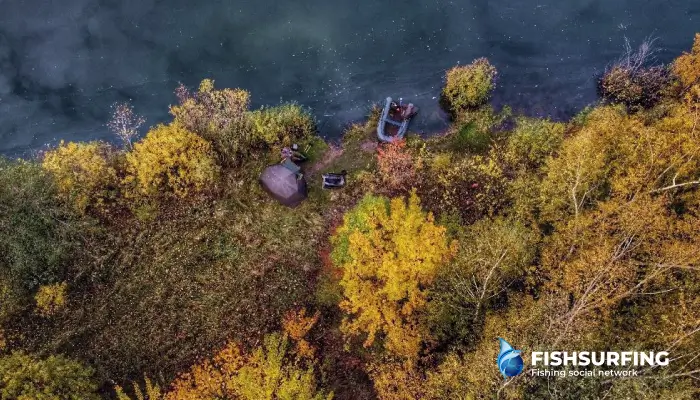
One common mistake is trying to drive as close to the water as possible, even when it’s clear the area isn’t meant for cars. Rutted paths, damaged bank edges, or muddy access points aren’t just unsightly. They actually damage the fishing area’s surroundings and often make access harder for others.
Unless access is explicitly permitted or commonly used, it’s better to park further away and walk the rest of the way. It’s not always convenient, but this kind of consideration makes a big difference.
Don’t take up space you don’t need
Some anglers tend to set up their gear in a way that takes up much more of the bank than they actually need. This may not be a problem in an empty fishing spot, but in a busier area, it can easily create tension. Especially when it’s clear that there’s room for someone else nearby.
The basic rule is simple: take up only as much space as you really need, and no more. Other anglers have come to the water for the same reason as you.
How to Treat Other Anglers
Fishing is supposed to be a peaceful activity. Yet it is precisely among anglers that unnecessary friction sometimes arises—friction that has nothing to do with the fish, but rather with a lack of respect. Often these aren’t major conflicts, but rather minor annoyances that keep happening: someone sits too close, someone makes unnecessary noise, or someone casts into someone else’s fishing spot.
Maintain a reasonable distance
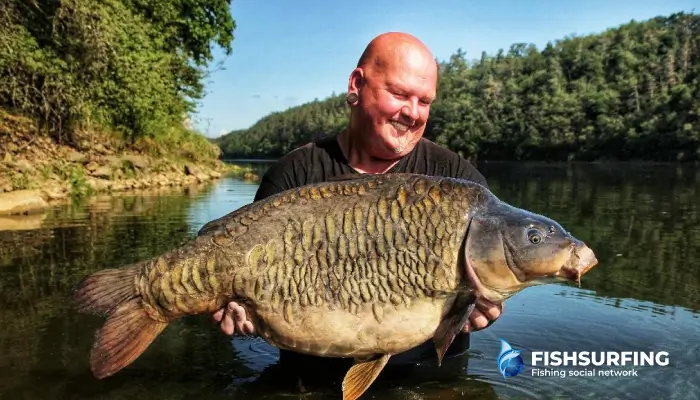
If you arrive at the water and see a fellow angler who has already cast out, it is automatically assumed that he is the one who chose the spot first. It is polite to sit far enough away so that you do not interfere with each other’s casting and so that you do not “steal” fish from each other’s feeding spots.
- On a river, try to maintain a distance of at least 30–50 meters, if the terrain allows. If you must get closer, it’s polite to ask: “Hello, would it be okay if I sat a little upstream from you?” You’ll usually get permission and even find out if the fish are biting.
- On still water, it’s more complicated because rods are often fanned out. Never cast across another angler’s lines. If you see someone fishing “at a distance,” don’t drive your boat or bait boat directly in front of their rods.
Reserving a Spot
In fishing etiquette, there is no such thing as “I’ve reserved this spot.” If you or your gear are not physically present at the spot (in accordance with the rules), the spot is open. Leaving just an empty chair on the bank and driving away for five hours is not only against the rules but also against common decency.
Do not cast across someone else’s fishing spot
This is a basic fishing rule that should go without saying. If someone is fishing in a specific area, it is not okay to cast over them, retrieve your lure through their zone, or get in the way of their fishing line. This applies to feeder fishing, carp fishing, and spinning.
If you’re not sure whether you’ll be in each other’s way, a quick chat is all it takes. Most situations can be easily resolved in under a minute if both anglers behave courteously.
Keep it quiet, even when you’re outdoors
One of the most common mistakes is the feeling that, since you’re out in nature, loud music, loud conversations, or shouting across half the fishing spot doesn’t matter. But by the water, silence is part of the atmosphere. Not everyone wants to listen to other people’s phone calls, speakers, or loud commentary on every cast all day long.
Moreover, noise bothers not only people but often the fish themselves, especially in smaller and quieter waters. Just because you’re having a good time doesn’t mean everyone around you feels the same way.
Fishing Etiquette
A large part of fishing etiquette concerns the fish themselves. Whether you’re a “catch and release” advocate or occasionally take a fish home for dinner, respect for living creatures is the cornerstone of fishing etiquette. A fish isn’t an object; it’s a partner in our game.
Reel in the fish sensibly
It is sometimes said that a longer fight makes for a better experience. But from the fish’s perspective, it is mainly more stress and greater exhaustion. Unnecessarily prolonged fighting, especially in warm water, significantly weakens the fish and can reduce its chances of survival after release.
This doesn’t mean reeling the fish in by force at any cost. It means using gear that suits the target fish and the situation, and not trying to unnecessarily prolong the fight. A gentle approach often means a quick and sure fight.
Land the fish safely and calmly
The landing net is not a formality, but an important part of gentle handling. Trying to force the fish onto the bank, lifting it by the leader, or dragging it over rocks is unnecessary and rough. Especially with larger fish, such behavior can result in injuries to the mouth, fins, or slime coat.
Once the fish is near the shore, try to get it into the landing net calmly and without fuss. The less stress and handling, the better.
Have everything ready in advance
One of the golden rules is to prepare whatever you can in advance: a mat, fish pliers, a measuring tape, a camera, and nippers. There’s nothing worse than having a fish on the bank and only then starting to frantically search for where everything is.
The fish should spend as little time as possible out of the water. When you have everything at hand, you can handle unhooking, a quick photo, and releasing the fish much more calmly and safely.
Catch and release doesn’t mean “catch and do whatever you want”
The catch-and-release method is now a common part of modern fishing. But on its own, it’s not automatically a guarantee of being gentle. A lot depends on how it’s done. You can release a fish back into the water while causing it unnecessary stress or injury beforehand.
Wet hands and gentle handling
A fish’s protective slime is essential; it protects it from infection and damage. That is precisely why anglers should handle fish with wet hands whenever possible, or with the help of a damp pad. Dry hands, rough handling, or placing the fish on dust, dirt, or a hot surface are unnecessarily harmful.
Photos are fine, but take them quickly and sensibly
Taking a photo of your catch is now a natural part of fishing. Most anglers want to document a nice fish, and that’s fine. The problem arises when the photo session takes too long, you lift the fish several times, set it down, and reposition it, or when you handle it clumsily just to get a better shot.
Only release the fish when it’s ready
Returning the fish to the water shouldn’t be just a mechanical “I’ll toss it back and that’s it.” If the fish is tired, it needs a moment to recover. Hold it in the water, ideally in a natural position, and wait until it regains the strength to swim away on its own. This is especially important in the summer and after a long fight.
If you keep the fish, do it right
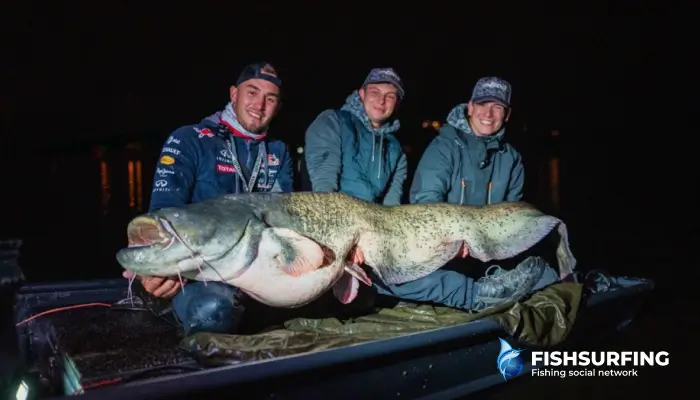
Water ethics aren’t just about catch and release. If you take a fish in accordance with the rules and for your own consumption, there’s nothing wrong with that. But it’s important that everything is done with dignity and without unnecessary suffering.
Don’t let the fish suffocate on the shore or in a net for no good reason. If you’ve decided to keep it, it should be killed quickly and properly. An ethical angler can be recognized by how they treat the fish they take home, not just the ones they release.
Tidiness by the water isn’t a bonus—it’s a must
Cleanliness is perhaps the most visible aspect of fishing etiquette. And at the same time, it is one of the things people complain about most often. No wonder. Discarded fishing lines, lure packaging, cigarette butts, cans, or food scraps are exactly the things that tarnish the public’s image of anglers the most.
Take out what you bring in
This should be automatic. If you bring something to the water, take it back with you. And this applies even to things that look “innocent.” For example, line scraps, rubber bands, hook wrappers, or leftover bait.
Fishing lines are especially dangerous because birds and other animals can get tangled in them. Yet it takes so little: just carry a small trash bag and toss everything into it as you go.
If you can, pick up a little extra
It’s not a requirement, but it’s a wonderful habit. Many considerate anglers occasionally pick up trash that they didn’t leave behind. Not because they feel responsible for it, but because they know that the water is a shared space and that small acts like these make a big difference.
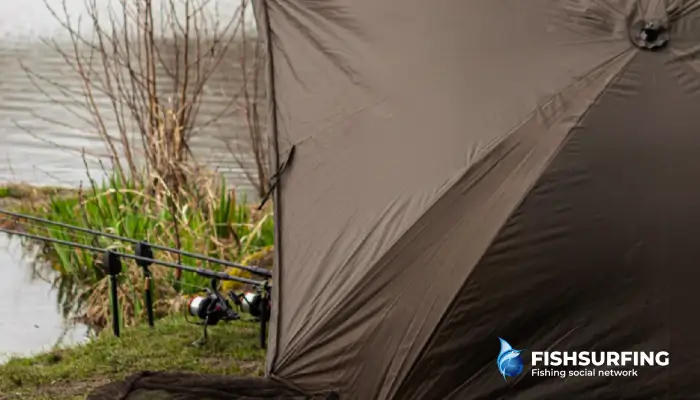
Etiquette on social media and in the online community
Today, fishing etiquette doesn’t end at the shore. A large part of fishing life has moved online. Photos of catches, sharing spots, comments in the community, or reviews of fishing spots have a huge impact on how anglers think and how they inspire one another.
Don’t share everything without thinking
This is the most sensitive topic. If you find a forgotten backwater or a small club-managed fishing spot where you landed the catch of a lifetime, think carefully about who you want to share it with.
Not every fishing spot can handle the same level of attention. For some smaller or more sensitive waters, sharing locations too precisely can lead to excessive pressure and a rapid deterioration of conditions. Online etiquette, therefore, also means thinking a bit about what and how you post.
Sharing your experience is fine. But you don’t have to immediately post exact GPS coordinates or take photos that clearly show which tree you’re sitting by.
Be fair in your comments
Just as by the water, basic courtesy applies online. Mocking beginners, condescending comments, or unnecessary conflicts do not help the fishing community. On the contrary. It makes much more sense to share experiences, offer advice, or point out mistakes in a normal and objective manner.
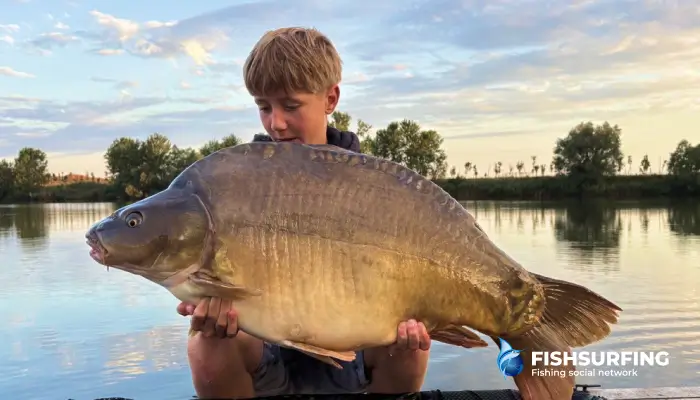
A good angler isn’t just a successful one
One of the beautiful things about fishing is that it teaches you more than just fishing techniques. It teaches patience, observation, respect, and a connection to nature. And fishing etiquette is one of the best proofs that all of this truly belongs by the water.
A good angler isn’t just recognized by how many fish they catch or how big a catch they share in a photo. They’re also recognized by how they behave when no one is watching. Whether they clean up after themselves. Whether they release the fish quickly and gently. Whether they respect others and whether they leave the water in good condition.