


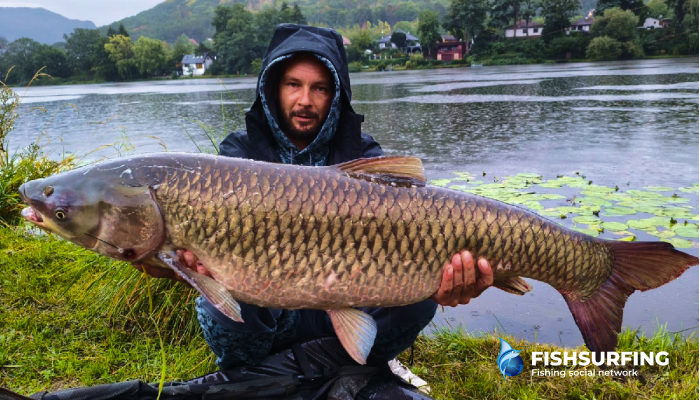
The Amur carp can remain inconspicuous near the water’s surface for a long time and then, in a matter of seconds, make a strike that you’ll never forget. It thrives best in warmer water, and plants make up a large part of its diet. If you want to target it specifically, it’s a good idea to adjust your fishing spot, bait, and feeding strategy accordingly.
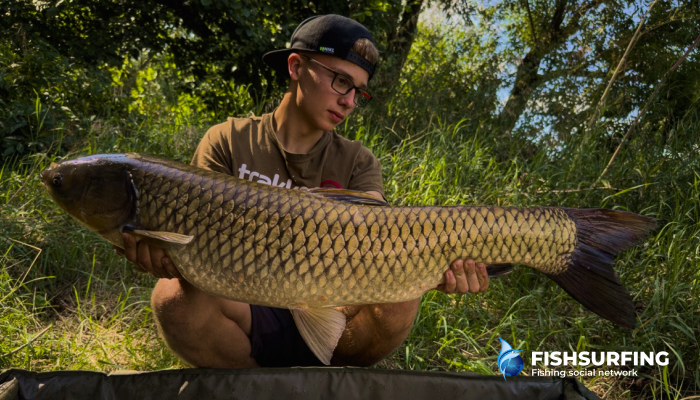
The Amur is not just a “long carp”
Although the white amur belongs to the carp family and is often fished with equipment similar to that used for carp, its behavior is different. It is strongly oriented toward a plant-based diet and thrives in still or slow-moving waters with vegetation.
Food is one of the main clues when fishing specifically for them. Grass carp may move around reeds, grasses, water lilies, and other vegetation, but they also frequent spots where they regularly come to feed. Unlike carp, which find a large portion of their food on the bottom, under the right conditions you may also find grass carp high in the water column or right at the surface.
That’s why it’s not enough to simply copy carp fishing tactics. While you’ll use some of the same gear and rigs, finding the fish and choosing the right bait require a different approach.
When to Go After Grass Carp
The best season comes with warm water. Grass carp activity typically increases from late spring and peaks during the summer. They can also be caught well in early fall, provided the water remains warm enough.
Summer is the prime season for grass carp
On hot days, grass carp may swim through shallow areas, stay near reeds, or show themselves just below the surface. Sometimes you’ll even see them during the day, when other fish tend to be less active.
When fishing in the summer heat, therefore, you don’t have to wait just for the morning or evening. If you see fish moving on the water, react to what’s happening at that very moment.
Pay close attention to:
- the movement of reeds and aquatic plants
- long, dark silhouettes just below the surface
- water swirls in shallow areas
- regular patterns of fish movement along the shore
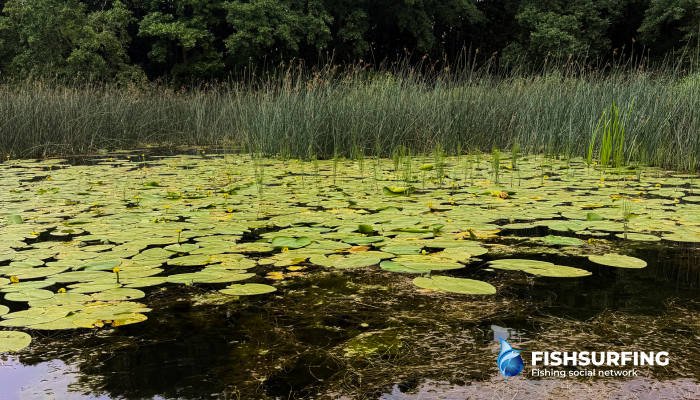
As the water cools, grass carp become less active
In spring and fall, fishing tends to be slower. Grass carp feed less and often retreat to calmer or deeper spots.
Under such conditions, use less bait and spend more time searching for fish. Just as when fishing in cold water, it’s not a good idea to automatically assume that the fish will come to a large amount of bait.
Where to Look for Grass Carp
Grass carp can often be spotted visually. Before setting up your entire fishing spot, walk along the bank and watch the water for a while. In smaller, clearer waters, you can actually see the fish; in larger bodies of water, their movement around the vegetation will give them away.
Edges of Aquatic Plants
Reed beds, water lilies, grassy banks, and other vegetation are among the first spots worth checking out. Grass carp find food here and often swim through these areas regularly.
However, casting directly into the middle of dense vegetation is risky. Once hooked, a large fish can disappear into the plants within a few seconds. It’s usually better to target a clear spot right next to the vegetation, from where you have a chance to guide it into open water.
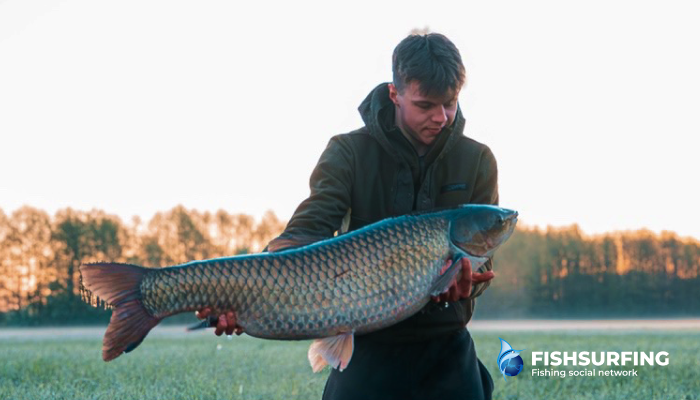
Shallow Areas and Warm Coves
In the summer, grass carp often appear in shallow, warm water. A calm cove, a sun-warmed shallow, or a strip of water along the reeds can be much more productive than the deep parts of the fishing area. In clear water, you can sometimes even trace the exact route that the fish repeatedly follow.
Islands, promontories, and regular routes
The grass carp isn’t a fish that stays in one spot all day. It may circle between deeper water, vegetation, and areas where it finds food. If you spot it several times on the same route, place your lure right there. It’s not necessary to cast directly in front of the fish you’re currently seeing. On the contrary, a sudden impact of the rig can scare it away.
What the grass carp bites on
The grass carp has a distinctly plant-based diet, but you can use various types of bait when fishing for them. The best choice varies depending on the water, the season, and what the fish are accustomed to.
Corn
Corn is one of the simplest baits for grass carp. It’s sweet, flavorful, and you can use it on the hook or as groundbait.
You can string several kernels on a leader to create a larger bite that’s more resistant to small fish. Both canned and cooked corn work well.
A can is enough for a short fishing trip. If you want to feed a larger amount, it’s more practical to prepare dry corn in advance by soaking and boiling it.
Fruit
Grass carp often respond well to fruit as well. Cherries, plums, mirabelle plums, and other sweeter fruits are commonly used.
They work best in places where fish commonly encounter them. A tree growing right above the water can be a very good indicator. If fruit falls beneath it regularly, grass carp will easily remember such a spot.
Boilies and Pellets
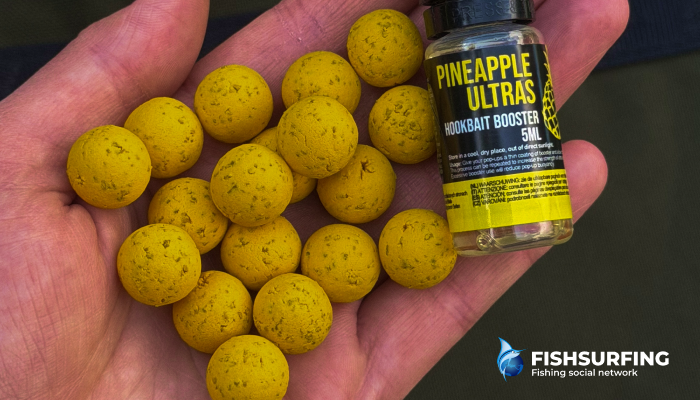
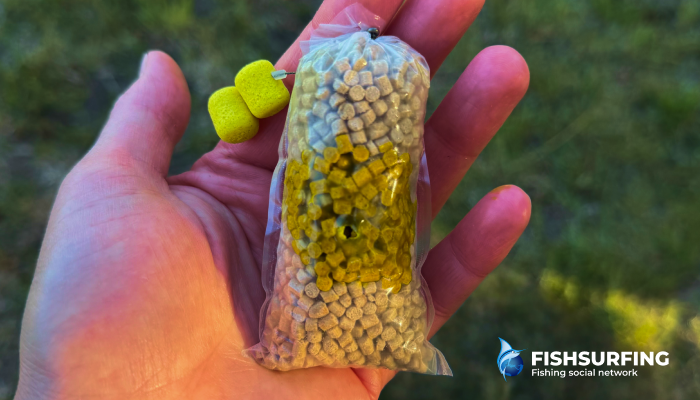
Grass carp can also be caught using boilies or pellets. Sweeter, fruity, or plant-based varieties are often used.
However, it’s not necessary to look for a special product intended exclusively for grass carp. In fishing spots where anglers regularly feed carp pellets and boilies, grass carp may respond well to standard baits as well.
Bread and floating baits
If the fish are near the surface, try presenting the bait near the top. A piece of bread, a floating pellet, or other light bait can make for a very exciting catch, as you can often see the bite right away.
The key is a discreet approach and a natural presentation of the bait. Large grass carp in clear water are cautious. A sudden movement, a shadow across the surface, or a noisy cast can send the entire school scattering.
What Rig to Use for Grass Carp
If you already have carp fishing gear at home, you can safely use most of it for grass carp as well. You’ll need a sturdy rod, a reliable reel, and a setup that can safely handle a sudden, powerful strike.
The leader must be strong
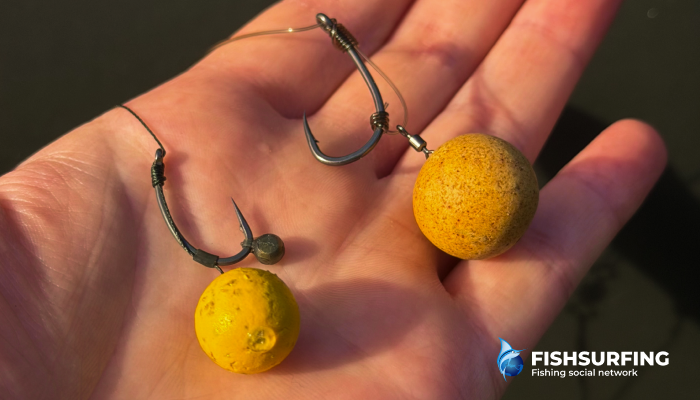
While it’s tempting to use a very fine leader in clear water, a large grass carp can quickly test such a weak spot. Moreover, if you’re fishing near reeds, water lilies, or submerged obstacles, you’ll need some extra strength. The leader should be inconspicuous enough, yet strong enough to allow you to make quick contact with the fish once it strikes.
Choose your hook based on the bait
A single kernel of corn, a few kernels on a hair rig, or larger boilies naturally require different hook sizes. Therefore, there is no such thing as a single universal “grouper hook size.” It’s much better to follow the proven ratio between the bait itself, the chosen hook, and the size of the expected fish.
Grass Carp with a Feeder
In smaller and medium-sized still waters, you can also successfully catch grass carp using a feeder. A major advantage here is the ability to feed with absolute precision, allowing you to present corn, small pellets, or other small bites exactly where the fish are currently swimming.
Be aware, however, that grass carp can exert incomparably more force than bream or common carp. A lighter feeder rig therefore requires a precisely adjusted drag and, most importantly, enough free line for the fight itself. If you hook a fish just a few meters from dense reeds, you’ll run into them very quickly with gear that’s too light.
What a Bite and the Fight with a Grass Carp Look Like
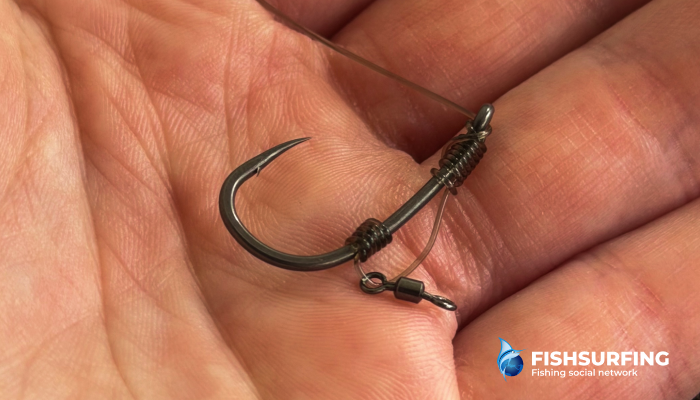
The bite itself is sometimes surprisingly subtle, but as soon as you set the hook, the situation changes dramatically. Grass carp are known for their long and extremely violent runs.
If the fish is heading toward open water, don’t try to stop it immediately with brute force. Instead, let the rod do its job and rely on a properly adjusted reel drag.
However, completely different rules apply near snags. There, you must react instantly and try to turn the grass carp around before it relentlessly dashes into the reeds or under sunken branches.
Be careful during the final meters near the shore
The grass carp is notorious for being able to pull off one more unexpected and massive surge even after a long fight. And most often, it does this precisely at the moment when it seems to be lying resignedly at the surface and you’re reaching for the landing net with relief.
So don’t rush it unnecessarily. As long as the fish is still actively thrashing or turning to make another escape attempt, it simply isn’t ready to be netted. Always have a large enough net ready and guide the grass carp into it smoothly, head first. Above all, never try to chase it chaotically across the surface with the landing net.
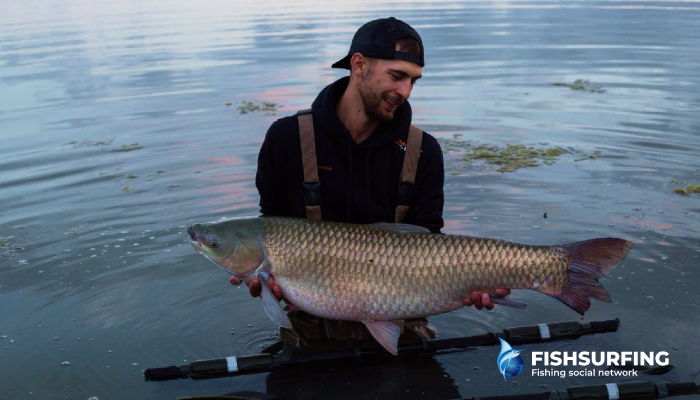
Find the fish first, then cast
When targeting grass carp, simply observing the water is often the key. Watch the reeds, the edges of vegetation, sunlit shallows, and the routes the fish naturally travel. Once you figure out where they’re currently hanging out, you won’t need to come up with any complicated rigs. Plain corn, pellets, boilies, or bait offered directly from the surface will be more than enough.
The most important thing is to place the bait quietly in the right spot, avoid spooking the fish with unnecessary noise on the bank, and have your entire rig perfectly prepared for that lightning-fast first strike. For large grass carp, this initial strike is the crucial moment that determines who will have the upper hand in the ensuing battle.