


The basic principle of feeder fishing remains the same everywhere, but fishing in a river differs significantly from fishing in still water. While on a calm pond, precision, a delicate rig, and careful bait feeding are key, on a river, the current dictates the rules. Let’s take a look at the main differences in tactics so that you always know exactly which strategy and gear to choose for the given conditions when you’re by the water.
The fundamental difference is determined by the strength of the current
The most fundamental difference between fishing on a river and in still water is the current itself. While in a pond or reservoir, loose bait essentially stays exactly where you cast it, in flowing water it is immediately washed out of the feeder and carried along the bottom.
This seemingly simple fact affects absolutely everything—from the need to choose a heavier feeder and a stickier bait mixture, to the correct leader length and casting frequency, all the way to where the fish will ultimately find your bait.
Feeder Fishing in Still Water
Still water tends to be more forgiving for beginners. There’s no constant battle against the current, the feeder rests steadily on the bottom, and it’s much easier to control the accuracy of your casts. But that certainly doesn’t mean you can just cast haphazardly.
Where to Look for Fish
In ponds, sand pits, or reservoirs, look for spots where fish naturally gather or regularly pass through in search of food. Terrain breaks, riverbed edges, clear gaps among aquatic vegetation, and the tight edges of reed beds work great. Always adjust your choice of fishing spot to the season—while in spring fish are attracted to shallower, faster-warming areas, in the sweltering summer they tend to seek refuge in cooler depths.
In still water, accuracy is absolutely essential for success. If each feed drop lands in a different spot, you’ll unnecessarily scatter the fish over a vast area, and bites will be more a matter of chance. Pick out a fixed landmark on the opposite bank and mark the distance by clipping the line on the reel. This is the only way to create a single, concentrated, and highly attractive feeding spot.
The Right Feeding Strategy
The absence of current allows you to use finer, more active baits that start working immediately upon hitting the bottom. If you’re targeting bream, roach, or crucian carp, you’ll appreciate bait that continuously releases small particles and creates an enticing cloud that keeps the school in place.
When fishing for carp or larger specimens, it’s necessary to add a coarser component to the feed—such as corn, pellets, or worms. But always remember the rule that less is sometimes more. Especially in smaller fishing spots, you can easily overfeed the fish with reckless and excessive baiting.
A More Delicate Rig and Working with the Leader
In calm waters, you can afford to make your entire setup significantly lighter. Lighter feeders and the most sensitive tips—which reliably detect even the most cautious bites—will suffice. In still water, you can successfully use both the classic running feeder and the highly effective method feeder.
The key is to constantly adjust the length of the leader. If the fish are lethargic and the bites are very subtle and weak, it often helps to lengthen and thin out the leader. Conversely, with strong and fast bites, or if the fish are taking the bait too deep, shortening the leader is the ideal solution. This ensures a faster and more secure hookset.
Feeder Fishing on a River
A river is a much more dynamic and technically demanding environment. The relentless current constantly interacts with the feeder, the leader, and the bait itself. That’s precisely why you have to think much more carefully about exactly where you’re casting and the path the bait will take after it hits the bottom.
Where to Look for Fish in a River
It usually doesn’t make sense to look for fish in the strongest current. Schools gather in spots where the water naturally carries food to them, but where they also don’t have to waste energy fighting the current. Focus on the edges of the current, calmer “eddies” next to the main channel, obstacles and boulders that slow the current, outflows from pools, or sections below weirs where the turbulent water gradually loses its force.
It’s essential to work with the fact that the food doesn’t stay in one place. If you cast into faster-moving water, the washed-out particles will create a feeding trail several meters long. Logically, the fish then gather downstream of the impact point—not directly beneath it—and thus often encounter the lure further downstream.
Specifics of River Feeding
In flowing water, you need a significantly heavier and stickier mixture. A light and airy mix would immediately disperse high in the water column, and the current would carry it far away from your fishing spot. Adding heavy fishing clay and coarser ingredients, such as hard pellets, corn, or meat worms, works very well. The mix must sink safely to the bottom and only then begin to break down gradually.
The consistency of the feed is always dictated by the strength of the current. In slower-moving sections, a standard feeder mix will suffice, but in strong currents, you’ll need to use a highly sticky mix that can withstand the water pressure.
Feeders and the Right Weight
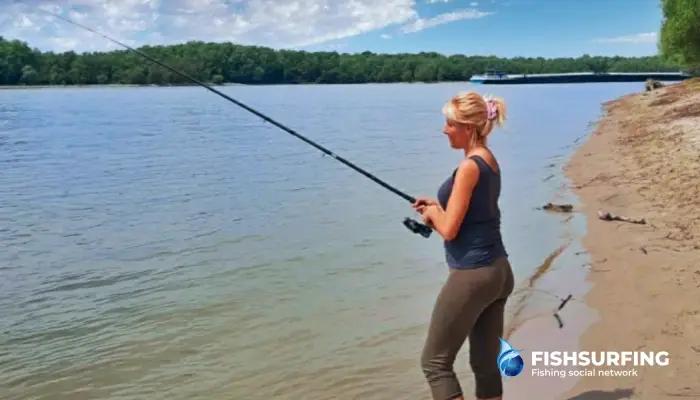
Logically, a river requires heavier weights. However, the rule of using the highest possible weight at all costs does not apply. The trick lies in finding the lightest possible feeder that can still lie stably on the bottom. If the current keeps rolling it around, the bait behaves unnaturally, the rig gets tangled, and you completely lose the ability to read bites on the rod tip.
The shape of the sinker itself also plays a crucial role. Square feeders (often with “claws” on the bottom) are ideal for currents, as the water doesn’t hit them as aggressively as it does round ones. However, on rocky or heavily rugged bottoms, you should expect a higher risk of them getting snagged.
Comparison of feeder fishing in rivers versus still water
|
Key factor |
Still Water |
River |
|---|---|---|
|
Decisive factor |
Absolute casting accuracy and current fish activity |
Current strength and the resulting movement of bait along the riverbed |
|
Weight and Feeder |
Light to medium weights, both running and method feeders |
Heavier (often angular) feeders designed to withstand the pull of the current |
|
Bait consistency |
A finer, airy, and highly active mixture that forms a cloud |
Heavier, sticky, and cohesive mixture (often enriched with clay) |
|
Where to Find Fish |
Terrain breaks, clear openings among vegetation, coves, and the edges of reed beds |
Current edges, calmer backwaters, obstacles that slow the river’s flow |
|
Rig specifics |
Thinner diameters, length variable depending on how cautious the fish are |
Stronger and more durable materials due to the risk of abrasion against rocky bottoms |
|
Biggest pitfalls |
Disturbing the feeding spot due to inaccuracy, unnecessarily overfeeding the fish |
The weight rolling along the bottom, misjudging the feeding trail’s path, frequent snags |
How often to cast
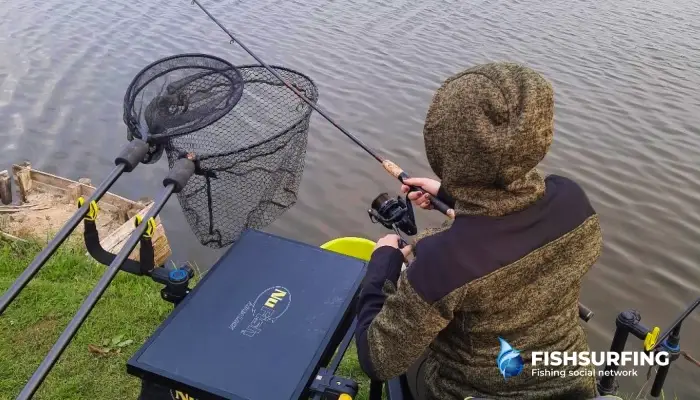
Choosing the right casting pace is key to success, with the ideal rhythm always dictated by the type of fishing spot and the current activity of the fish. The goal is to deliver the optimal amount of feed to the bottom without creating unnecessary commotion at the fishing spot.
In still water
Cast more frequently at the start to establish an attractive feeding spot. Once the fish start biting, adapt to their preferences. Maintain a brisk pace during fast strikes, but if the school is cautious, let the rig rest on the bottom for much longer.
On a river
Here, the current dictates the rules, constantly carrying the bait away, so you’ll need to replenish the feeding spot more regularly. Be careful, however, not to unnecessarily spook the fish in shallow or clear water.
Watch closely for when the bites come. If the fish strike immediately after the weight hits the water, keep the intervals short. If they take a while to bite, give the rig some time.
How to Read Bites Correctly
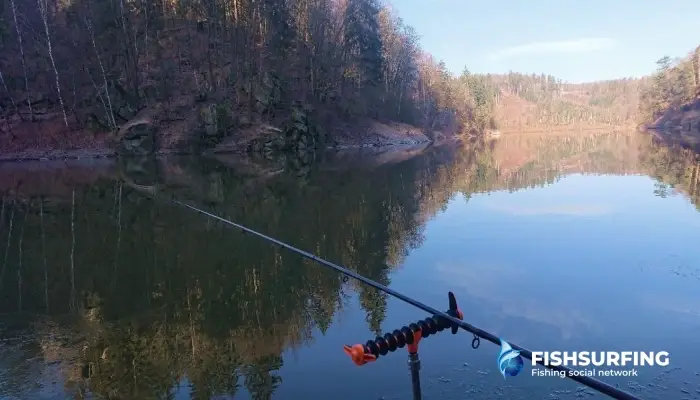
The feeder tip acts as your eyes underwater. It’s a highly sensitive indicator, but distinguishing a real bite from false alarms requires practice. Furthermore, the way the rod bends is significantly influenced by the nature of the fishing spot itself.
In still water
Reading the tip is much easier and clearer here. Without any distractions, you’ll clearly see gentle taps, smooth pulls, and sharp bends. You’ll quickly learn to tell when a fish is just cautiously nibbling at the bait and when it’s the right time to set the hook.
On a river
In the current, detecting a bite is significantly more difficult. Water is constantly pushing against the line, and the tip reacts even to a drifting feeder or floating debris and grass. You must learn to visually distinguish a genuine fish strike from the action of the current—it’s usually much more rhythmic, aggressive, or, conversely, it will smoothly bend the rod with a pull that defies the river’s normal behavior.
The Key to Successful Feeder Fishing in Any Water
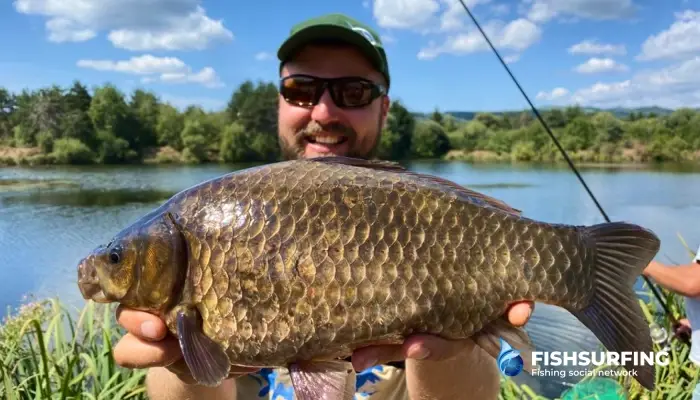
Feeder fishing in flowing and still water shares the same principle but requires completely different tactics. In a pond, precision, a refined rig, and creating a single compact feeding spot are key. A river, on the other hand, forces you to react to the strength of the current, use heavier feeders and stickier baits, and fish along an elongated feeding trail.
If you’re just starting out with this technique, still water will be more forgiving and allow for more mistakes. Rivers are technically more demanding, but in return, they’ll teach you to read the water perfectly and think through every cast. Regardless of the type of fishing spot, however, one fundamental principle applies. Feeder fishing isn’t just about mindlessly filling the feeder. It’s an active form of fishing that requires precision, careful observation, and constant minor adjustments—which ultimately determine whether you’ll leave empty-handed or have a great catch.