


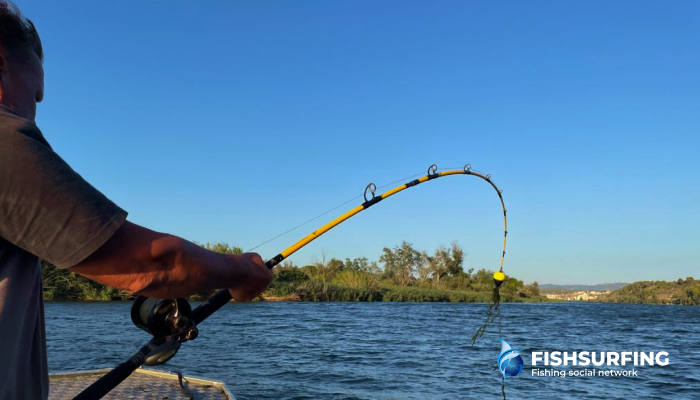
The fish is a few meters from the shore, the landing net is ready, and it seems like you’ve got it in the bag. But it’s often at this very moment that the fish makes one last sudden lunge, the line slacks, or you make a hasty move with the landing net. Simply put, a successful landing begins long before you pull the fish right up to your feet.
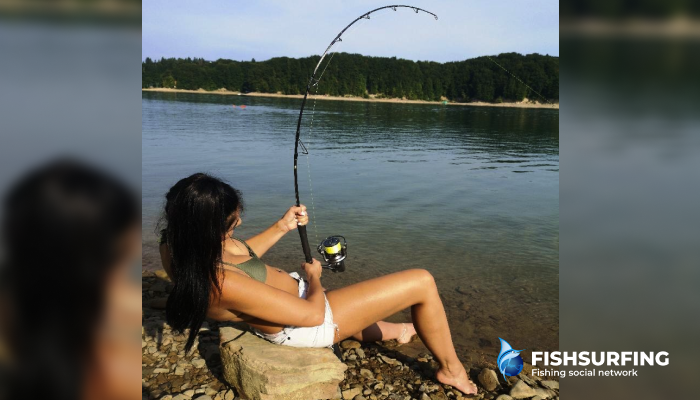
A fish near the shore isn’t subdued yet
As you fight the fish, it gradually loses strength, but the proximity to the shore can rouse it again. Shallow water, the angler’s movements, or the landing net itself often trigger another escape attempt.
This is typical with carp, grass carp, and stronger river fish. You might be playing the fish for several minutes without any major problems, get it to the surface, and then it suddenly takes off again. That’s why you shouldn’t force it into the landing net just because it’s already close. If it still has enough energy for sharp turns, let it work against the rod and drag for a little while longer.
When It’s Better to Wait a Little Longer Before Landing the Fish
- The fish is stubbornly holding onto the bottom. If you still can’t see the fish at the surface and the rod is pulling sharply downward, it still has plenty of energy. Don’t force it up.
- It’s swimming in fast circles. A fish that constantly changes direction in front of the landing net and is actively flicking its tail fin is far from ready to be guided into the net.
- It reacts actively to your shadow. As soon as the fish swims into shallow water, it notices you or the submerged landing net and immediately dashes back into the water—the fight continues.
- It hasn’t rolled onto its side. For many species, such as carp or bream, a reliable sign of exhaustion is the moment when it partially rolls onto its side to “gasp for air.” As long as it swims completely straight, it still has plenty of strength.
- Its runs are still fierce. If, every time you approach the shore, the fish relentlessly pulls out more meters of line through the drag, simply let it work a little longer.
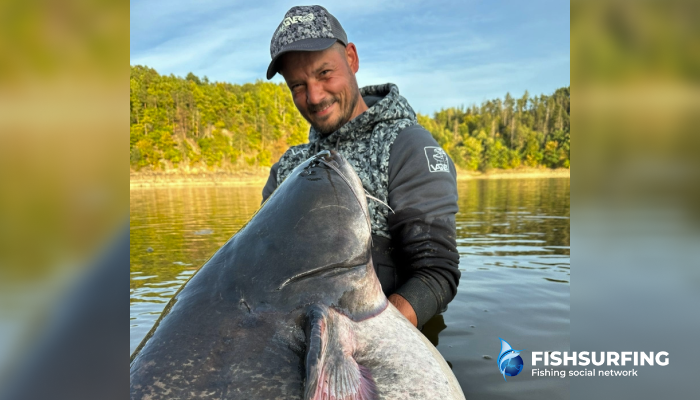
Have your landing net ready before you even set the hook
Do you know when the absolute worst time to look for your landing net is? It’s when you already have the fish just a few meters from the shore. That’s why, before you cast, check where your landing net is, make sure it’s set up, and ensure you have easy access to it. On an overgrown bank or a steep slope, even a few seconds spent searching can cause unnecessary trouble.
Adjust the landing net’s size to the fish you expect
Adjust the size of your landing net to the fish you expect to catch. A small trout net won’t be enough for a large carp, and a huge carp landing net, in turn, unnecessarily complicates mobile spinning.
The length of the handle is also important. If you’re fishing from a high bank, a pier, or through a belt of shoreline vegetation, a short handle might not allow you to get the net where you need it.
First, get the fish under control
A successful landing doesn’t actually begin with the first movement of the landing net, but with the correct and patient handling of the fish. The ideal moment comes only when the fish stops making long, uncontrollable runs and you are able to smoothly guide it toward you. However, you must keep the line under constant tension the entire time.
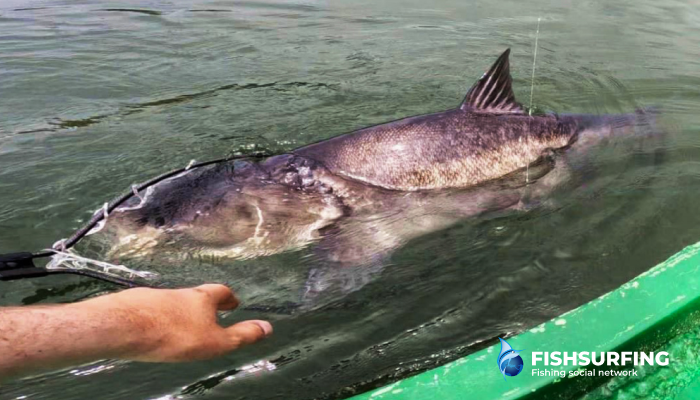
Don’t lift the rod unnecessarily high
When landing a fish near the shore, hold the rod at an angle that allows the blank to continue safely absorbing any unexpected movements. If you raise it too high above your head, the tip will reach its limit, and you’ll instantly lose any room to counter the next surge.
Try to guide the fish smoothly. As soon as it heads off to the side, react with the rod and try to gently but firmly turn its head back toward open water.
Keep enough line
When the fish gets within reach, instinct often tells you to raise the rod higher and frantically reel in more line. In the end, you’ll be left with only a dangerously short length of line between the tip and the fish. But by doing this, you’re unnecessarily depriving yourself of the space needed for the entire rig to function properly.
If the fish suddenly turns a meter from the shore, the shortened line simply has nowhere to give way, and the rod will bend to an extreme, often fatal degree. Moreover, with a line that’s too short, you’ll have a hard time guiding the fish far enough in front of you over the prepared net.
Therefore, always leave yourself a reasonable amount of slack. You definitely don’t need to hold the rod straight up in the air and force the fish right up against the tips of your shoes.
Don’t tighten the drag all the way when fishing near the shore
When fighting a fish in open water, the fish has plenty of room to maneuver. Near the shore, however, the entire battle is confined to just a few meters, and every sudden movement is transmitted to your rig with much greater force. That’s precisely why it’s a huge mistake to tighten the reel all the way at the last moment.
If the fish suddenly bolts a meter before the landing net, you need your gear to immediately absorb that critical surge. A locked spool means that all the energy is transferred directly to the line, the knots, and the hook, which usually results in the line snapping or the hook being cut off. Therefore, set the drag so that it holds reliably during normal retrieval but smoothly releases a few meters of line during an unexpected run.
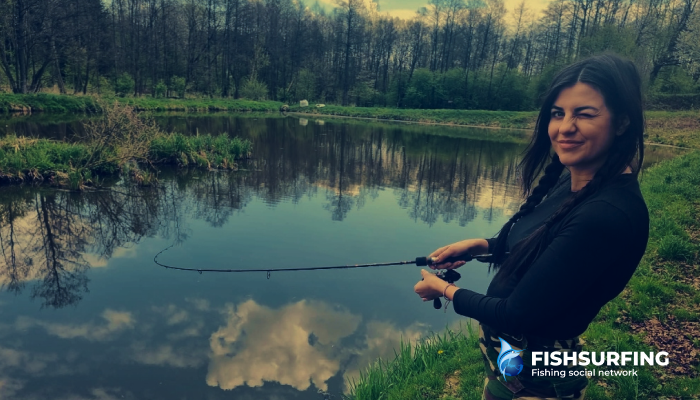
Be even more careful when using braided line
Unlike monofilament, braided line hardly stretches at all. This means that the vast majority of the impact must be absorbed solely by the rod and reel. Every sudden surge near the shore is thus transmitted to the rig instantly and with full force.
If you’re fishing with braided line, give the drag a little more slack to allow for an immediate response, and under no circumstances try to stop a fleeing fish with brute force.
Guide the fish into the landing net headfirst
One of the most important rules for successful landing is simple: the fish must always swim into the landing net headfirst. Under no circumstances should you try to frantically chase it from behind with the net or scoop it up from the tail. As soon as the fish feels the rigid frame or the net itself against its body, it will immediately and violently bolt, which will instantly subject the entire setup to extreme pressure.
Hold the landing net in front of the fish
Gently lower the landing net into the water in front of you and let it hang there steadily. Guide the fish into it with a smooth pull using the rod. As soon as its head is safely inside the hoop, you can slowly lift the net (for longer fish, such as grass carp or pike, of course, wait until a substantial portion of its body is also above the hoop).
Remember that when done correctly, the rod does 90% of the work. The landing net isn’t meant for chasing the fish across the surface.
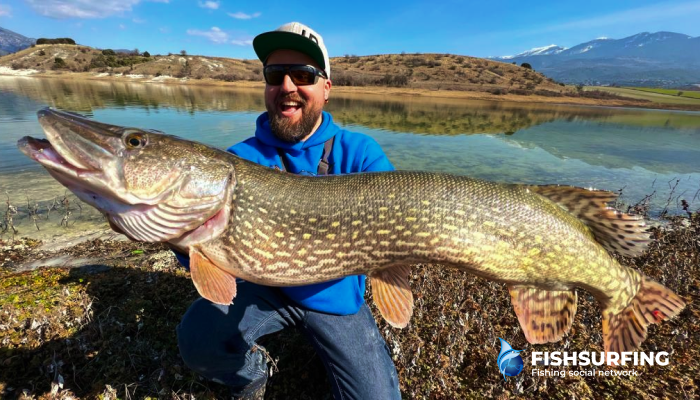
Don’t wave the net around unnecessarily
A common mistake is a frantic swing toward the catch. When an angler sees that the fish is finally within reach, they lose patience and try to cover that last meter by making a quick snap with the net. However, fish are very sensitive to any sudden movement underwater. They turn immediately, and instead of a clean landing, another wild run ensues.
Therefore, submerge the landing net in time, hold it firmly, and, most importantly, keep it steady. Let the fish swim over the open net and lift it only when it’s directly above it. If you’re fishing in crystal-clear water, it helps to keep the net submerged a little deeper below the surface. A landing net frame sticking out just below the surface will scare the fish much more than a net submerged deeper, which the fish won’t even notice up close.
How to Know the Right Moment to Net a Fish
There’s no exact number of minutes after which you can safely net a fish. Its behavior is a much better indicator.
The fish is usually ready when:
- it stops making long, sudden lunges
- it allows you to guide its head toward you
- stays near the surface
- doesn’t immediately dart back down into the depths after turning
If the fish takes off again before you can land it
If the fish takes off again at the last moment and refuses to cooperate, under no circumstances should youtry to stop it with brute force. Let it take a short trip back down to the depths, and simply calmly repeat the entire run toward the landing net. A few extra seconds under control are still incomparably better than a hasty attempt and a fish lost for good.
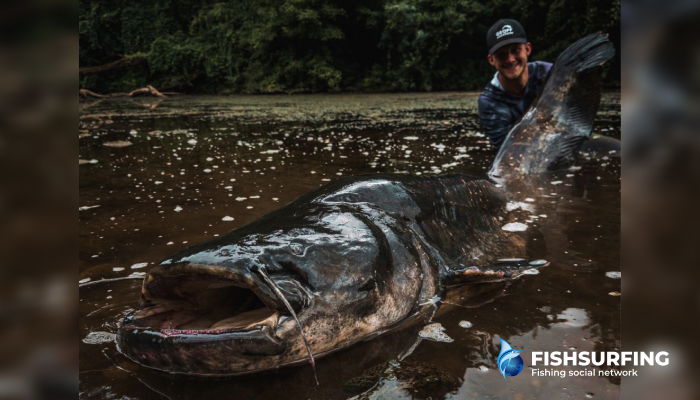
Specifics of Landing Fish in a River
The current significantly complicates the final phase of landing the fish, because the fish is fighting not only the rod but also the force of the water. Therefore, try to guide it to a calmer spot or at least away from the main current, where even a tired catch would put up a much stronger fight.
Also keep in mind that the current pushes against the landing net itself. If you position the landing net perpendicular to the current, it will be difficult to handle and will start to spin. When fishing for barbel or other powerful river fish, therefore, plan the final stage of the fight with the bank in mind. A calm eddy below you is always much better for a safe landing than a strong current directly in front of you.
How to Safely Land a Fish
Once you have the fish in the net, the work is far from over. A mistake in the final seconds can ruin all your efforts.
Don’t lift a large fish by the end of the pole
With a heavier catch, avoid lifting the entire landing net into the air by holding only the very end of the handle. This creates enormous leverage, which can damage the landing net handle or break the joint.
If possible, pull the net toward you across the water and grip the handle closer to the head. Only then should you safely lift the catch. On a high bank, the situation is obviously more complicated, so if you don’t have a long enough and sturdy enough pole, keep this in mind when choosing your fishing spot.
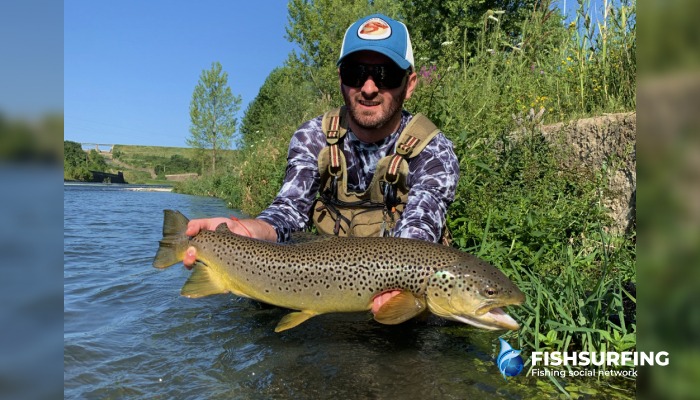
What to Do When a Fish Refuses the Landing Net
Some fish will approach the net but always swim away in a panic at the last moment. The worst thing you can do at that moment is to start frantically chasing them with the landing net.
Keep the net firmly in place and try another approach instead. You don’t have to bring the fish to the shore at a right angle at all costs. Sometimes it’s much easier to guide it at a slight angle and smoothly turn it over the submerged rim.
If it keeps turning sharply in front of the net, it means only one thing: it isn’t tired enough yet. Let it swim a few meters further away and continue reeling it in steadily.
The final meters require, above all, calm
When netting the fish, there’s absolutely no need to pull off any lightning-fast moves. The calmer and more deliberate the entire final phase of the fight is, the smaller the chance that you’ll needlessly lose your catch just before the shore.
A fish circling a meter from the net is far from being yours yet. But once you stop rushing the finish unnecessarily, you’ll see that far fewer of them will escape near the shore.