


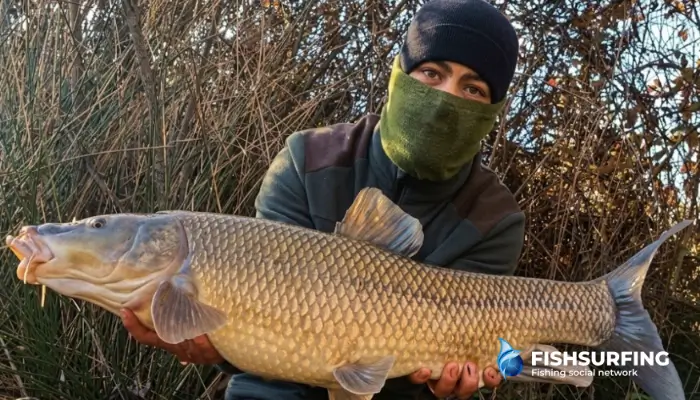
The barbel is one of those fish you’ll never forget after your first real fight with one. It’s not a lazy inhabitant of still waters that just rolls around sluggishly near the bottom after being hooked. Quite the opposite. The barbel is strong, tenacious, and perfectly adapted to life in the current. When it takes a larger bait, it immediately harnesses the river’s power, stays close to the bottom, and puts the leader, drag, and the angler’s patience to the test. In this article, we’ll show you where to look for barbel, when to go after them, what gear to choose, which lures work best, and how to avoid the most common mistakes when fishing in a current.
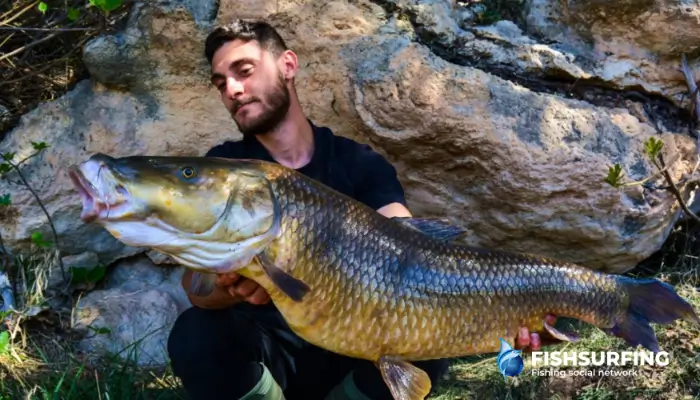
Why Is the Barbel Such an Interesting Fish?
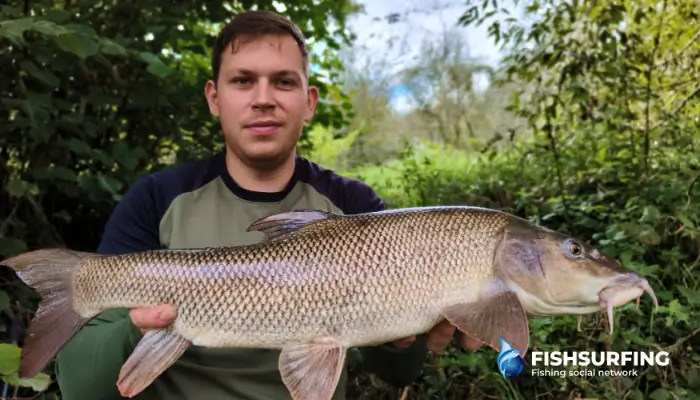
The common barbel has an elongated body, strong fins, and a bottom-facing mouth with barbels that help it forage near the bottom. It is precisely this body structure that suggests where to look for it. The barbel isn’t a typical fish of muddy coves and stagnant water. It prefers fast-flowing sections of rivers, harder bottoms, rocks, gravel, shoals, and spots where the current brings food.
For anglers, it’s particularly interesting because of the way it fights. Even a medium-sized barbel can put up a much stronger fight in the current than one would expect based on its size. After being hooked, it usually doesn’t head straight for the surface but pushes downward, trying to get into the current or toward the rocks, and often uses every meter of the river to its advantage.
The barbel is not a fish for completely passive fishing
Of course, you can sit by your rods and wait for it to find the bait on its own. However, anglers who actively think about the location tend to be more successful. The barbel often follows specific feeding routes and stays near the bottom in spots where the current brings it food. When you find such a spot, you may get several bites in a row. If you miss it, you might wait the whole afternoon with almost no action.
When to Go Barbel Fishing
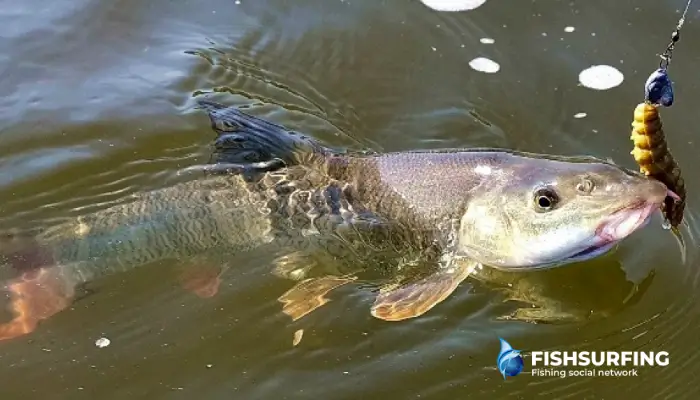
You can fish for barbel at various times of the season, but the best period usually comes after the close of the closed season, during the warmer part of the year, and in early fall. However, always check the current fishing regulations, closed season dates, minimum size limits, and local conditions for the specific fishing area in advance.
Summer and Early Fall
In summer, barbel tend to be active mainly in faster-flowing, well-oxygenated sections. When the water is warm and low, they often stay in current zones, below weirs, in rocky sections, or in places where the current brings plenty of food. Mornings, evenings, and sections after a slight rise in water level can be particularly productive.
Early fall is often a very promising time for barbel fishing. The water cools down, the fish feed actively, and river conditions tend to be more stable than during the summer heat. If you catch the right water conditions, September and October can be among the best times of the year.
After rain and when the water level is slightly higher
Slightly swollen and turbid water can get the barbel moving. The current stirs up food from the bottom, the fish tend to be less cautious, and they often come out to feed more actively. However, this doesn’t mean that the higher the water level, the better. Too strong a current, murky water, and floating debris significantly complicate fishing.
The ideal condition is when the water is livelier but still safe and clear. The rig must stay in place, the bait must not get lost in the sediment, and you must have a chance to safely land the fish after a strike.
What time of day should you fish for barbel?
Barbel can bite at any time of day, but it’s often best to focus on the morning, early evening, and quieter parts of the day. In heavily fished sections, they may be more cautious and tend to become more active only once the activity along the water’s edge dies down. Conversely, in fast-flowing, lively water, you can catch them even in broad daylight if you present the lure exactly where they’re feeding.
Where to Look for Barbel in a River
For barbel, the key is to find a spot where there’s food, a current, and the ability to stay near the bottom without unnecessary effort. Once you find such a spot, you’re much closer to success.
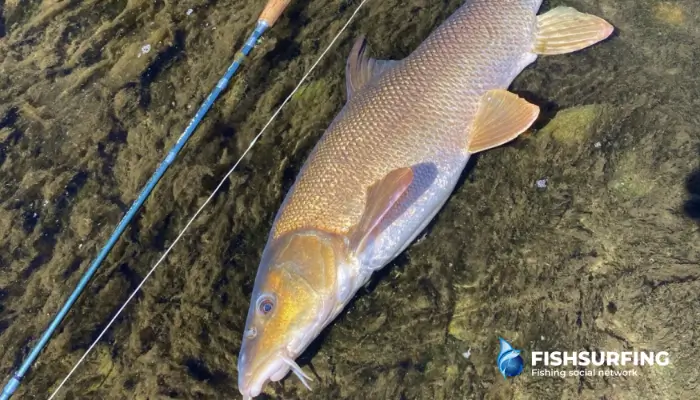
Fast-flowing sections with a harder bottom
Barbel prefer a harder bottom, such as gravel, rocks, boulders, or coarse sand. That’s where they look for food and can move easily in the current. Focus on sections where the current isn’t completely wild but is still lively enough. Water that’s too calm, with no movement of food, isn’t usually very appealing to her.
Edges of the current
Excellent spots are often found where faster and slower-moving water meet. The barbel may stand near the bottom in the calmer section and gather food carried to it by the stronger current. When fishing with a feeder or a bottom rig, it’s not necessary to cast into the strongest current. It’s often better to target its lower or side edges.
Areas Below Weirs and Rapid Eddies
Sections below weirs are often promising due to the oxygenated water and abundance of food. However, be aware that strong currents, rocks, and eddies can complicate your fishing. Look for barbel further downstream, at the edge of a eddy, or at the transition between fast-moving and calmer water. There, they have food within reach but may not be in the strongest current.
Rocky shoals and depth transitions
Rocky shoals, breaks, and transitions between shallower and deeper water are classic barbel spots. The fish may swim along the edge, forage for food, and retreat into deeper water if danger arises. Sometimes even a few meters can make all the difference. A lure placed just below the edge can work significantly better than a rig cast too high on the ledge.
Eroded banks and current along the edge
Barbel don’t necessarily stay only in the middle of the river. On smaller and medium-sized streams, the current along the bank can also be effective, especially if there’s a deeper channel, roots, rocks, or a harder bottom there. Before you start casting far, fish the shallower water first. A shorter, precise cast to the right spot is often better than a long blind cast.
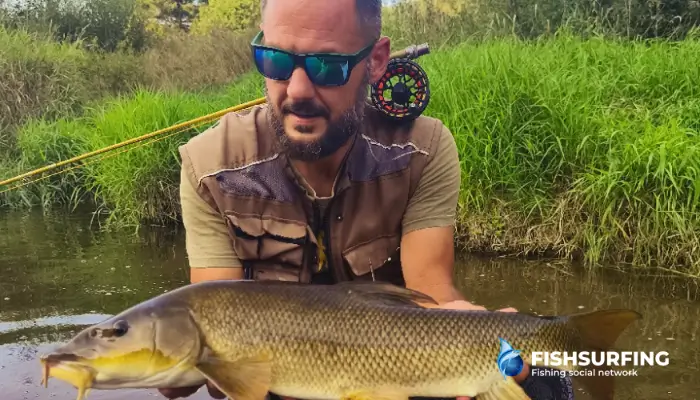
Which technique to choose for barbel
There are various ways to catch barbel, but on Czech rivers, the most practical methods include feeder fishing, bottom fishing, and, in some situations, float fishing.
Feeder
The feeder method is very popular for barbel fishing because it allows for precise feeding, good bite detection, and the ability to adjust the weight to the strength of the current. It’s especially suitable where you can keep the rig in place or let it drift in a controlled manner with the current.
Heavier feeder rods are often used for barbel, as they can handle heavier feeders and the current. A sturdier rig is also important, because after being hooked, the barbel fights near the bottom and can use rocks and the current to its advantage.
Flat-Laying
The classic bottom-fishing rig is best suited for stronger currents or situations where you need to use a heavier weight. It allows you to place the bait steadily on the bottom and wait for a bite. Compared to a feeder rig, however, you lose some of the finesse and the ability to feed the fish regularly through the feeder.
The bottom-fishing rig is suitable for targeting larger barbel, on wider rivers, or in spots where a lighter feeder rig wouldn’t be sufficient.
Floating
Float fishing for barbel can be very effective, but it requires good control of the float and knowledge of the current. It’s suitable where you can guide the bait naturally along the bottom or just above it. It’s especially effective on smaller and medium-sized rivers, where you can precisely fish through current zones.
The downside is that in strong currents and on uneven riverbeds, float fishing can be more challenging to control. But once you master it, it can be a lot of fun and very active.
Equipment for Barbel Fishing
Barbel isn’t a fish you should target with overly delicate gear. It’s not about using unnecessarily heavy tackle, but your setup must be suited to the current, the rocky bottom, and the fish’s strength.
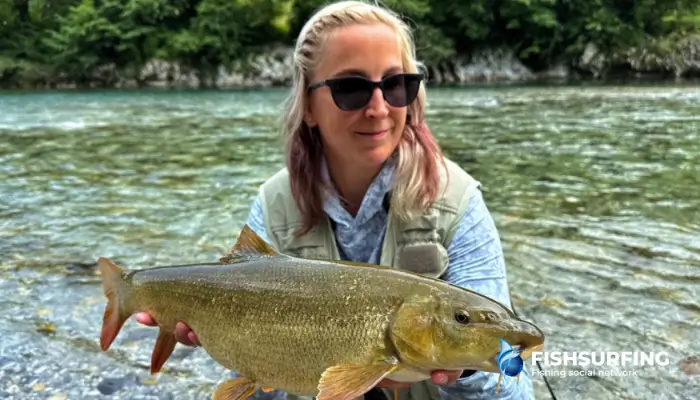
Rod for barbel
A sturdier rod is better suited for feeder fishing, as it can handle heavier feeders and the current. A medium feeder rod may suffice for smaller rivers, while for larger rivers and stronger currents, a medium-heavy or heavy feeder rod is recommended. It’s important to have sufficient reserve when casting and fighting the fish.
For bottom fishing, use a rod that can handle a heavier load while safely absorbing the fish’s runs. A rod that’s too soft may be ineffective in a strong current, while one that’s too stiff increases the risk of the line being cut or snapped during the fight.
Reel and Drag
What’s really important when fishing for barbel is that the reel has a reliable drag. After a strike, the fish may dash downstream, stay near the bottom, or try to get between rocks. The drag must operate smoothly, not jerkily.
Main Line, Leader, and Tagline
On a river, you have to account for abrasion. Rocks, shells, branches, and a rough riverbed can quickly damage a weak leader. That’s why it pays to use high-quality main line or leader material with greater abrasion resistance.
Hooks
The hook must be appropriate for both the bait and the size of the fish. For worms, corn, pellets, or cheese, use a hook shape that holds the bait securely while allowing for a reliable set. A dull hook won’t forgive mistakes when fishing for barbel. When fishing on a rocky bottom, check your hook regularly.
Barbel Rig
A barbel rig must fulfill three basic requirements: keep the bait in the right spot, provide a clear bite indication, and withstand the fish’s powerful pull.
Feeder Rig
Simple and reliable rigs work best with a feeder. Unnecessarily complex setups in the current often cause more tangles than they’re worth. It’s important that the feeder stays near the bottom, the leader moves naturally, and the bite is clearly transmitted to the tip.
Adjust the length of the leader according to fish activity and the strength of the current. A shorter leader can provide a quicker bite indication, while a longer leader offers a more natural presentation. It’s practical to start with a medium length and adjust it based on the bites.
Weight in the Current
In a current, choosing the right weight is crucial. A feeder that’s too light will roll along the bottom, while one that’s too heavy may look unnatural and impair your ability to feel a bite. The ideal weight is the lightest one that still reliably holds the rig in place.
On a rocky bottom, the shape of the feeder or sinker can help it hold its position better. In a strong current, it’s worth having sinkers of various weights to adapt to the current water conditions.
The Best Baits for Barbel
Barbel aren’t particularly picky, but the bait must suit the current, location, and activity level of the fish. It’s important that it stays securely on the hook and attracts fish near the bottom.
- Meat worms are a classic choice, especially for feeder and float fishing. They pair well with groundbait and can entice even cautious fish, though they often attract smaller fish as well.
- Mud minnows and earthworms can work well after rain or in slightly murky water. They are distinctive and natural baits that perform well near the bottom.
- Corn is readily available, stays on the hook well, and works very reliably in some rivers. You can use it on its own or in combination with worms.
- Pellets are ideal for targeted barbel fishing because they can be used both as groundbait and on the hook. Smaller pellets work faster, while larger ones last longer and can better attract larger fish.
- Cheese and more pungent baits are among the traditional baits for barbel, especially where the fish are accustomed to them. In faster-moving or slightly turbid water, a stronger scent can help, but the bait must stay securely on the hook.
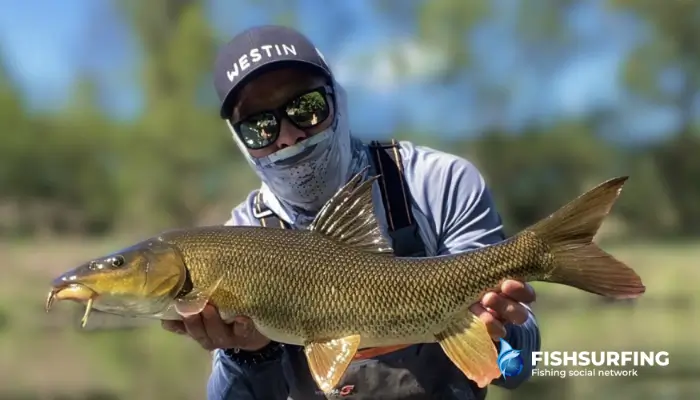
How to Recognize a Barbel Bite
A barbel’s bite can vary. Sometimes it feels like a sharp tug on the tip, other times like a gradual bend or a series of forceful movements. In addition, in the current, water pressure, debris, and the movement of the rig all affect the tip, so it takes a while to learn to distinguish between a real bite and the river’s natural movement.
When fishing with a feeder, barbel bites are often forceful. The barbel takes the bait off the bottom and continues swimming, so the tip can quickly bend into an arc. At that moment, don’t wait unnecessarily long. A smooth, firm hookset is usually better than a sudden jerk, which can damage the leader or snap the hook.
How to Land a Barbel in the Current
Fighting a barbel is one of the most enjoyable parts of the entire fishing experience. It’s also the moment that reveals whether your rig is set up correctly.
Don’t force the barbel
A barbel in the current has a huge advantage. If you recklessly pull it against the current, you’ll often only increase the risk of the line snapping or the hook being cut out. It’s better to maintain steady pressure, work the rod, and use the drag.
If the fish takes off downstream, don’t try to stop it immediately at all costs. Give it some room, but stay in contact. As soon as it starts to tire, gradually guide it into calmer water.
Watch out for rocks and obstacles
Barbel often stay near the bottom and, after being hooked, may try to reach rocks, ledges, or other obstacles. If you know there’s a risky spot ahead, try to steer the fish away from it right from the start. Hold the rod so that you have control over the angle of the pull, but without overloading the leader.
Don’t land the fish until it’s ready
Barbel can make several strong bursts near the shore. Don’t try to net it too soon. Wait until it reaches calmer water and begins to turn on its side. Have your landing net ready in advance—ideally one that’s large enough and has a finer mesh.
Handle the barbel gently
The barbel is a beautiful and powerful fish, but after a long fight in the current, it can be exhausted. That’s why it’s important to handle it quickly and gently. Have a mat, fish grippers, and a measuring tape ready in advance so the fish doesn’t spend unnecessary time out of the water.
If you’re releasing it, give it time. Don’t release it into the current right away without checking on it first. Hold it with its head against the current in calmer water and wait until it starts swimming on its own. Only then should you let it swim away.