


A dull hook is often the hidden culprit behind many missed bites and lost fish. You may have a perfectly baited spot and a premium lure, but if the hook point isn’t sharp, your chances of a successful hookset drop sharply. Hooks dull much faster against rocks, shells, and the bottom than you might think. In this article, you’ll learn how to reliably spot a dull hook and when it’s high time to replace it with a new one without hesitation.
Why a Sharp Hook Is So Important
For a set to be successful, the hook must penetrate the fish’s mouth as quickly and cleanly as possible. The physics behind this are very simple: the sharper the point, the less resistance it offers. The moment the fish takes the bait and you set the hook (or the rig tenses on its own), only a truly sharp hook has a chance of setting reliably.
Hook sharpness is crucial across all techniques. In feeder fishing, a dull hook will cause you to miss subtle bites; in carp fishing, it means losing the fish in the very first seconds of the fight. In spinning, it determines whether a predator remains hooked after an aggressive strike, and in fly fishing—where you work with tiny hooks and delicate leaders—a sharp point is an absolute necessity.
How a Dull Hook Causes You to Lose Fish
A dull hook doesn’t just mean a wasted strike that comes up empty. Major problems often arise during the fight itself.
- Poor penetration into the tissue – A dull hook offers resistance during the strike, slips easily, and sets too shallowly. The fish then simply shakes it off at the first sharp surge.
- A False Sense of Security – The hookset was successful, the rod bends, but after a few seconds the fish is gone. This is because the hook didn’t penetrate deeply enough and only caught a thin piece of skin.
- High risk of the hook coming loose – A hook set poorly and shallowly in the fish’s mouth will constantly shift and move around during the fight, enlarging the hole and easily coming loose, even if you’re playing the fish flawlessly.
- Loss of Cautious Bites – Especially in more delicate disciplines (feeder fishing, float fishing, fly fishing), where the fish often just cautiously takes the bait, a dull hook doesn’t get a chance to set.

How to Reliably Identify a Dull Hook
The problem with a dull hook is that, at first glance, it often doesn’t look damaged at all. The point may appear flawless, but it no longer works when it actually makes contact with the fish. A mere visual inspection is therefore insufficient; it’s much more reliable to perform a quick practical test.
The classic fingernail test
This is the best-known and most reliable method among anglers. Gently place the hook point against your fingernail and try to slide it along slightly. A perfectly sharp hook will immediately “bite” into the nail and refuse to slip. A dull hook, on the other hand, will slide down the nail without resistance.
It’s crucial not to apply force. With a truly sharp hook, the slightest touch is enough. If you have to press down on the tip just to get it to catch, it’s high time to replace it.
A Careful Test with Your Finger
You can also test the sharpness with a light touch of your fingertip. A properly sharpened hook feels slightly “sticky” and offers a bit of resistance; it definitely shouldn’t glide smoothly over your skin. Be extremely careful when performing this test, however—especially with thin, chemically sharpened hooks, as you risk getting an unpleasant prick if you’re not careful.
Visual Inspection Against the Light
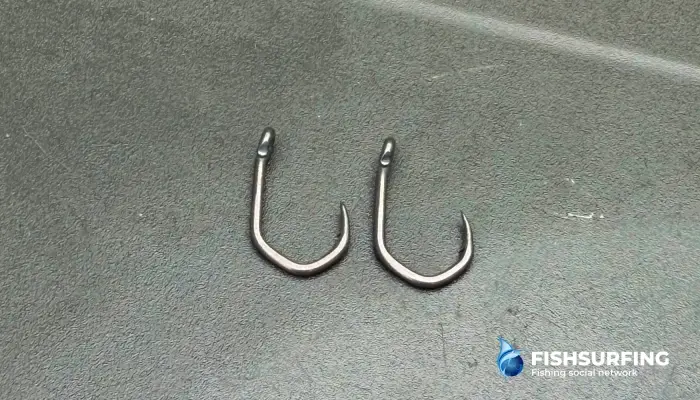
Look closely at the tip of the hook against the light. If the very tip glistens, forms a slight flat spot, or is even slightly bent, that’s a problem. The sharp tip must remain perfectly thin and uniform under all circumstances.
For smaller hook sizes, don’t hesitate to use a magnifying glass or zoom in on the tip with your phone’s camera. Even microscopic damage from scraping against a rock or shell can negatively affect your chances of a successful hookset.
Warning Signs Right by the Water
A dull hook will very often give itself away during the fish catch. Are you getting great strikes but constantly hooking air? Does the fish hang on for a few seconds after the hookset and then inexplicably fall off? Even though such situations can have multiple causes (such as a poor rig setup), checking the hook should always be your first step before you start painstakingly reworking the entire rig.
When to Check the Hook
It’s not necessary to inspect the hook every time you pull a fish out of clear, soft-bottomed water. In certain situations, however, a quick check should become standard routine. It only takes a moment and will reliably help you prevent unnecessary fish losses.
After getting snagged on an obstacle
If your rig gets snagged in branches, catches on a rock, or passes through a colony of minnows, always check the hook point. Even if you eventually manage to free the rig, the hook point may have been damaged by the impact. Snags are among the most common causes of hook dullness.
When fishing on a rocky bottom
When fishing on gravel, near rocky structures, or beneath a dam, the hook takes a much harder beating than it would on soft mud. For techniques where the lure lies on the bottom or actively rests against it (feeder fishing, bottom fishing, spinning), regularly checking the sharpness is essential.
After every fish you land
As soon as you release the fish and are about to cast again, take a second to run the tip of the hook along your fingernail. During the fight, the tip can easily become dulled or slightly bent by the harder parts of the fish’s mouth. This is especially true for larger and stronger catches.
When You’re Getting False Bites
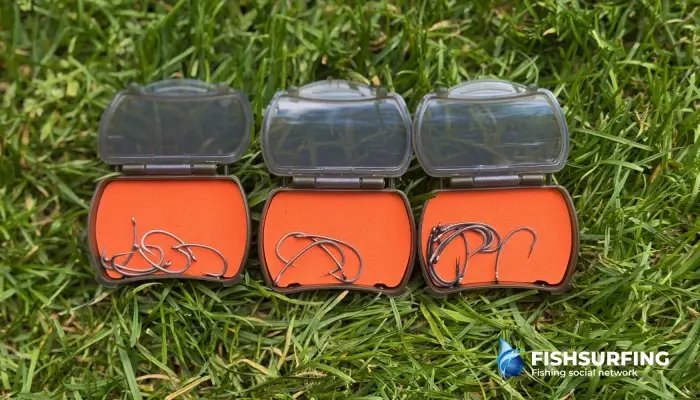
Are you getting clear bites but struggling to set the hook reliably? Before you start shortening your leader, changing your lure, or adjusting your bait, check the hook. Often, the cause of failure is a damaged hook point, and simply replacing the hook will solve the problem immediately.
Should you replace or resharpen the hook?
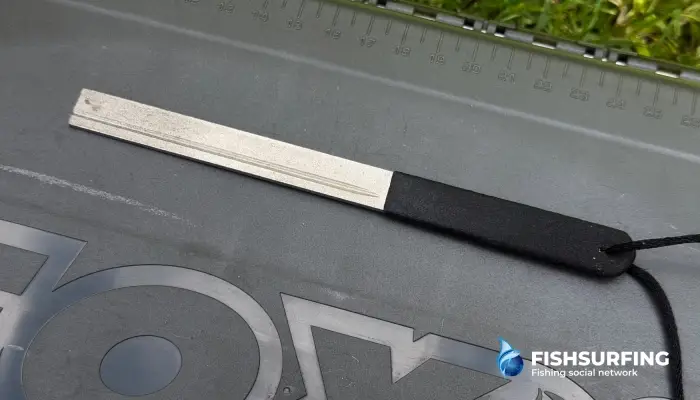
The decision depends primarily on the hook size and the specific situation. Some sturdier models can be successfully salvaged with a fine file or a special fishing file. For smaller sizes, delicate feeder rigs, flies, or hooks made of thin wire, however, it’s much more sensible and reliable to simply reach for a new one.
When It Makes Sense to Resharpen a Hook
It’s worth reaching for a file mainly with larger hooks, typically for sturdy carp rigs, when fishing for catfish, or for saltwater fishing. If the point is only slightly dulled and the hook otherwise retains its original shape perfectly, a gentle sharpening can help. When sharpening, proceed carefully and with a light touch so you don’t damage the point even further with overly aggressive sharpening.
When to Replace the Hook
Replace the hook as soon as the point is bent, broken off, significantly flattened, rusted, or if the hook slides off your fingernail even after attempting to sharpen it. Definitely opt for a new hook even with small hooks, where manual sharpening would be imprecise, time-consuming, and would often only damage the hook point material.
If you’re fishing with pre-tied rigs, the quickest and safest solution is often simply to tie a whole new leader. This gives you complete peace of mind and prevents you from wasting time at the water’s edge.
A sharp hook is a small detail with a big impact
In fishing, people often spend a great deal of time discussing rods, reels, complex rigs, bait mixtures, or choosing the best fishing spot. Paradoxically, the hook itself sometimes escapes attention, even though it is precisely the hook that provides the most important direct contact with the fish. If the point isn’t 100 percent sharp, all your previous efforts can easily come to naught.
Of course, even a perfectly sharp hook alone cannot guarantee that you’ll catch a fish on every cast. However, it significantly increases the chance that when that long-awaited bite finally comes, you’ll be able to set the hook reliably and successfully.