


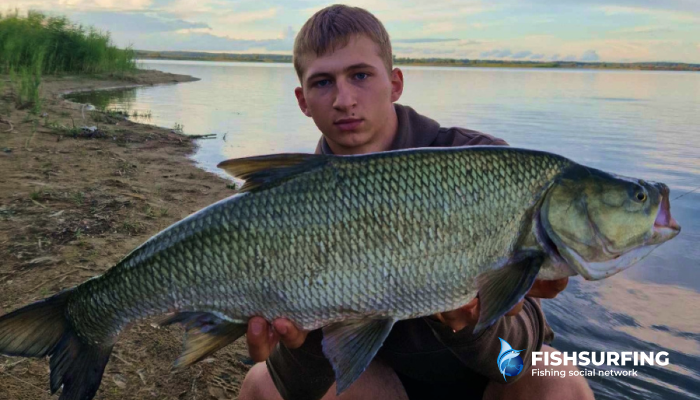
The asp often gives itself away even before you see it. The water’s surface erupts, a school of small fish scatters, and a moment later, all is quiet again. But catching a fish that hunts so conspicuously isn’t usually easy. Asp have excellent eyesight, react quickly to activity along the shore, and can ignore artificial lures even when they’re actively hunting right around you.
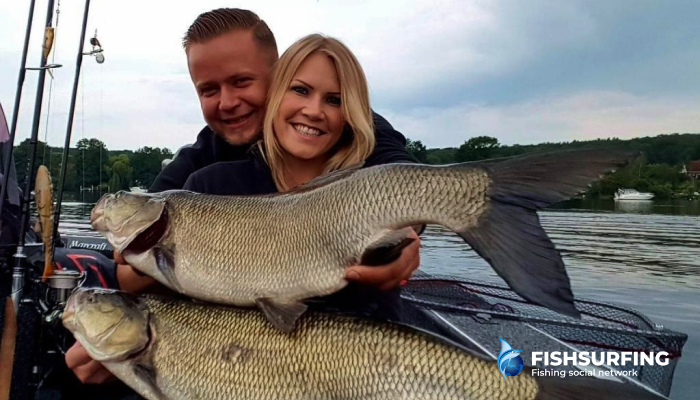
Look for asp based on activity on the surface
The asp is a member of the carp family, but adult asp feed primarily as predators. Their typical prey consists of small fish, and it is precisely their movement that will often tell you where to start fishing.
Asp mainly hunt in the upper layers of the water. Their strikes are usually fast and conspicuous—sometimes you’ll hear a sudden splash, other times you’ll see small fish fleeing just below the surface.
However, don’t try to cast immediately to the exact spot where the water splashed after every strike. The asp may already be several meters away. It’s better to watch for a moment to see if the strikes are repeating along the same path.
If you’re heading to an unfamiliar river, research the surrounding fishing areas before your trip and identify sections with weirs, confluences, or distinct current edges.
Where Asp Are Most Commonly Found
The asp is a typical fish of larger rivers, but you can also find it in reservoirs and other expansive bodies of water. On a river, the current is usually an important indicator. The fish often uses spots where the water concentrates small prey or creates an opening for a quick attack.
Current Edges
When fishing for asp, focus mainly on the transition zone between fast- and slow-moving water. Small fish often gather here, and the asp may patrol the entire edge regularly.
Work the lure across the boundary, along it, and diagonally with the current. Sometimes a strike comes immediately after the lure hits the water; other times, it occurs just as the lure transitions from fast-moving water to calmer water.
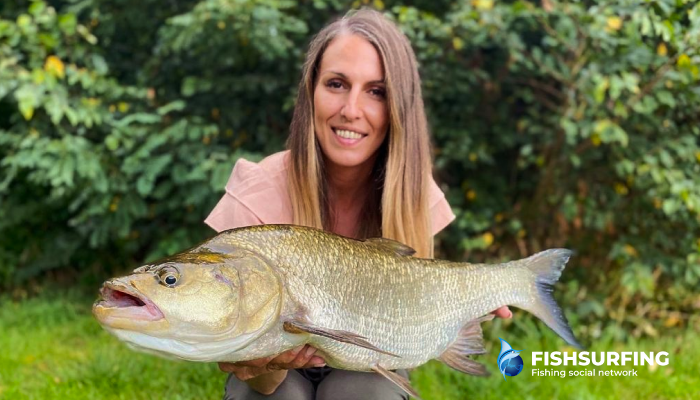
Below Weirs
The area below a weir offers current, oxygen, and an abundance of food. Asp often move along the edge of the most turbulent water, around the eddy, and further downstream.
Don’t just cast into the heaviest foam. Also fish the calmer sections on the sides and the spots where the strong current begins to level off.
Confluences and tributaries
Where two currents meet, distinct current lines form. Small fish gather along their edges, and asp regularly check these spots.
If there’s no visible activity on the surface, watch the direction of the current, the foam, and small debris. These often highlight the line along which the prey moves through the water.
Rocky weirs, points, and spurs
Rocky banks and promontories change the direction of the current and create small eddies. The asp may position itself downstream and strike from there at passing prey.
Chub also seek out similar habitats, but asp are more often revealed by their swift attacks on small fish in more open water.
Open Water on Dams
Reservoirs lack the distinct current edges typical of rivers, so focus primarily on schools of small fish, shallower shoals, the tips of coves, and areas where fry stay near the surface.
If asp are hunting far from the shore, casting distance becomes crucial. Sometimes a few meters make all the difference, as the predator won’t come anywhere near the shore while hunting.
When to Go After Asp
Asp are active for much of the season, but their hunting behavior gradually changes:
- In the summer, large numbers of fish fry move near the surface, and asp regularly chase after them. Active fish can be observed early in the morning, in the evening, and during the day.
- In the fall, small fish gradually gather into larger schools, and the predators follow them. Just as with fall spinning, therefore, focus primarily on the movement of the prey.
Morning and Evening
In calm summer weather, surface activity is clearly visible after dawn and before dusk. Small fish move high in the water column, and an asp’s strike is easily recognizable.
However, you can also encounter active asp during the day, especially in faster-flowing rivers. In broad daylight, they tend to be more cautious, so a stealthy approach and precise lure control are even more important.
What Lures to Use for Asp
A successful asp lure generally has two key characteristics: it must handle a brisk retrieve with ease and, in larger bodies of water, allow for a really long cast.
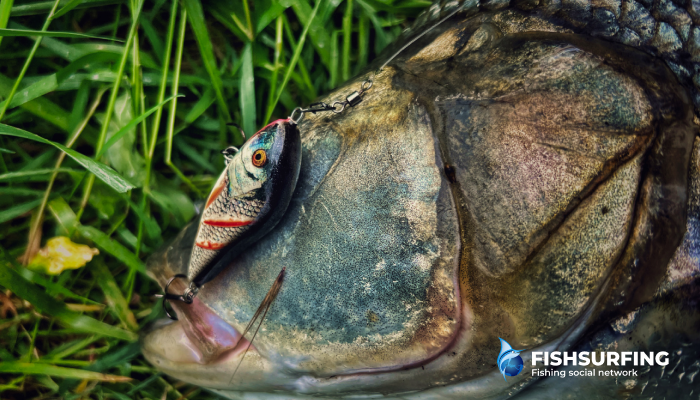
Slim wobblers
A narrow wobbler resembling a bleak is an absolute must-have. It maintains excellent stability in the current, allowing you to fish both the surface and the water just below it. Opt for natural colors (silver sides, darker back), and if the predators are currently hunting only small fry, don’t hesitate to scale down the lure accordingly so it blends naturally into the confused school.
Spinners and slender metal lures
Their biggest advantage is their unmatched casting distance. On wide rivers or large reservoirs, you can reliably reach fish feeding far from the shore with them. Slimmer models can also handle very fast retrieves while still maintaining a smooth action.
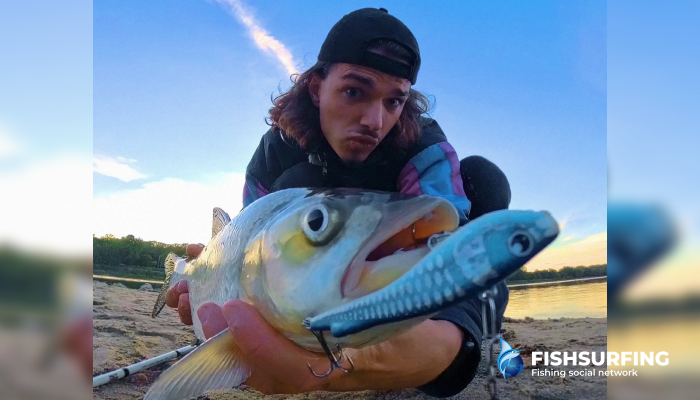
Spinners
Smaller spinners are ideal for spots where you don’t need to cast extreme distances. The rotating blade emits strong vibrations underwater, which provoke asp even in stronger currents and along the bank edges. When retrieving faster, just make sure the lure doesn’t bounce up to the surface unnecessarily.
Surface Lures
When asp are actively and aggressively striking right at the surface, a surface lure can produce a visually stunning strike. But there’s one catch—never rush to set the hook at the very first splash. Wait until you actually feel the rod get heavier and sense solid contact with the fish.
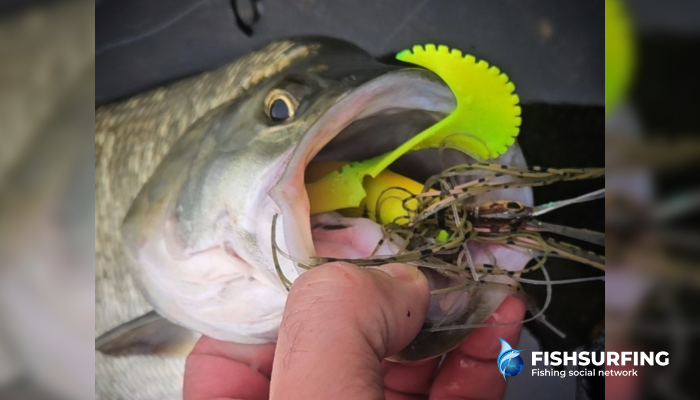
Asp Requires Faster Retrieval
Asp can chase very fast-moving prey and usually responds to a quickly retrieved lure when fishing. However, monotonous retrieving isn’t always the best tactic. While retrieving, try:
- speed up or, conversely, slow down for a moment
- insert a very brief pause
- change direction
- guide the lure diagonally across the current
It is precisely this kind of variation that perfectly imitates a disoriented fish that has strayed from the school. The asp often follows the lure for several meters out of curiosity, and it is only your unexpected change in speed or direction that provokes it to launch an aggressive attack.
The first cast is often the most important
Although the asp can cause quite a commotion on the surface, it is extremely sensitive to any disturbance. In clear water, it picks up on movement along the bank and the constant splashes of heavy lures very easily. Therefore, approach the fishing spot as quietly as possible.
Don’t step right up to the very edge of the bank and don’t scatter the water with a series of random casts. First, watch for a moment to see where the fish is swimming, and cast the lure slightly ahead of its expected path. Furthermore, if an asp has taken the bait near the bank, don’t try to cast all the way to the middle of the river at any cost. An unnecessarily long cast would only cause your line to sweep across a promising spot and scare off the cautious predator.
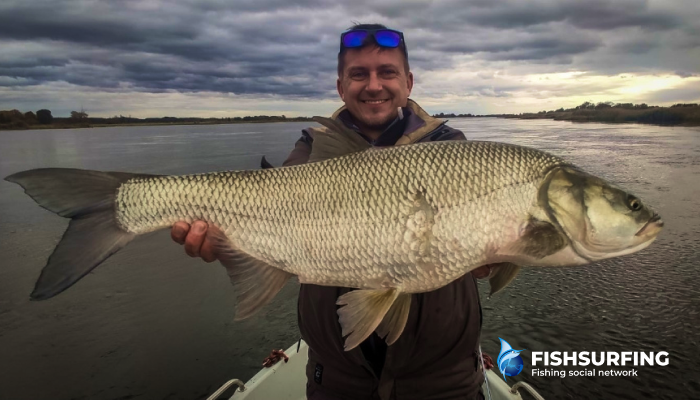
What Gear to Choose
When fishing for asp, you’ll be doing a lot of casting. On larger bodies of water, you’ll often need to cast even very light lures quite a distance. From the bank, you’ll appreciate a slightly longer spinning rod, which will make accurate and long casts much easier. Choose the specific length and casting weight based on the size of the river and the lures you plan to use.
Complete your setup with a reliable reel featuring a precise and smooth drag. Asp can make a brutal run immediately after the strike, and a reel set too tight would instantly overload more delicate tackle.
Monofilament or braided line?
Braided line flies farther and perfectly transmits every contact with the lure. That’s exactly why most asp anglers rely on it today. However, it has one characteristic you must keep in mind: it has almost no give. The entire force of that uncompromising attack must therefore be absorbed solely by the rod and the reel’s drag, which you should never set too tight when using braided line.
It’s ideal to tie an inconspicuous leader to the very end of the line (fluorocarbon works great). Asp don’t have sharp teeth like pike, so you don’t need a classic steel wire leader at all. Adjust the overall strength of the monofilament or braided line primarily based on potential snags and other predators you might encounter in that spot.
What if the asp are feeding but ignoring your lure?
You’re surely familiar with this situation—the water’s literally boiling, asp are hunting aggressively all around, but they’re blatantly ignoring your lure. At a moment like this, it pays to pause for a moment and adjust your tactics.
- First, take a look at how big the prey they’re currently chasing is. If the water is full of fry just a few centimeters long, a large wobbler won’t work. Downsize your lure to mimic the size of real prey as closely as possible.
- Then try changing the angle at which you retrieve it. Asp often ignore lures pulled directly upstream, but will immediately strike at the same lure retrieved across the current’s edge.
- If the predators still aren’t responding, move away from the shore, change your location, or let the water rest for a while. Casting dozens more times into the same spot usually only makes the situation worse.
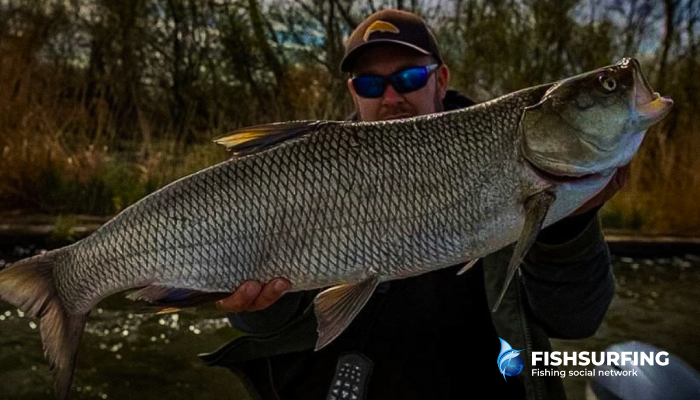
Setting the Hook and Fighting an Asp
A strike from an asp comes at full speed and is usually a powerful blow. Therefore, you don’t need an overly forceful hookset at all, especially if you’re fishing with a non-stretchy braided line, which transmits contact practically instantly.
After setting the hook, maintain steady pressure and let the drag do its job. The asp is at its strongest right at the start of the fight, when it can also make excellent use of the river’s current. In the final meters before the landing net, you must not let the line slack. If the fish is still thrashing and trying to make more runs, feel free to give it a little more slack for a moment. A few extra seconds of fighting is always safer than a hasty attempt to net it.
Don’t Forget the Closed Season
In our non-trout fishing areas, the asp is a protected predatory fish from January 1 through June 15, and its minimum catch size is 40 cm. Keep in mind, however, that specific fishing areas may have even stricter regulations. Before every targeted fishing trip, be sure to carefully check the current rules for your chosen body of water.
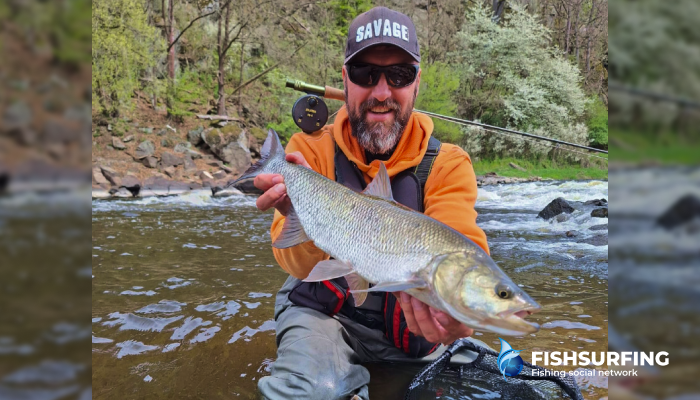
With asp, observation is key
The asp usually makes its presence known quite loudly on its own. It’s much harder to figure out exactly where it’s swimming, how big a prey it’s currently chasing, and at what angle to best present the lure to it.
Before you start nervously changing your wobbler every two minutes by the water’s edge, take a moment to calmly observe the surface. Find a current edge, map out the movement of small fish, and identify spots where the predator’s attacks occur regularly. Only then should you select a lure of the right size and guide it directly along the path where the asp is actually patrolling. Just one such well-thought-out cast is ultimately much more valuable than dozens of desperate, blind casts.