


The catch-and-release method is now a standard part of modern fishing. But simply releasing a fish back into the water doesn’t mean everything went right. The fish’s actual chance of survival after being caught often comes down to the smallest details: how long it took you to land it, whether you left it lying on dry land, how you held it while unhooking it, or even how much time it spent out of the water while you were taking photos.
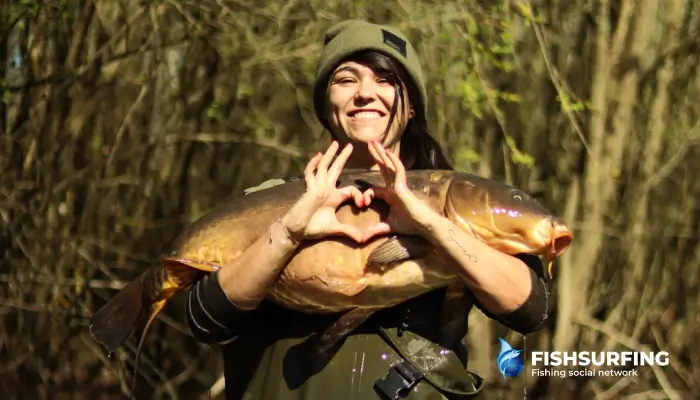
Why proper catch-and-release matters
After being hooked and fought, a fish doesn’t just experience brief contact with the hook. It undergoes intense stress, during which it becomes exhausted and must subsequently recover. After being landed, it needs more oxygen, and even if it appears to swim away normally after being released, this does not automatically mean it is fully okay. The stress from being caught and handled can affect its condition long afterward.
That is precisely why the goal of gentle handling is to avoid exposing the fish to unnecessary further harm. Dry hands, a rough mat, prolonged photo sessions, squeezing the body, or an unnecessarily exhausting struggle can significantly worsen its condition. On the other hand, a quick and calm landing, unhooking in the water if possible, minimal time out of the water, and a careful release increase the fish’s chances of survival.
Proper fish handling starts with your gear
Gentle handling of the fish isn’t something you only start thinking about once it’s in the landing net. It begins with the selection of your rods, hooks, and accessories. If you’re heading to the water with the intention of releasing the fish, your gear should reflect that.
Barbless hooks
Today, many private and club-managed fishing areas require the use of barbless hooks. And there’s a good reason for that. A barbless hook causes only a clean wound in the fish’s mouth, which heals quickly. Plus, unhooking is a matter of seconds—often all you need to do is loosen the line in the landing net and the hook will fall out on its own.
If you do use barbed hooks, consider flattening the barbs with pliers. You’ll see that you won’t lose any fish because of this, as long as you keep the line taut at all times.
Landing net with rubberized mesh
Forget about old string nets that cut into the fish’s scales and get the hook so tangled that you have to cut it out. Rubberized netting is much gentler on the fish’s slime, doesn’t absorb odors, and just needs a quick rinse after fishing. Plus, the fish stays calm in it and doesn’t thrash around unnecessarily.
Fish mat
Having a mat under the fish is now part of basic fishing etiquette. Whether it’s a simple mat or a modern tub with legs, the mat protects the fish from contact with hard ground, rocks, or hot sand. Remember that fish have a protective slime coating that acts as their immune system. As soon as you wipe it off on dry grass, you open the door to fungi and bacteria.
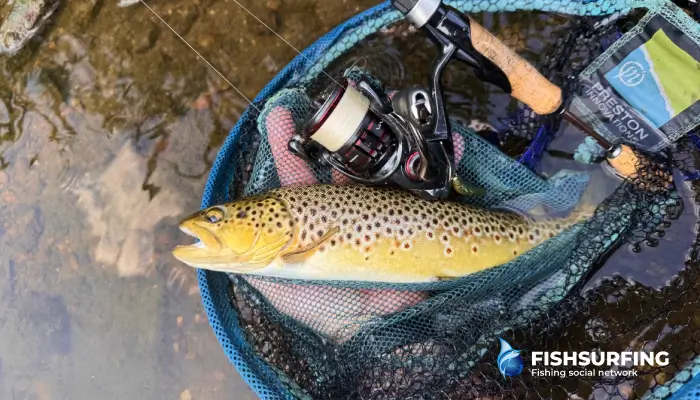
How to Land a Fish Gently
The goal is not to land the fish as quickly as possible at any cost, but to get it under control safely, without chaos, and without unnecessarily rough handling. Proper landing is the first important step toward truly gentle catch-and-release.
Don’t tire the fish unnecessarily
One of the most common mistakes in catch-and-release is letting the fight drag on too long. Don’t let the fish fight until it’s completely exhausted; instead, try to keep the struggle to an absolute minimum. It’s not about pulling it in roughly by force, but about having your gear and approach set up so that the fight isn’t longer than it needs to be. This is especially important in warm water or during low water levels, when the fish are already stressed by the conditions themselves.
Once the fish is near the shore or the boat, there should be a calm and confident moment with the landing net. Try to guide it into the net, rather than frantically “chasing” it at the last moment. The more confusion, sudden movements, and repeated attempts, the greater the risk of further stress and injury.
Do not drag the fish along the shore or let it lie on dry land
If you plan to release the fish, it should not come into unnecessary contact with rocks, sand, mud, dry grass, or the hot bottom of the boat. Contact with dry, hard, or rough surfaces damages the protective mucus and scales, making the fish more susceptible to infections and other problems. That’s why it’s best to keep it in the water as much as possible, or at least in a wet landing net.
This is precisely why, in humane catch-and-release fishing, it is so strongly emphasized that the fish should remain wet. It should only be taken out of the water when absolutely necessary, and for as short a time as possible.
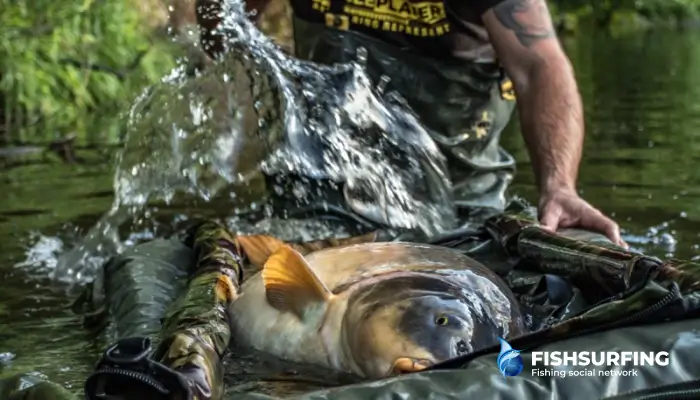
How to properly unhook a fish
Unhooking should be as quick, calm, and, above all, as gentle as possible. The shorter and more confident this phase is, the less stress and risk of injury it poses to the fish. Not only does the technique itself play a major role, but also whether you have the right tools on hand and can prepare everything before you pull the fish out of the water.
Ideally in the water or at least in a wet landing net
Whenever possible, it is recommended to unhook the fish in the water. This is one of the best ways to minimize handling and time spent out of the water. With smaller fish or those caught on simpler rigs, this is often easy to do. For larger fish or those with more difficult hooks, it may be more practical to leave the fish in a landing net submerged in the water and remove the hook there.
What you use to hold the fish also plays a major role. Your hands should be wet and clean, as handling the fish with dry hands increases damage to the mucus layer. The same applies to dry gloves, towels, or rags, which may seem gentle but are actually worse for the fish than a wet palm.
Do not touch the eyes or gills
When unhooking, a simple rule applies: touch the fish as little as possible, and especially avoid sensitive areas such as the eyes and gills. While holding by the lower jaw is common for some species, even then great care is needed, and the entire body must always be supported so the fish isn’t hanging by just one part.
For most fish, it’s safer to hold the body with both hands and work calmly, without squeezing. This is especially important with larger fish, whose bodies aren’t built to hang vertically out of the water. Holding them vertically or lifting them by the jaw, gill covers, or tail can cause further damage.
What if the hook is deep?
One common mistake is trying to remove a deeply embedded hook at all costs. In a situation where the hook cannot be safely and quickly removed, we recommend cutting the leader or line as close to the hook as possible and not needlessly distressing the fish further.
This applies mainly to hooks swallowed deep or hooks in sensitive areas. The fish may eventually expel or encapsulate them, whereas heavy bleeding from the gills is a very serious injury and the chances of survival are low.
How to take a photo without harming the fish
Taking a photo of your catch is a common part of fishing today, and there’s nothing wrong with it. The problem isn’t the photo itself, but how long the fish stays out of the water because of it and how you handle it during that time. The maximum time a fish should spend out of the water is said to be 60 seconds. For some species, even very brief exposure to the air can be harmful.
Take the photo quickly, just above the water, and in a horizontal position
In practice, this means one thing: have your camera or phone ready in advance. Don’t start looking for it the moment you’re already holding the fish in your hand. If you know you’re going to take a photo, get everything ready beforehand, snap one or two quick shots, and return the fish to the water. Sensitive or more vulnerable species ideally shouldn’t be taken out of the water at all, and the best photo is often the one you take in the landing net or just above the surface.
Body position is also important. The fish should be supported horizontally with both hands at all times, not held vertically by the gills, jaw, or tail. Improper handling out of the water can damage the spine, internal structures, or soft tissues around the head.
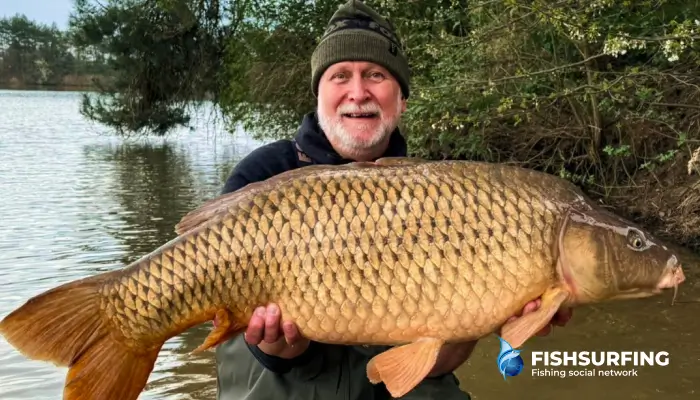
How to Release a Fish Properly
Proper release isn’t just “throwing it back.” After a fight, the fish needs a short time to orient itself and recover. Hold a slower or dazed fish in the water, ideally against the current, until it regains its strength and swims away on its own.
Let the fish swim away when it’s ready
On a river, it’s best to hold the fish gently facing the current so the water flows naturally over its gills. In still water, it’s a bit different, but the principle is the same: don’t release the fish until it actively begins to push against the current and shows an effort to swim away.
It is also important not to throw the fish into the water. Although this may seem like a minor detail, especially with larger fish or from a higher bank, it is unnecessarily rough. The goal is to return the fish so that it has the best possible conditions for its first strong burst of speed after being released.
Be even more careful in summer and in warm water
Gentle catch-and-release is always important, but doubly so in warm water. It is precisely during warm or low water conditions that the fight needs to be shortened even further and the entire handling kept to a minimum. Fish are more susceptible to stress under such conditions and recover more slowly.
In practice, this means less time-consuming photography, fewer unnecessary touches, and a greater emphasis on a quick and calm approach. If conditions are truly challenging, it’s also worth considering whether it might be better not to chase fish unnecessarily on that particular day. Responsible catch-and-release isn’t just a technique, but also the ability to judge when you’re causing the fish more stress than is reasonable.
The Most Common Mistakes in Catch and Release
In catch-and-release, it’s often not major blunders that make the difference, but small mistakes that many anglers aren’t even aware of. Yet it is precisely these that can significantly increase stress, worsen the fish’s condition, and reduce its chances of actually swimming away safely after release.
- Fighting the fish for too long – You shouldn’t fight the fish until it’s completely exhausted just because you want to enjoy the battle a few minutes longer. It’s better to keep the fight to a minimum.
- Dry hands or a dry surface – Damage to the slime coat is often invisible at first glance, but it is very significant for the fish.
- Holding the fish vertically or by only one part of its body – Especially with larger fish, such handling can damage the spine or surrounding tissues. The fish must always be supported along the length of its body.
- Long photo sessions on dry land – Every extra second out of the water counts. If you want a photo, it must be quick and well-planned.
- Forcibly removing a deeply embedded hook – In some situations, it’s better for the fish to cut the leader at the hook than to torment it for a long time with pliers.
- Mechanically casting it back without allowing it to recover – After a fight, the fish often needs a moment to recover. Releasing it only when it actively swims away on its own is much gentler.
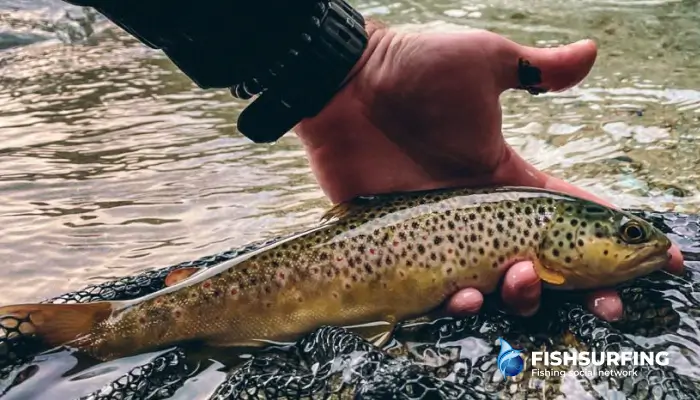
Catch and release done right means thinking about the fish, not yourself
The beauty of proper catch-and-release is that it isn’t based on any complicated theory. Ultimately, it boils down to a simple principle: get the fish under control as quickly as possible, handle it as little as possible, keep it out of the water for the shortest possible time, and release it only when it has a realistic chance of swimming away unharmed.