


Fishing for tench is a quiet, patient pursuit in which the details make all the difference: the right spot, a delicate rig, an inconspicuous lure, and the ability to disturb the water no more than necessary. And that is precisely where its charm lies. Tench often stay in overgrown and calmer parts of the water and don’t require large feeding campaigns or complicated rigs. It’s much more important to understand where they move, when they go out in search of food, and how to present the bait so that it looks natural.
Why Is the Tench Such an Interesting Fish?
The common tench is a typical fish of calmer waters. You’ll most often find it in ponds, pools, oxbow lakes, overgrown lakes, sand pits, or slower-moving river sections. It prefers areas with aquatic vegetation, a muddy or soft bottom, and an abundance of natural food.
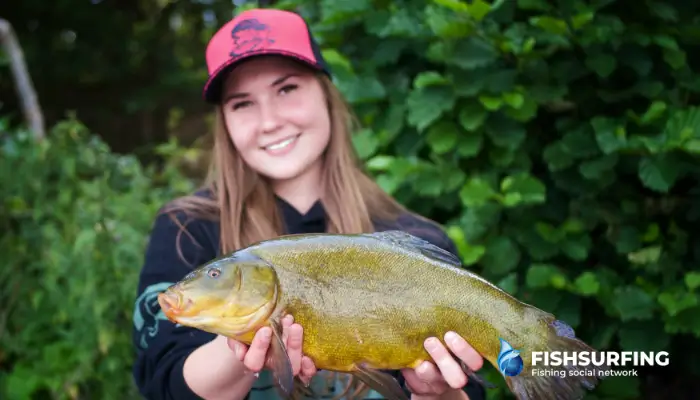
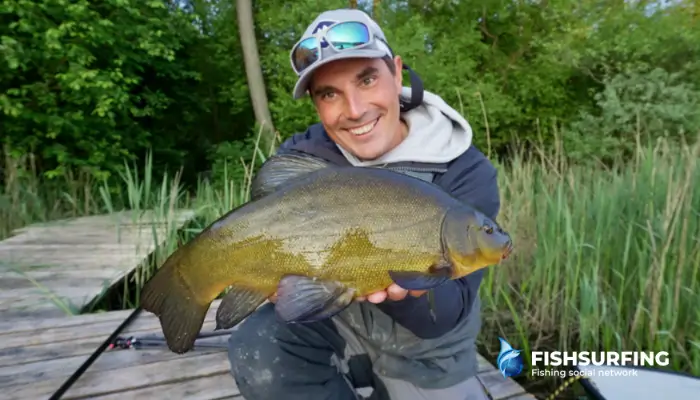
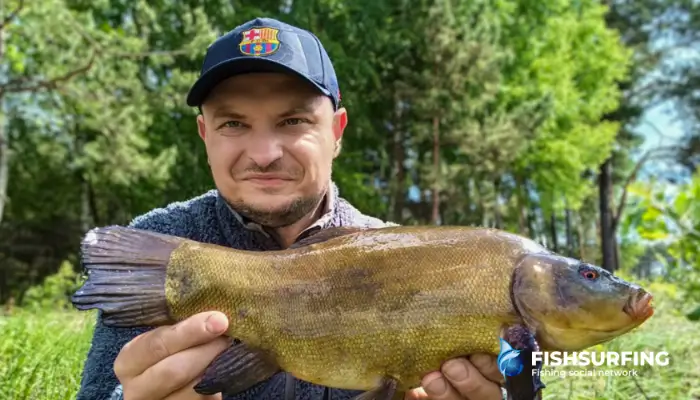
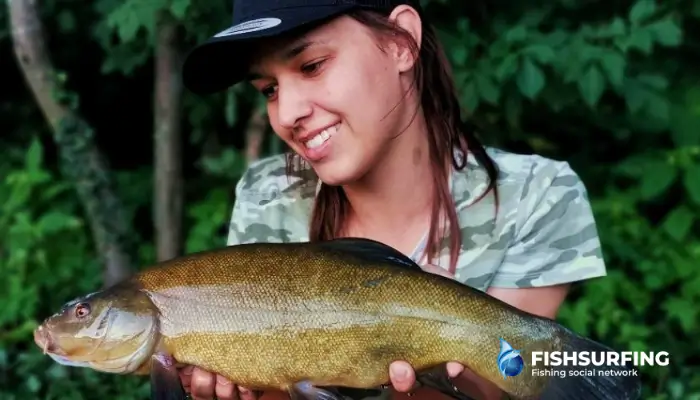
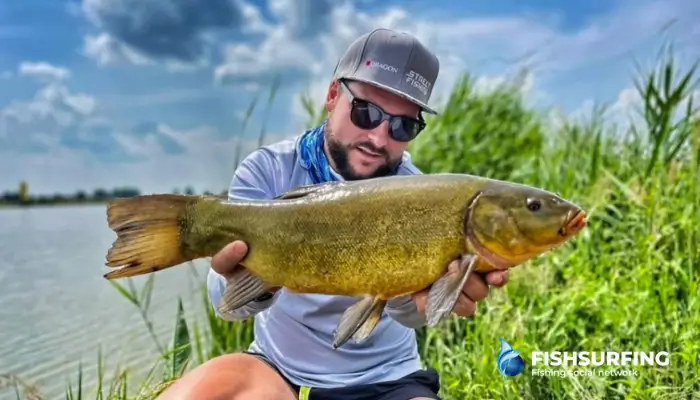
At first glance, the tench seems unremarkable, but anyone who has ever caught one knows full well that it is a very beautiful fish. It has a sturdy body, olive-green to golden coloring, small scales, and a distinctly slimy surface, which is characteristic of the species. A tench’s bite is often not particularly fierce, but the fight itself can be surprising and offer a very enjoyable battle.
The tench is a fish of calm and patience
Fishing for tench isn’t about constantly casting and noisy baiting. On the contrary. Often, the angler who prepares their spot, sits quietly, and is able to wait comes out on top. Tench may examine the bait cautiously; the bite may come slowly, and any unnecessary disturbance near the shore can scare the fish away.
That’s precisely why the tench is the ideal fish for anglers who enjoy a more subtle approach, observing the water, and a more relaxed pace. Sometimes all it takes is a few small bubbles on the surface, the movement of a reed stalk, or a gentle lift of the float—and you know something is happening beneath the surface.
When Is the Best Time to Fish for Tench
Tench are fish of the warmer part of the year. Their activity increases with water temperature, so they’re usually most active from late spring through summer until early fall. This doesn’t mean you can’t catch them outside of this period, but targeted tench fishing has the best chance of success precisely when the water warms up and the fish begin to actively search for food.
Late Spring
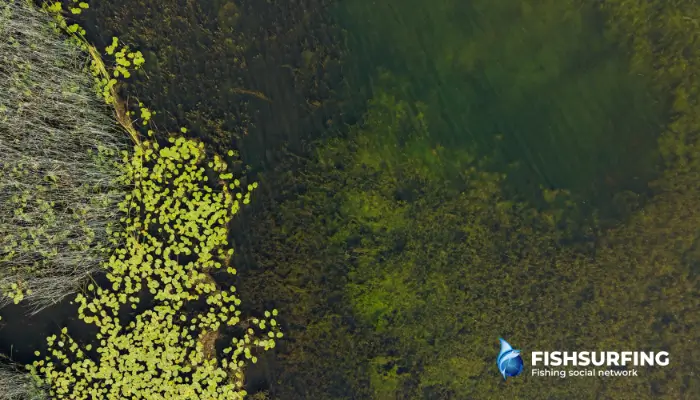
Late spring is a very interesting time for tench. The water is no longer cold, aquatic vegetation begins to thrive, and the fish are more frequently found in shallower areas. During this time, tench often seek out warmed-up coves, the edges of reed beds, shallower shoals, and spots where life is stirring near the bottom. Fishing tends to be most successful where the water warms up faster than the rest of the fishing area.
Summer
Summer is the classic season for tench fishing. In warm water, tench are most active early in the morning, in the evening, and sometimes even at night. During the day, they may retreat into denser vegetation, shade, or quieter spots where they have cover.
During the summer months, it pays to be by the water at dawn. The early morning hours often yield the best bites. The water is calm, there isn’t much activity along the banks yet, and tench may venture closer to the shore in search of food.
Early Fall
Early fall can be a very pleasant time for tench fishing. The water is still warm enough, but there’s usually less activity along the water’s edge than in summer. The fish often feed actively before their activity levels drop as the water cools further.
During this period, it’s worth looking for tench at the transition between overgrown areas and open water, near softer bottoms, or in spots where their natural food sources are found.
Best Time of Day
Tench often bite during the calmer parts of the day. The best times are early morning, late afternoon, and evening. In some bodies of water, you can fish successfully even during the day, especially if it’s cloudy, there’s a light breeze, or the fish aren’t disturbed.
On a bright, hot day, tench often hide in the vegetation and may be more cautious. But that doesn’t mean it’s not worth fishing. You just need to fish more precisely and delicately, and look for them where there’s shade, cover, and calm.
Where to Look for Tench
Finding the right spot is crucial when fishing for tench. Tench don’t usually move randomly throughout the water but tend to stay in specific areas that provide them with food, safety, and suitable conditions. If you find such a spot, you can return to it repeatedly.
Edges of aquatic vegetation
Aquatic plants provide tench with both cover and food. Excellent spots include the edges of reeds, water lilies, water hyacinths, aquatic grasses, or overgrown coves. However, it’s not necessary to cast directly into dense vegetation. It’s often better to place your bait at the edge of the vegetation, where the tench moves and from where you can land it more safely.
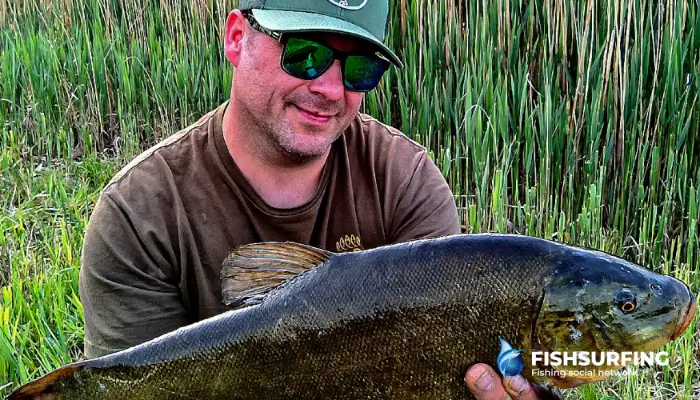
Shallower, warmed-up coves
In the spring and early summer, shallower coves that warm up more quickly work well. This is where small aquatic life begins to stir, and tench often search for food here. The most promising spots are usually where the shallows meet vegetation, a softer bottom, or a gentle transition to greater depths.
Muddy and softer bottoms
Tench often forage near the bottom, so look for them in softer sections with natural vegetation. A fine-grained bottom with plants, calmer water, and plenty of food is ideal. Fine bubbles on the surface can be a good indicator. Sometimes they reveal a fish digging in the bottom.
Quiet spots near the shore
Tench can be found surprisingly close to the shore, especially early in the morning, in the evening, or in less disturbed waters. However, a noisy approach to the water will easily scare them away. Before you start casting far out, check the nearest edge as well. When fishing for tench, calmness and stealth really pay off.
How to Tell If a Tench Is in the Area
Tench usually don’t give themselves away as clearly as, say, carp. Still, there are signs that can tell you you’re in the right spot.
Bubbles on the surface
Fine bubbles rising from a single spot may indicate that a fish is digging in the bottom. This is a fairly typical sign for tench, especially in shallower waters with softer bottoms. Watch to see if the bubbles move slowly or appear repeatedly in a single band.
Movement of vegetation
In overgrown waters, tench can be revealed by a gentle trembling of stalks, movement of reeds, or a subtle opening in the water among the plants. Sometimes you won’t see the fish itself, but only a slight movement that stands out on the calm surface.
Subtle lifting and lowering of the float
When fishing with a float, bites from tench are often slower and more cautious. The float may lift slightly, settle, drift to the side, or tremble gently a few times. With tench in particular, it’s important not to panic and to learn to distinguish a real bite from the nibbles of small fish.
Which technique to choose for tench
There are several ways to catch tench, with the most common being float fishing, bottom fishing, or light feeder fishing. Each method has its place and depends mainly on the type of water, fishing distance, and amount of vegetation.
Float Fishing
Float fishing is a wonderful and very effective method for catching tench. It allows you to fish delicately and precisely, while monitoring every detail of the bite. It’s particularly well-suited for shallower coves, the edges of reed beds, pools, oxbow lakes, and spots where you don’t want to make unnecessary noise.
It’s important to balance the float correctly. Tench can take the bait cautiously, and if the float offers too much resistance, they may let go of the lure. A more delicate rig often yields more bites, but it must be sturdy enough to handle the fish among the vegetation.
Static
The bottom-fishing rig is suitable for situations where you want to gently place the bait on the bottom and wait for the tench to find it. It’s practical for longer distances, in slightly overgrown areas, or where the float wouldn’t hold well. The rig should be as simple and inconspicuous as possible.
Light Feeder
A feeder rig can be very effective for tench, especially if you need to precisely deliver a small amount of feed to a single spot. A lighter setup, a smaller feeder, and subtle bait are preferable. Tench aren’t the kind of fish you can always attract with a large pile of food. They often bite better on smaller, regularly administered portions.
Tidefish Fishing Gear
Tilefish tackle should be delicate, but not weak. That’s an important distinction. The tench isn’t an extremely large fish, but it likes to stay among the vegetation and may try to dart into cover after a strike. If you choose a leader that’s too fine without any slack, you’ll lose fish unnecessarily.
Rod
For float fishing, a lighter float rod or a longer rod with a more sensitive action is suitable, allowing for precise control of the rig and gentle playing of the fish. For bottom fishing or feeder fishing, choose a rod based on the distance and the nature of the water. For smaller bodies of water, a more delicate setup is sufficient; for larger bodies of water or near vegetation, it pays to have a little extra slack.
Main Line and Leader
The main line should be inconspicuous but sufficiently strong. In clear water and when targeting cautious fish, thinner lines are preferable, but be mindful of the risk of abrasion near reeds, water lilies, or branches. Check your leader regularly, especially when fishing near vegetation or on a shell-covered bottom.
Hooks
Choose your hook based on the bait. Smaller, sturdy hooks with a good grip work well for worms and earthworms. For corn or pellets, you can choose a slightly larger size. Sharpness is crucial. Tench often take the bait cautiously, and a dull hook can mean a missed bite.
Landing Net and Mat
Tench have a delicate body and a very slimy surface, so handle them with care. Have the landing net ready before you even start playing the fish. If you’re releasing the fish, use a wet mat, keep your hands wet, and don’t keep it out of the water any longer than necessary.
Best Baits for Tench
Tench prefer natural, inconspicuous, and well-presented baits. Simplicity often pays off. There’s no need to bring dozens of exotic options to the water. What matters more is the right spot, a calm environment, and proper presentation.
Earthworms and manure worms
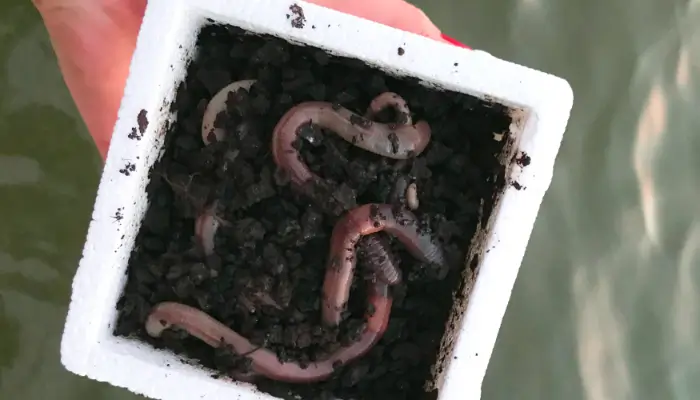
Earthworms are among the most classic baits for tench. They work best on softer bottoms, after rain, in more natural waters, and where tench are actively foraging near the bottom. Smaller earthworms can be excellent for more cautious fish, while larger earthworms can attract even bigger specimens.
Meatworms
Meatworms are versatile and very effective for tench. You can use them on their own, combined with earthworms, or with corn. The downside is that they often attract small whitefish. If small fish keep stealing your bait, try a larger piece or combine it with a sturdier bait.
Corn
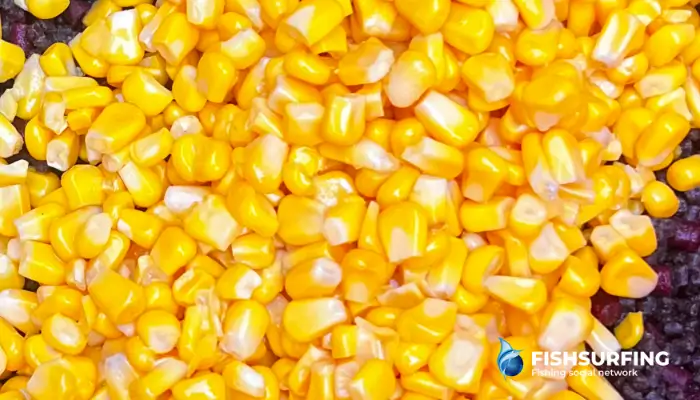
Corn is simple, readily available, and very effective in many waters. Tench take it well, especially where they’re regularly fed with it. It works well for float fishing, bottom fishing, and feeder fishing. One or two kernels are often enough.
Pellets
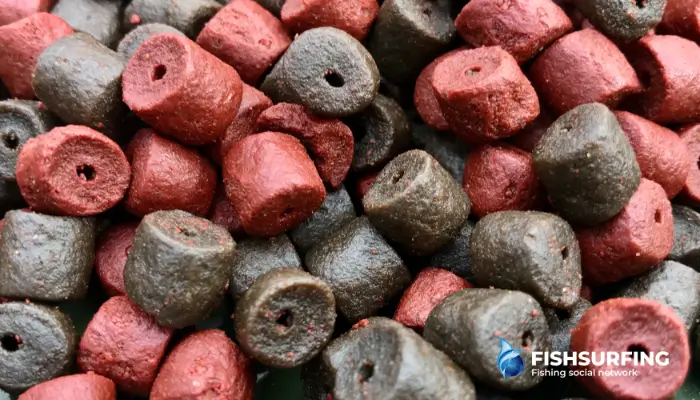
Smaller, softened pellets or fine pellets can be a good choice, especially in waters where fish are accustomed to modern feed. The advantage is that they last longer on the hook and allow you to better avoid catching small fish.
Dough and Baked Goods
In some older ponds, dough or finely prepared bread can also work well. It’s a softer bait that looks natural but doesn’t hold up as well on longer casts. It’s better suited for shorter distances and calmer fishing.
Bait Combinations
When fishing for tench, it often pays to try small combinations. A worm with corn, a piece of earthworm with a worm, or a small pellet supplemented with a worm can be more effective than a single bait on its own. But don’t overdo the combinations. A bite that’s too big can scare off a cautious tench.
How to Feed Tench
Feeding while fishing for tench should be moderate and well-planned. Tench aren’t fish that you need to bombard with large amounts of bait. Often, a smaller feeding spot that looks natural and doesn’t scare them away is enough.
- Smaller portions are safer. Start with a smaller amount of bait and watch the fish’s reaction. Too much bait can fill the tench up, attract small fish, or unnecessarily disturb the spot.
- The feed should work near the bottom. Tench mainly search for food at the bottom, so the feed shouldn’t break up too high in the water column. The mix should sink to the bottom and slowly release small particles there.
- Be careful with overly strong aromatic mixes. With cautious tench, a more natural approach is usually better. A milder, sweeter mix, a small amount of animal protein, or a bit of corn often seems more trustworthy than an aggressive scent trail.
- Precision is key, especially when fishing near vegetation. Feed exactly where the bait is located.
What a tench bite looks like
A tench bite can be wonderfully suspenseful. On a float, it often doesn’t start with a sudden plunge but with a slow movement. The float may first lift slightly, rest on the surface, tremble slightly, or drift slowly to the side. That’s exactly why float fishing for tench is so popular.
Don’t rush to set the hook at every slight touch. A tench may inspect the bait, lift it, and then let it go again. However, if the float drifts smoothly, sinks, or rises and remains stable, it’s time to react.
How to Land a Tench
After the strike, tench often try to dart into vegetation, reeds, or toward the bottom. That’s why it’s important to keep the rig under control right from the start. This doesn’t mean dragging the fish by force, but rather preventing it from immediately darting into the nearest cover.
Maintain a steady pull, work the rod, and try to steer the fish away from obstacles. If you’re fishing near vegetation, have your landing net ready in advance. Tench may strike several more times near the shore, and that’s exactly where fish that already seemed like a sure catch are often lost.