
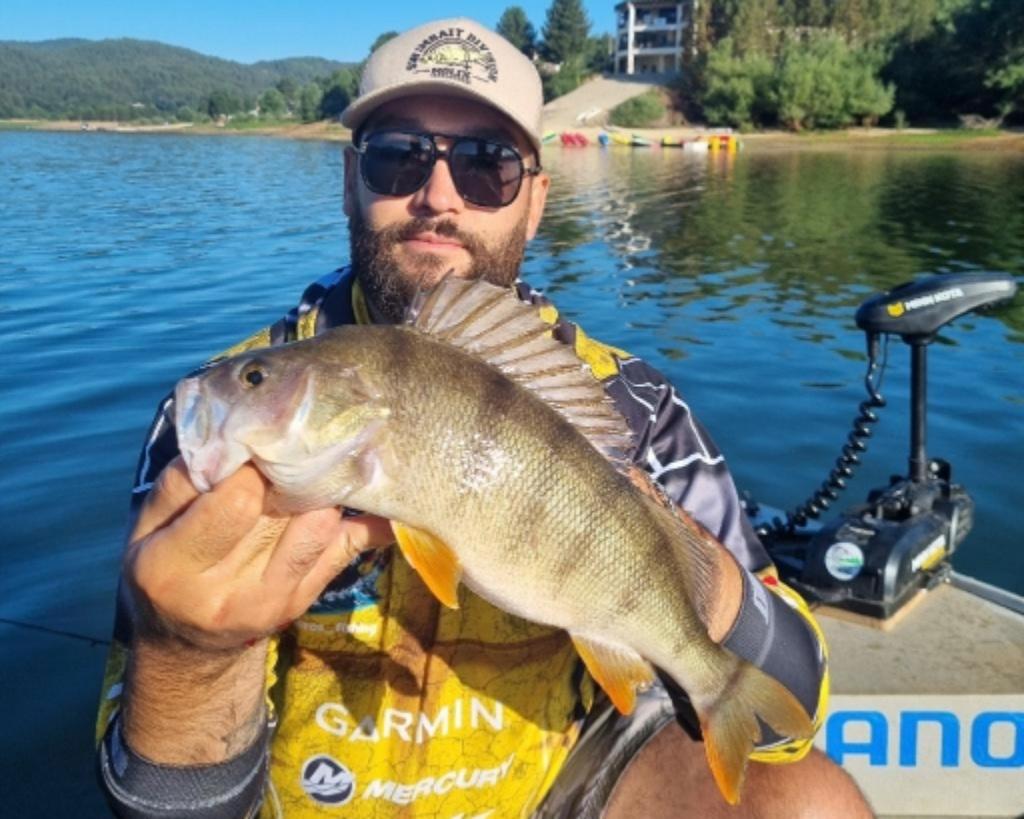


Riccardo does not remember the first time he held a fishing rod. He was only three years old, so this story will always remain one he knows from his father – the man who sparked his passion for sport fishing. Today, Riccardo has 30 years of fishing experience behind him, including five years competing in the Italian Predator Boat Fishing Championship with lures.
Although he mainly fishes in Italy, his fishing experience also includes trips to Ireland and Extremadura in Spain. His favourite fishing method is, of course spinning and in recent years, one species in particular has become especially close to his heart – the perch.
The Italian way of spinning
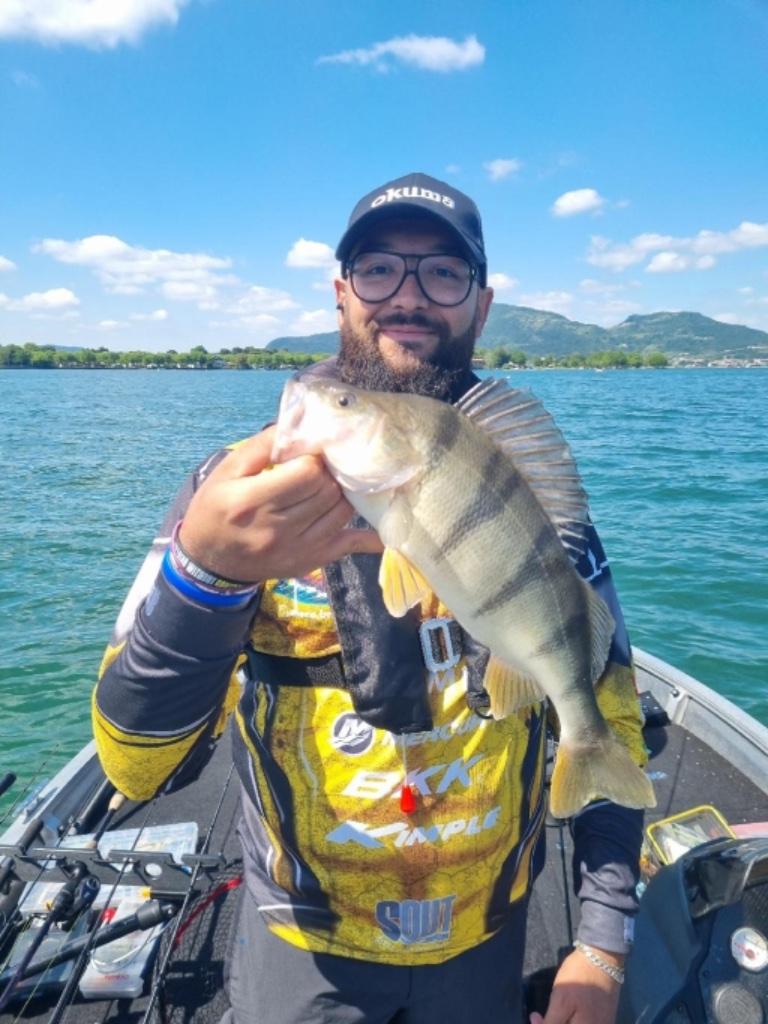
Spinning is a very popular and important part of fishing in Italy. Riccardo has also seen its development from the other side of the counter, having worked in a fishing tackle shop. As he explains, he had the opportunity to see many people discover spinning and gradually explore its different forms.
In Italy, spinning is practised by both recreational anglers and competitive fishermen. Anglers fish mountain streams, lowland rivers and large rivers such as the Po and Ticino. Street fishing and boat fishing for predators are also very popular. However, according to Riccardo, bass fishing remains the most popular form of spinning.
This diversity is what makes spinning so versatile, offering anglers countless opportunities - from freshwater to saltwater and from small rivers to huge bodies of water.
How perch became a passion
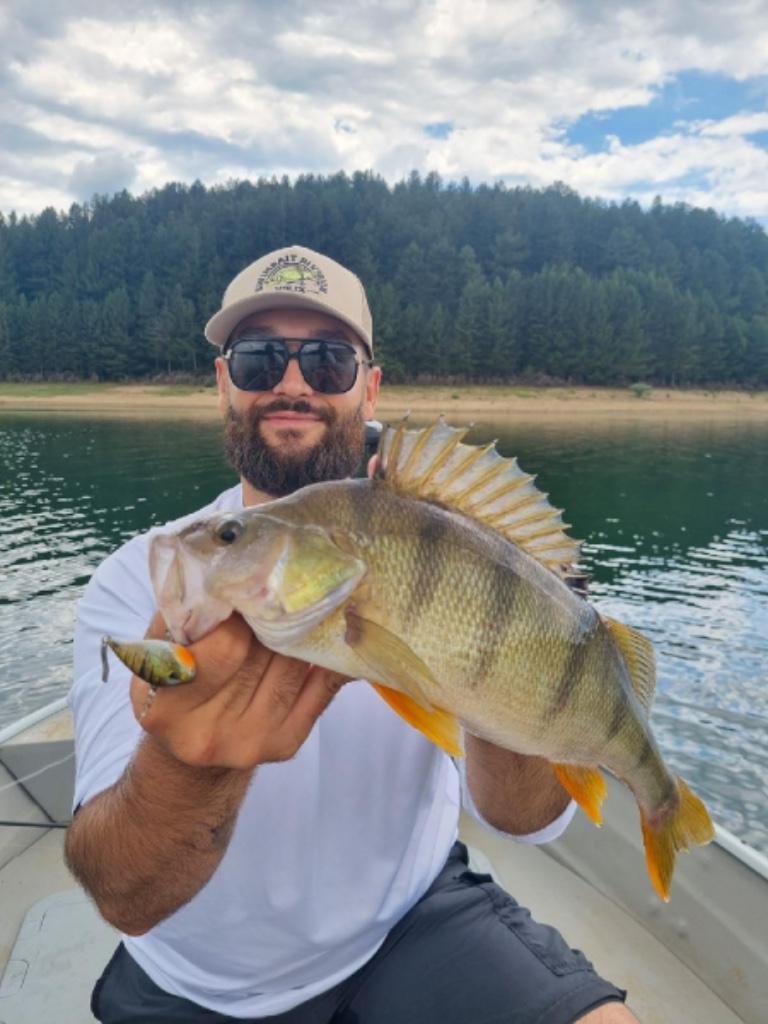
Riccardo’s story with perch began in a slightly unexpected way. It was not initially a species he planned to focus on. Instead, perch entered his fishing life out of necessity.
When he started competing, he quickly realised that he could not rely solely on pike. To be successful in competitions, he also had to learn how to target perch.
After three years, he can say that this necessity has turned into a genuine passion. Perch have given him a great deal of satisfaction and have now become one of the most important species in his fishing.
Interestingly, Riccardo points out that perch can be found in a wide variety of waters. They inhabit rivers, large lakes in northern Italy, reservoirs in the central and southern parts of the country, as well as smaller quarry lakes.
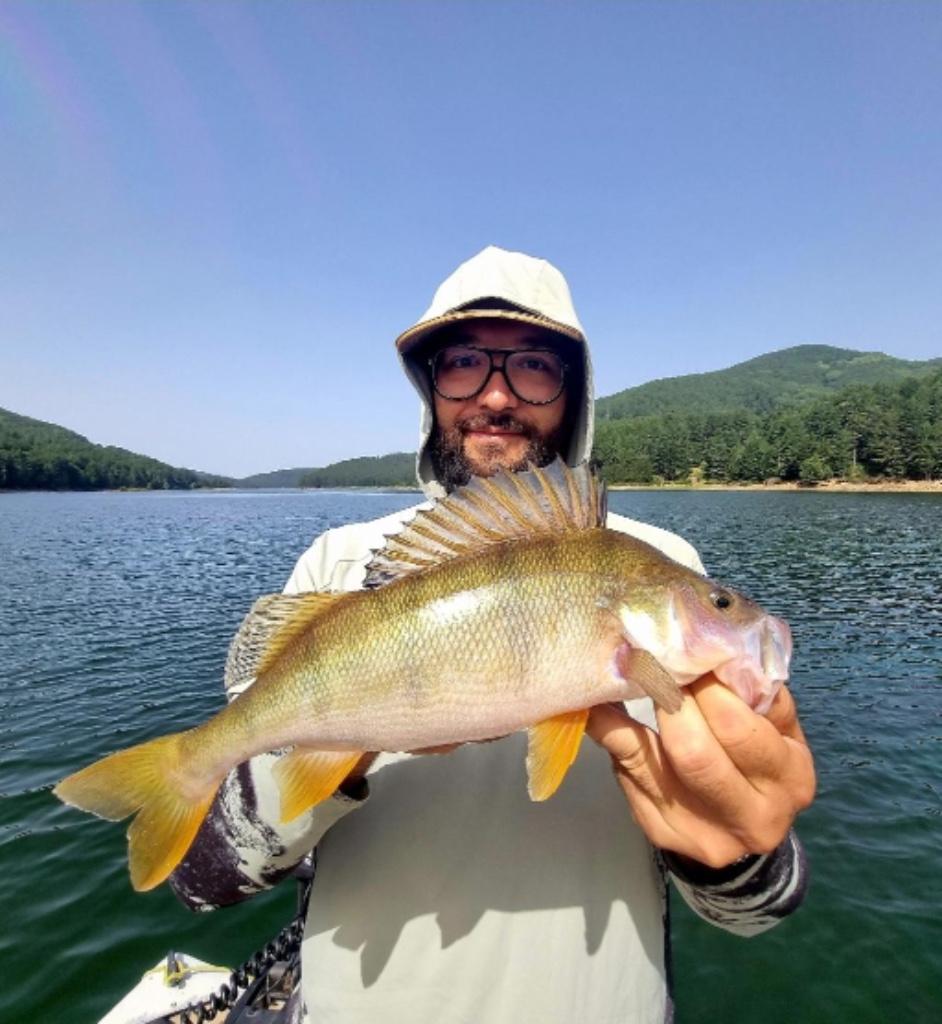
His personal best perch measured 45 cm and was caught in Lake Maggiore
Wild Italian waters
When choosing between public and private waters, Riccardo’s preference is clear – he definitely favours public waters, including smaller quarry lakes.
Of course, he understands that for anglers who are not able to travel freely, private fisheries can be a good place to spend a few peaceful hours by the water. However, he believes they are often not the ideal solution.
It is on public waters that he has caught his most beautiful perch.

Favourite and most-used lures
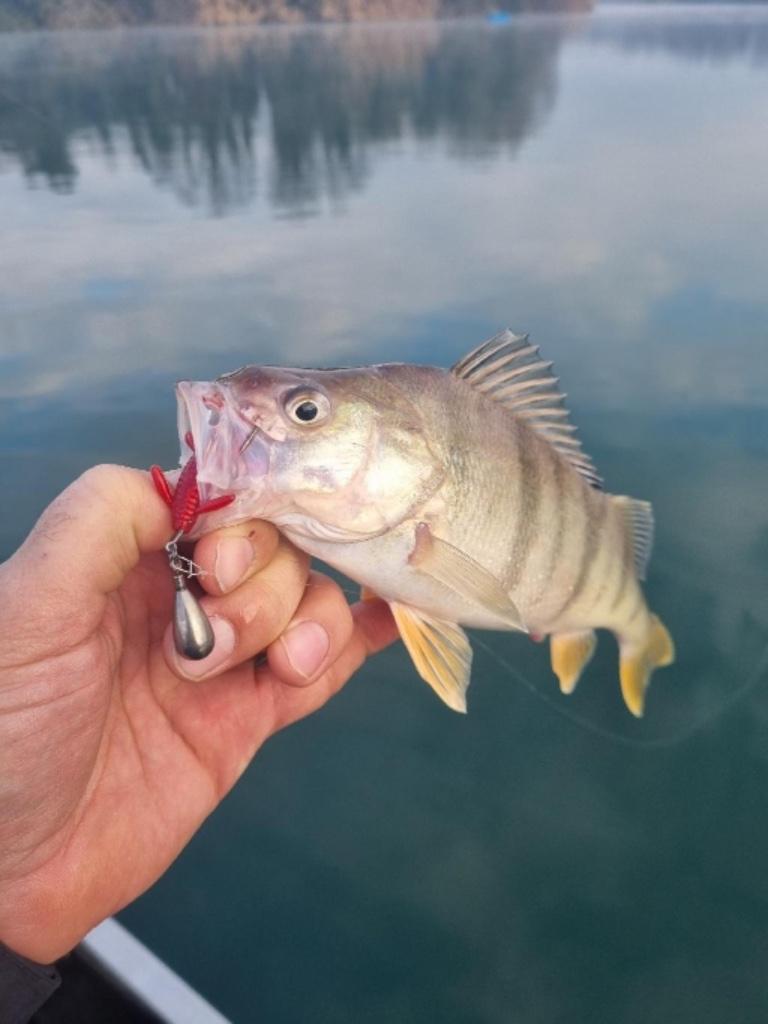
When targeting perch, Riccardo uses a variety of lures. He particularly enjoys fishing with shads on jig heads and soft shrimp imitations.
Both allow him to fish more slowly and keep the lure in the chosen area for longer, giving him the opportunity to thoroughly work a specific zone. When he needs to search the water more quickly, he turns to metal lures - VIBs, spin tails and metal jigs.
Each type of lure therefore has its own role. Some allow him to stay in one area and fish it more precisely, while others are primarily used to quickly locate active fish.
That is why, during a single fishing trip, he believes none of these lure groups should be missing from his tackle box.
Big perch require a different approach
One of Riccardo’s most important tips for targeting big perch is very simple: if there are smaller perch in a body of water, there may also be bigger ones.
The key, however, is to approach them in the right way. Anglers should not be afraid to think outside the box, including when it comes to lure size.
Riccardo himself uses lures measuring up to 3–4 inches. This does not mean that bigger lures are always the answer. Rather, the point is not to limit yourself to small lures simply because you are targeting perch.
The fishing conditions in Italy also play a role. Anglers often fish at considerable depths, which is why Riccardo uses jig heads weighing between 10 and as much as 20 grams.
No secrets – just experience
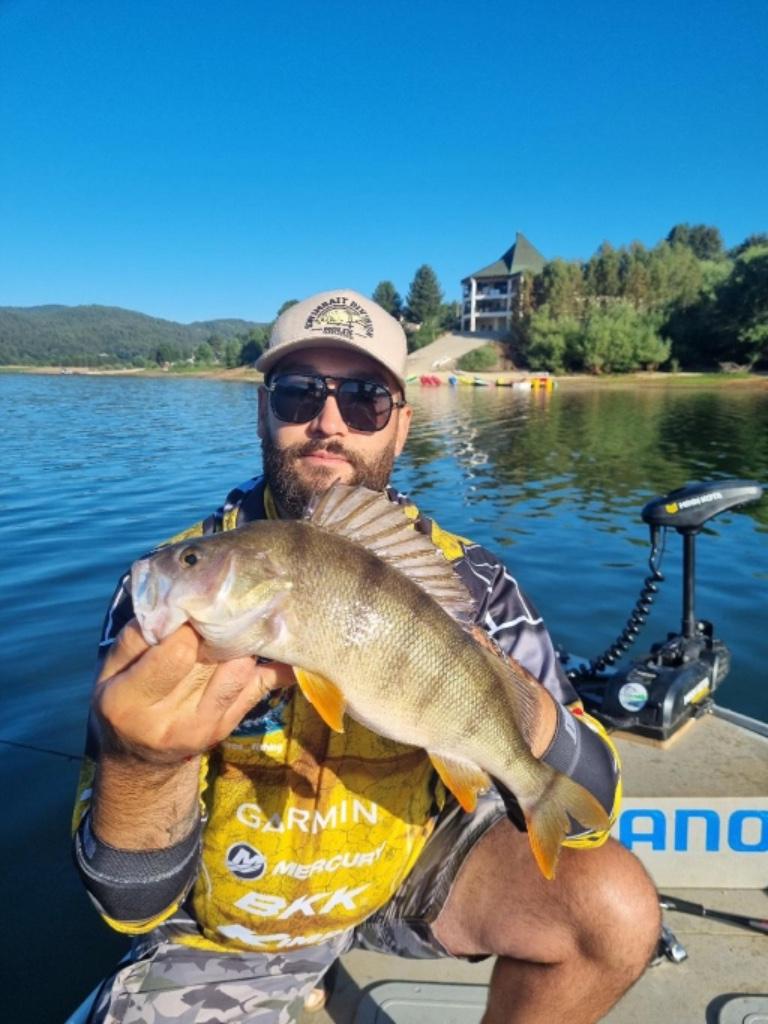
After 30 years of fishing, Riccardo is not looking for any magic formula for success. In his view, one of the most important parts of becoming a better angler is understanding your own mistakes.
Analysing unsuccessful trips and learning from them is what allows you to improve and grow as an angler.
There are no real secrets in fishing. There are only experiences that need to be observed, analysed and used to make better decisions on future trips.
Perhaps that is one of the most important lessons fishing has to offer. Whether we have been fishing for a few years or for three decades, there is always something new to discover.
As the Italian saying goes: you never stop learning.