


Fly fishing has a special reputation among anglers. For some, it’s the ultimate discipline; for others, it’s a beautiful but unnecessarily complicated technique they’re afraid to try. And that’s a shame. Fly fishing doesn’t have to be an inaccessible world full of expensive gear, Latin names for insects, and perfect casts that take years to master. Once you understand the basic principles and learn to read the water around you, it can actually be one of the most beautiful ways to fish.
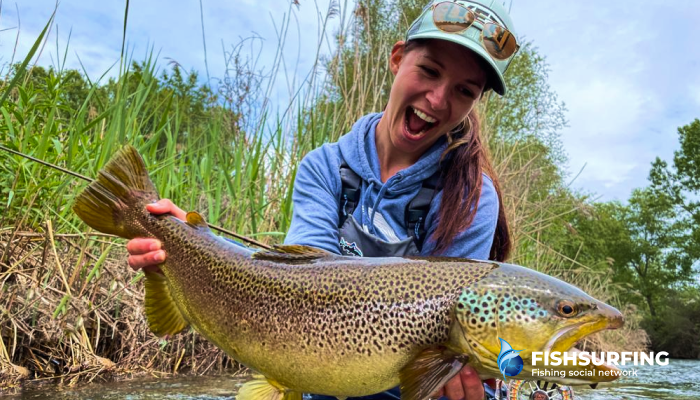
What is fly fishing and how does it differ from other techniques
While in spinning, feeder fishing, or classic float fishing, you get the lure to the fishing spot primarily thanks to the weight of the lead, the feeder, or the lure itself, fly fishing works on a completely opposite physical principle. The artificial fly itself is often as light as a feather and lacks sufficient kinetic energy to fly.
The secret to a graceful cast lies in the fly line
What flies through the air during the cast and pulls the lure behind it is a special fly line. Its specific weight and profile allow for that incredibly gentle and precise presentation of the lure on the water’s surface.
It is precisely this that makes fly fishing seem so elegant and harmonious, and at first glance, so different from conventional fishing. It is a technique based on precision, a perfect sense of the water’s current, and sensitive handling of the tiny lure.
Fly fishing isn’t just for a select few connoisseurs
From a distance, the graceful casting of the line may look like an art reserved exclusively for veteran anglers. For every beginner, however, it is crucial to realize one fundamental thing. Fly fishing is not, at its core, more complicated or bound by stricter rules than other methods. Its uniqueness lies solely in the fact that it requires the integration of several different skills into a single fluid whole.
Who is fly fishing a good fit for
Fly fishing suits those who enjoy an active and observant style of fishing. It is not a technique for someone who wants to sit in a chair, cast, and wait. Here, you’re mostly on the move, observing the water, and constantly thinking things through. At the same time, though, it’s not a race. Fly fishing has its own rhythm, which is usually calm, focused, and surprisingly soothing.
How to Choose Your First Fly-Fishing Gear
This is where many beginners get unnecessarily flustered. They see dozens of types of rods, lines, leaders, and flies and feel that it’s not worth starting without expensive gear. In reality, however, it’s better to stick with a simple and versatile setup that forgives mistakes and allows you to learn the basic movements and how to work the water.
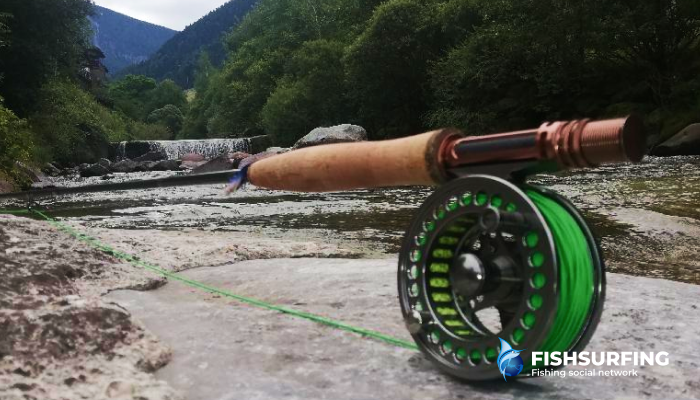
Your first fly rod
When choosing your first rod, it makes the most sense to go for a versatile model that can easily handle small to medium-sized rivers. There’s no point in spending money on extremely light or, conversely, overly specialized rods. As a beginner, you need a rod that can handle a light dry fly but is also capable of nymphing or wet fly fishing.
The gold standard for typical local conditions in trout and grayling waters is a 9-foot (approximately 270 centimeters) fly rod in the medium weight class designated as AFTMA 4 or 5. Such a rod isn’t unnecessarily heavy, doesn’t feel clumsy in the hand, and is excellent for learning the basics of proper casting and delicate lure control.
Fly Reel
In fly fishing, the reel is usually not as critical as it is, say, in spin fishing. For standard trout and grayling fishing, it plays more of a supporting role. But that doesn’t mean it doesn’t matter which one you buy. The reel should be reliable, well-balanced with the rod, and run smoothly. It doesn’t have to be an expensive top-of-the-line model, but it definitely shouldn’t feel like the cheapest plastic emergency reel that you’ll want to replace after your third outing.
Fly Line
Here, beginners often underestimate one thing: a high-quality line is often much more important than a top-of-the-line reel. It is the line that determines how you’ll cast and how quickly you’ll master the basic motion. For your first setup, it’s therefore wise not to skimp on the line, because a poor-quality line can make the early days unnecessarily frustrating.
For your first season, a floating fly line is clearly the most practical choice. It’s great for learning and covers most situations you’ll encounter by the water. The ideal choice is a so-called WF profile. Its center of gravity is shifted forward, which significantly helps beginners load the rod better during the cast and deliver the fly to the target more easily.
Leaders and Accessories
In addition to a rod, reel, and line, you’ll also need basic leaders, a little extra material, and a few small items. But you don’t need to buy half the store to get started. A few ready-made leaders, scissors or nippers, a fly hook setter, and a fly box are more than enough. The goal of your first setup isn’t to be prepared for everything, but to have enough to get out there and start fishing.
Which artificial flies to choose for your first box
A glance into the display window of a specialty shop is often both fascinating and intimidating for a beginner. Huge boxes filled with hundreds of colorful flies may look beautiful, but they’re more confusing than helpful when you’re just starting out. If you’re constantly sorting through dozens of unfamiliar patterns while you’re out on the water, you’ll waste both time and concentration. A much better strategy is to put together a small, simple selection of proven classics and learn how to use them properly.
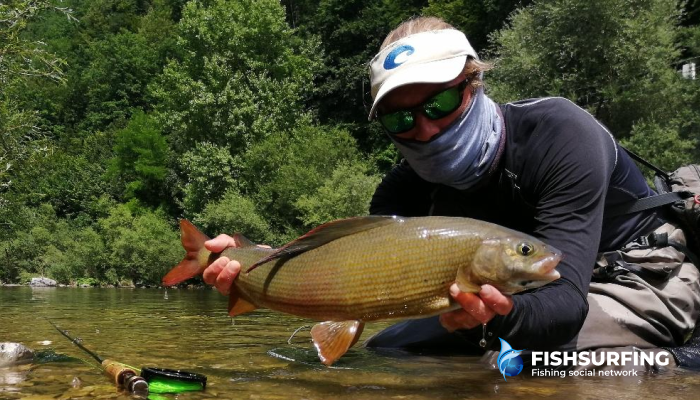
Less is more when you’re just starting out
For your first season, one small box will be more than enough—it should contain a few basic dry flies, a couple of versatile nymphs, and one or two simpler streamers.
Your main task in the first few months isn’t to test complex color combinations, but to understand when it’s time to reach for a dry fly floating on the surface, when fish are feeding near the bottom and require a nymph, or when a predator is provoked by the livelier movement of a streamer.
Versatile patterns and sizes for Czech waters
When shopping, stick to more natural color variations and medium sizes. In the fly-fishing world, hook size is indicated by numbers, with sizes 12, 14, and 16 being ideal for beginners. And what specific patterns should you definitely have in your collection?
From classic dry flies that mimic adult insects on the surface, go for the tried-and-true classic called the Red Tag, add a versatile caddis, and a Klinkhammer-style mayfly, which is beautifully visible on the water.
Among the nymphs that imitate the developmental stages of insects underwater, the absolute world leaders are the Hare’s Ear and the Pheasant Tail with a tungsten head for a faster sink rate. With this handful of patterns, you’ll comfortably get through your entire first season.
Where to Start Fly Fishing
Choosing your first fishing spot is perhaps even more important than choosing your first rod. If you start on a river that’s too fast, wide, or technically challenging, you might feel that fly fishing is unnecessarily complicated. Yet the problem won’t be the method itself, but the fact that you chose terrain that was too difficult for a beginner.
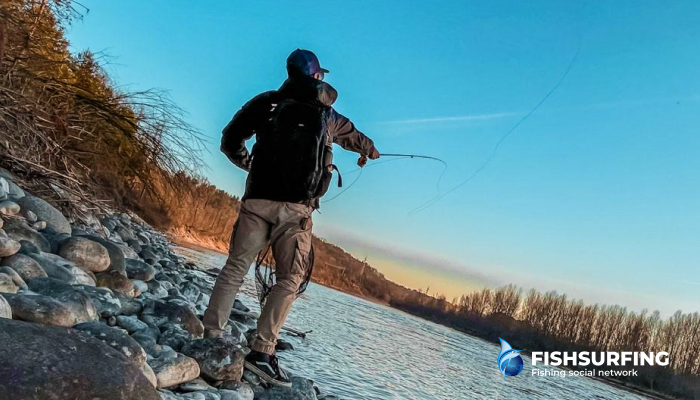
Small and medium-sized rivers are ideal
For your first outings, the best option is a small or medium-sized stream where you can easily read the current, wade comfortably, and where you don’t need to cast long distances. Such water is more forgiving of mistakes and will also teach you the absolute basics: where fish might be holding, how the current works, and where it makes sense to place your fly.
Avoid the crowds
It’s usually better to start on calmer waters where no one is watching you after every tangled cast. Fly fishing is a technique where it’s normal for the first few dozen casts not to be perfect. If you’re standing on crowded, well-known waters among experienced fly fishers, you’ll be more nervous than focused.
Find a spot where you’ll have space and peace. That’s another reason why it makes sense to scout the area in advance, look at a map, consider others’ experiences, and assess whether the water is suitable for your first attempts.
Basic fly-fishing techniques for your first season
At the beginning, there’s no need to master dozens of complex styles. It’s more than enough to understand three basic approaches that will open the door to most situations you’ll encounter by the water.
Dry fly fishing: a visual thrill
For most anglers, the dry fly is the most beautiful introduction to this discipline. The fly floats right on the surface, so you see the entire strike in real time.
This technique is extremely instructive because it immediately teaches you precise presentation. If the line pulls the fly unnaturally (so-called “plowing”), the fish will lose interest in it. On smaller trout waters, this is an ideal and highly addictive way to start.
Nymphing for maximum success below the surface
While the dry fly is the queen of the surface, the nymph reigns at the bottom, where fish consume up to 80% of their food. This method mimics insect larvae carried by the current and is often extremely effective even when nothing is happening on the surface. For beginners, nymphing is more demanding in terms of estimating depth and reading subtle line contact, but thanks to its effectiveness, it will save you many fishing trips.
Active fishing with a streamer
Streamer fishing is a more dynamic style that imitates a small fleeing fish or leech. Unlike the previous techniques, you don’t just let the lure drift freely, but actively animate it by pulling on the line. It’s a great “secret weapon” for murky water after rain or in situations where you’re targeting larger predators that have outgrown small insects.
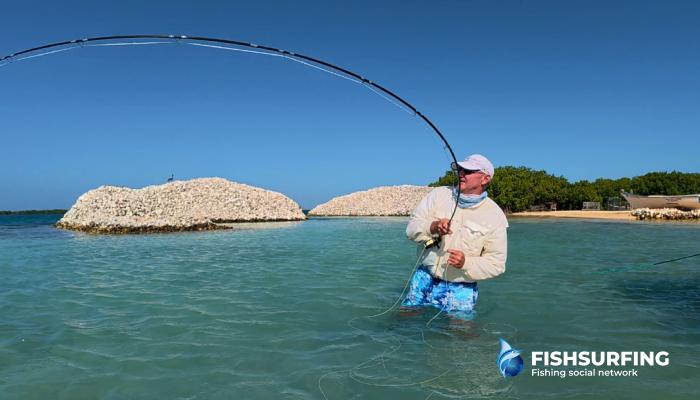
Fly fishing is beautiful precisely because you’re always learning
Perhaps the best thing about fly fishing is that it constantly pushes you forward. Even if you can already cast decently, you’re still learning to read the water. Even if you know where to stand, a change in light or the fish’s mood can still surprise you. And that’s exactly why so many people stick with it for years to come.
But you really don’t need perfection to get started. You just need a reasonable starter kit, suitable water, and a desire to learn. Once you have that, the rest will come with time. And you’ll likely discover very quickly that fly fishing isn’t some inaccessible discipline for the chosen few, but a wonderful way to perceive the water in a slightly different light.