


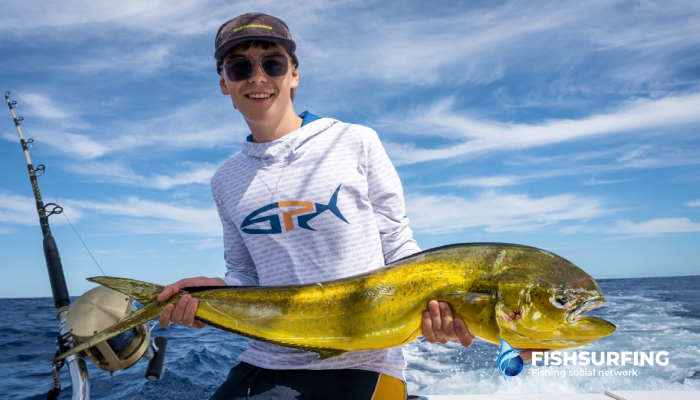
The hook is a small detail, but it often determines whether you’ll actually hook the fish. A hook that’s too large unnecessarily weighs down the lure and looks unnatural, while a small one might not sit properly in the fish’s mouth. Therefore, always choose the right size based on the lure, the target fish, and the fishing method itself.
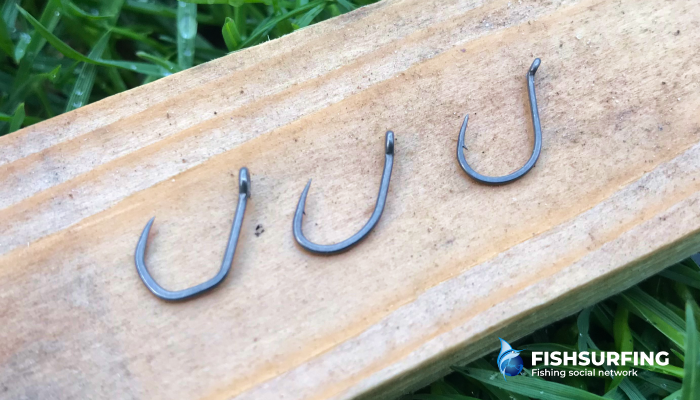
Understanding Hook Sizes
Beginners are often confused by the seemingly reversed numbering system. For standard hooks, the higher the number, the smaller the hook. Size 16 is therefore smaller than 12, size 12 is smaller than 8, and so on.
For very large hooks, you’ll encounter sizes such as 1/0, 2/0, 3/0, and so on. Here, the logic is standard: as the number increases, so does the hook size.
A simplified series looks like this: …18 – 16 – 14 – 12 – 10 – 8 – 6 – 4 – 2 – 1 – 1/0 – 2/0 – 3/0…
However, the number alone doesn’t tell the whole story. Hooks from different brands with the same designation may not have identical shapes or dimensions. One might have a wider bend, another a longer shank, or be forged from thicker wire. Therefore, treat the number mainly as a guide and always examine the specific shape.
Think about the bait first, then the fish
When choosing a hook, start with a simple question: What am I going to put on it?
The hook should be large enough to hold the bait while keeping the point exposed. At the same time, however, it shouldn’t overwhelm the bait unnecessarily. If you bait a sturdy hook with a single small worm, it will look very suspicious underwater. Conversely, if you force a large bloodworm onto a small hook, you’ll most likely cover the point and reduce your chances of a successful hookset.
Worms
Smaller, lighter hooks are traditionally used for meat worms. If you’re targeting small whitefish with one or two worms, use sizes 16 through 20. For a larger bait or when fishing for bigger fish, you can switch to sizes 12 through 16. It’s important that the worms aren’t crammed onto the hook so that the point can do its job reliably.
Corn
A kernel of corn is a larger bite, so it can handle a sturdier hook. Depending on the specific rig and target fish, you’ll usually start with hook sizes ranging from 8 to 14. It also depends a lot on whether you’re hooking the corn directly onto the hook or placing it on a leader. With a leader rig, the hook remains completely free, so it doesn’t have to match the exact size of the bait.
Boilies and Pellets
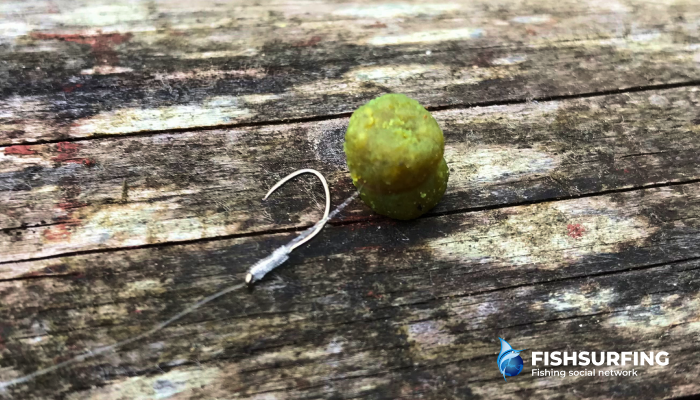
For pellets and boilies, the diameter and the way they’re rigged play the main role. Hooks around sizes 8 to 12 work well with small pellets, mini boilies, or wafters. For larger pellets, on the other hand, sizes 4 to 8 are commonly used.
However, even when fishing for carp, the rule that “the bigger the fish, the bigger the hook you need” doesn’t always apply. Much more important is the overall mechanics—that is, how the bait, hook, and leader work together in the water.
Earthworms and bloodworms
Earthworms need a little more space on the hook. For smaller earthworms, you can start with hook sizes 8 through 12, while a hook size 4 through 8 is suitable for a good-sized bloodworm or a cluster of earthworms.
If the hook is too small, the bait will pile up on it and hide the point. This is exactly what leads to a situation where you get a nice bite, set the hook, and come up empty.
What Hook Size to Choose Based on the Fish
The target fish, of course, plays a role. It primarily determines how strong and wide a hook you can use and how large a bite you plan to offer it. Therefore, treat the following values mainly as a starting point.
|
Fish |
Approximate hook size |
|---|---|
|
Roach, rudd, and small whitefish |
14–20 |
|
Bream |
10–16 |
|
8–14 |
|
|
Roach |
6–14 |
|
Barbel |
6–12 |
|
Carp |
4–10 |
|
Amur |
4–10 |
The wide range in the table is not a mistake. You can catch chub with a tiny worm just as easily as with a much larger bait. And the same applies to carp or tench, for example.
Therefore, looking for a single universal answer to the question of which hook to choose for carp or tench doesn’t make much sense. You’ll simply choose a different hook for a small wafters than for a massive boilie. Moreover, this rule applies to practically every fish.
Choosing a Hook Based on Fishing Technique
Every fishing discipline has its own rules and specifics. The way you present your bait, as well as the equipment you use, plays a crucial role in hook selection.
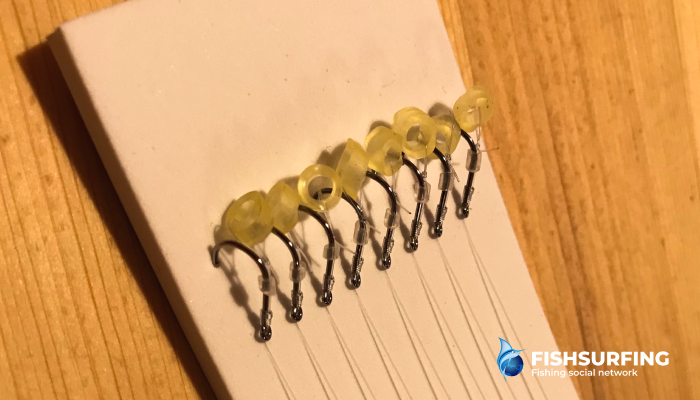
Feeder fishing usually calls for a smaller hook
Feeder fishing often involves smaller baits and a more delicate rig, so smaller hooks are commonly used. For worms, corn, or small pellets, there’s no point in using an unnecessarily sturdy hook.
However, this isn’t a competition to use the smallest hook possible. If you’re getting clear bites but can’t set the hook properly or the fish fall off while fighting them, the problem may lie in an inappropriate hook size or shape.
A lot also depends on the water itself. A delicate rig for bream in a calm pond requires a completely different approach than a feeder rig on a river, where current, rocks, and often larger fish come into play. This is clearly evident, for example, when fishing for barbel. Even if you use a relatively small bait, you need a hook you can trust 100 percent when fighting a fish in the current.
Adjust the hook size for carp to match the entire rig
When carp fishing, you’ll commonly encounter sizes such as 4, 6, 8, or 10. However, the carp’s weight alone isn’t the deciding factor. Imagine two scenarios. In the first, you’re fishing with small boilies and a delicate rig for cautious fish. In the second, you’re using a larger bait in waters where you expect large carp and are fishing near snags. The same hook won’t be ideal for both situations.
When fishing for carp, therefore, pay close attention to the ratio between the bait and the hook. The point must remain free, and the shank needs enough space to securely catch in the mouth. At the same time, however, the hook should not appear disproportionately large next to the bait.
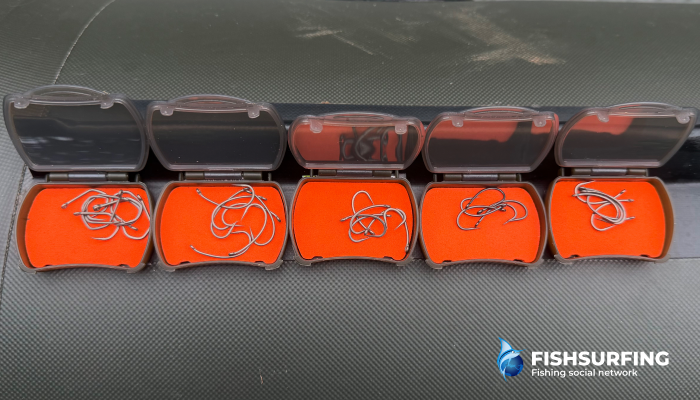
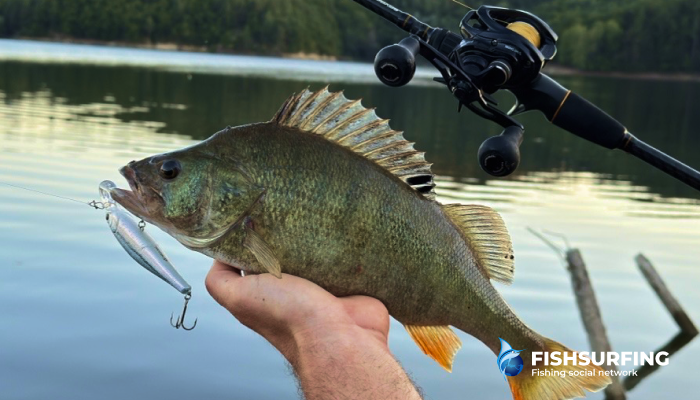
When spin fishing, the hook must primarily match the lure
Spinning works a little differently. Wobblers, spoons, and spinners usually come with hooks already attached, so anglers mainly consider hook size when replacing them. You’ll be choosing the size of a single hook much more often for soft plastic lures.
With a jig head, the hook length must always correspond to the body of the soft plastic lure. If the hook is too short, it protrudes from the lure almost immediately behind the jig head. Conversely, if it is too long, it extends too far into the rear section and unnecessarily restricts the natural movement of the tail.
Overall strength is also important. A hook for light perch trolling can be thin and light, whereas when fishing for pike or larger zander, you’ll need significantly more strength.
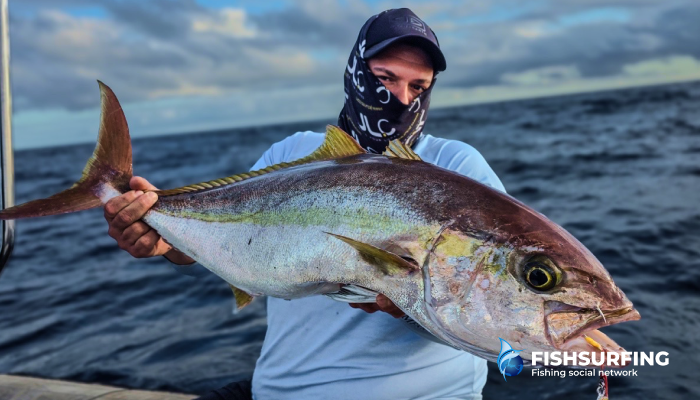
The size of a fly fishing hook isn’t determined solely by the target fish
In fly fishing, it’s common to use hooks in sizes 12, 14, 16, and even significantly smaller. Here, hook size is very closely tied to the size of the insect you’re trying to imitate.
And fly fishing beautifully illustrates why the well-established rule “big fish equals big hook” doesn’t work in practice. Even a truly massive trout can skim tiny insects off the surface and will readily take a small fly on a delicate hook. That’s why you should always think first and foremost about what exactly you’re offering the fish.
When to Choose a Smaller Hook
A smaller hook is ideal when fish are cautious, the water is clear, or you’re using a very small bait. A light hook doesn’t weigh down the lure as much, so it behaves much more naturally underwater. A typical example is when you get subtle bites—the fish are just testing the bait warily and don’t want to take the whole thing. Using a smaller hook along with a smaller bait at such moments often yields the desired result.
However, there are clear limits to how small you can go. If your hooks start to straighten out, the fish fall off while you’re playing them, or you see after landing them that the hook is only sitting very shallowly in the mouth, it’s time to go up a size or switch to a model made of thicker wire.
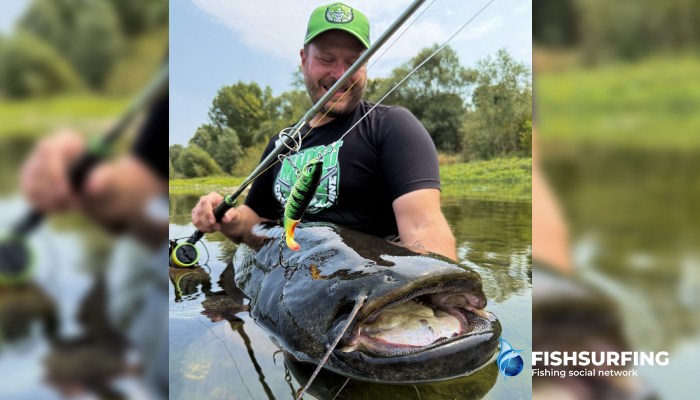
When to Use a Larger Hook
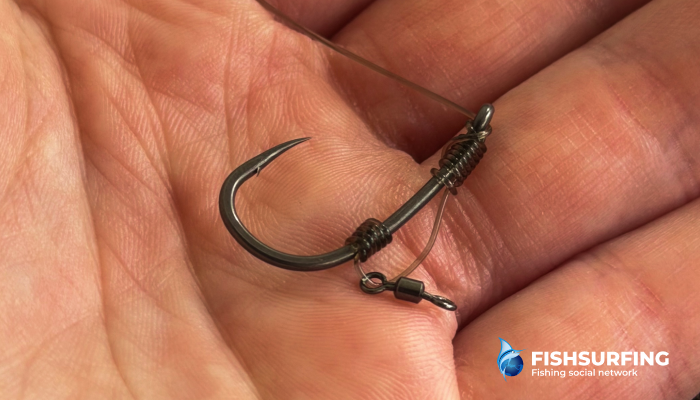
A larger hook makes sense when paired with a bulkier lure, when specifically targeting large fish, or in situations where you absolutely need a wider gape for a reliable set. When making your selection, however, don’t focus solely on the size number. The shape and wire strength are also absolutely crucial. A delicate size 8 hook for small whitefish may have nothing in common with a massive carp hook of the same size other than the number on the box.
Therefore, when making your final choice, always consider:
- The size and type of bait
- The width of the hook bend
- Wire thickness
- The length of the shank
- The shape of the hook point
- Strength of the expected fish
In many situations, you’ll find that instead of automatically moving up to a larger size, a sturdier hook made from thicker wire in the same size works much better.
If you’re unsure, bring two sizes
You don’t have to have your hook selection figured out down to the last detail at home. If you’re hesitating between a size 10 and a size 12, for example, take both with you to the water. Start with the hook that best suits your lure and the expected fish, and then adapt to the situation as it unfolds. If the fish are only cautiously nibbling, lighten up the rig. Conversely, if you’re getting strong strikes and fish are getting away, check the hook point and switch to a larger or sturdier model.
Above all, don’t change everything at once. If you switch the hook, lure, leader, and even your spot all at the same time, it will be hard to tell exactly what worked in the end.
The right hook size simply isn’t a single specific number. It’s primarily about finding the right balance between the lure, the hook, the target fish, and the fishing technique. Once you start choosing based on these four factors, you’ll immediately know which hook to reach for.