


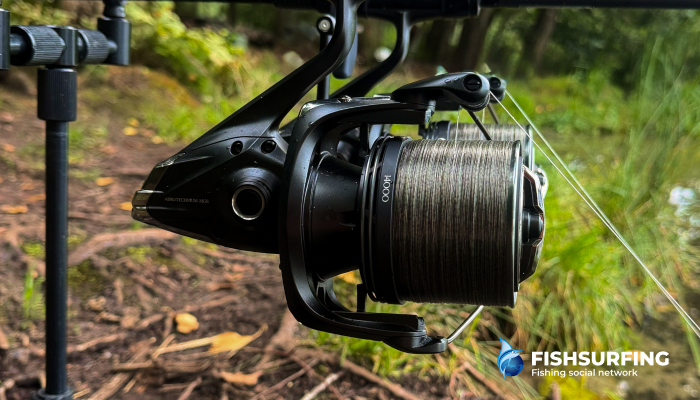
You hardly notice the reel’s drag during normal fishing. But as soon as a larger fish takes the bait, it can determine whether you’ll land it. A drag that’s too tight puts excessive strain on the leader and hook, while one that’s too loose gives the fish too much room. Setting it correctly isn’t difficult, though. Just set the drag in advance and fine-tune it gently as needed while fighting the fish.
What the Reel Drag Actually Does
The drag determines how much resistance the fish must overcome to start unwinding the line from the spool. As long as the pull isn’t strong enough, the spool holds firm. As soon as the fish pulls harder, the drag releases and lets out some line.
This protects several of the weakest points in the entire setup at once. The reel helps dampen the fish’s runs, rather than leaving it all up to the rod. This reduces the risk of the line or leader breaking, the hook straightening out, or the fish biting the hook clean out of its mouth.
However, this doesn’t mean the drag should slip immediately with every movement of the fish. It must be set so that you maintain control over the fish while still allowing it to run safely during a truly powerful run.
What Happens If You Tighten the Drag Too Much
A drag that’s set too tight is a common mistake, especially when an angler wants to gain as much control over the fish as possible. At first glance, it makes sense: if the spool doesn’t give way, the fish won’t get away.
But the force of the run has to be transferred somewhere. If the drag doesn’t give way, the rod, line, knot, leader, and hook will bear the brunt of it. And eventually, one of these components may give way.
The result is usually:
- a broken leader
- a broken knot
- a straightened hook
- a hook that’s been sheared off
- in extreme cases, even damage to the rod
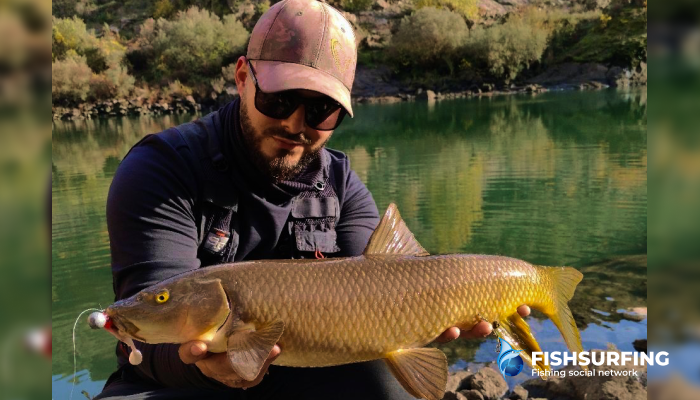
This is clearly evident, for example, when fishing for barbel. A strong fish in the current can generate much greater pulling force in an instant than would be expected given its size. If the drag doesn’t give even a centimeter on the first run, a more delicate rig may not stand a chance.
But having the drag set too loose isn’t the solution either
At first glance, the other extreme seems safer. If the drag is very loose, logically nothing will snap. But you also need to successfully land the fish. If the spool spins almost without resistance, the fish can easily swim off into branches, submerged trees, rocks, or aquatic plants. The fight drags on unnecessarily, and you lose the necessary control over its course.
You can often tell if the drag is too loose right when you set the hook. You lift the rod, the spool spins immediately, and not enough tension is transferred to the hook. With many techniques, you’ll miss the strike before the actual fight even begins. The correct setting is therefore a compromise. The drag must hold under normal pull, but smoothly release the line during a stronger run.
How to Set the Drag Before Your First Cast
It’s best to check the drag before you start fishing. Waiting to adjust it until you catch your first big fish isn’t ideal, especially if you haven’t yet fully mastered the reel’s operation.
The procedure is simple:
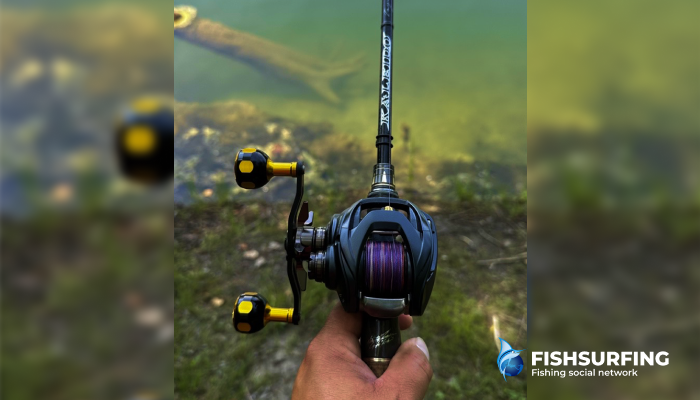
1. Prepare the entire setup
A rod fitted with a reel, line or monofilament threaded through the guides, and a tied-on leader. Always adjust the drag according to the rig you’ll actually be using. Thick carp line can handle one level of drag, while a thin feeder leader requires a completely different setting.
2. Start by tightening the drag slightly
You don’t need to tighten it all the way. Set it so that the spool holds firmly when pulled normally.
3. Pull on the line
Grasp the line securely above the reel and pull it smoothly. With a stronger pull, the spool should begin to turn and the line should unwind smoothly. The drag must not jerk—it should hold firmly for a moment and then release suddenly. A completely smooth retrieve is essential when fighting a fish.
4. Fine-tune the settings
If the line is paying out with even a very light pull, tighten the drag slightly. If, on the other hand, you can barely get it to spin, loosen it a little. The goal isn’t to find one universally correct setting. It always depends on the strength of the main line, the leader, the hook, and the fish you expect to catch.
Adjust according to the weakest part of the rig
This is perhaps the most important rule of all. Never set the drag based on what the reel or rod can handle, but exclusively on the weakest part of the rig.
Do you have a strong main line but a significantly thinner leader? The drag must protect the leader. A sturdy reel won’t help you if the thin line snaps just above the hook during the first sudden run.
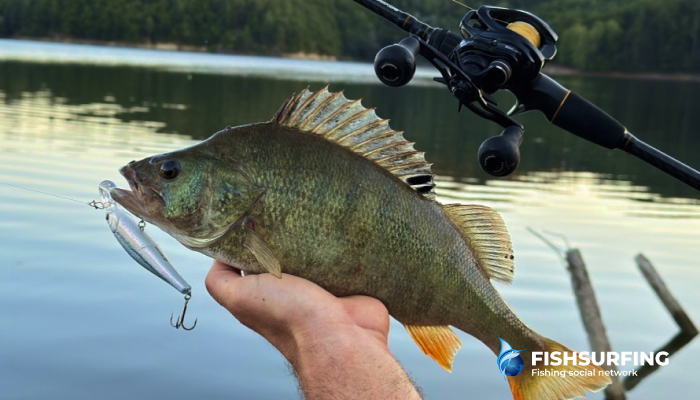
Feel free to adjust the drag while fighting a fish
A good starting setting doesn’t mean you can’t adjust the drag at all. You need a different amount of drag in open water than when the fish is heading toward snags. Therefore, gently tighten or loosen the drag during the fight as the situation demands.
But do it gradually. A sudden tightening can easily turn a safely functioning rig into a locked trap. In open water, keep the drag a little looser and rely on the rod’s action. Near obstacles, on the other hand, increase the drag slightly. If a big fish darts straight into the branches just ahead of you, no rule will help, and sometimes you simply have to take a risk.
Be most careful right near the shore
Anglers lose many catches in the very last few meters. The fish already seems tired; you reel it in toward the shore and subconsciously tighten your line. But as soon as it spots the landing net or your silhouette, it can muster its remaining strength for a lightning-fast dash.
This is exactly when you’ll appreciate a sensitive drag that safely lets the fish make this final escape. The shorter the length of line remaining between the rod tip and the fish, the less effectively the entire setup can absorb sudden surges.
Adjusting the Drag According to Fishing Technique
Just as with choosing other pieces of fishing gear, how you use the drag varies depending on the fishing method you’re currently using. Each discipline has its own specifics and requires a slightly different approach.
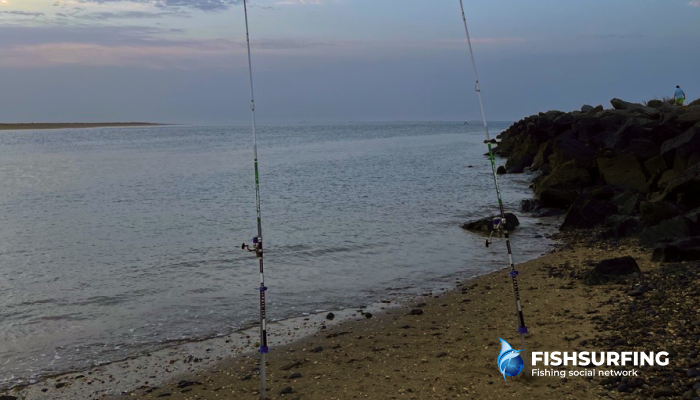
How to Set the Drag for Feeder Fishing
When feeder fishing on rivers or in still water, you usually use finer leaders. The drag must therefore respond to a sudden run without immediately overloading the thin line. However, don’t leave it completely loose. When setting the hook, you need to apply sufficient pressure to the hook, and while playing the fish, you must keep it under control.
You can easily tell if it’s set correctly—during normal reeling and when the fish pulls, the spool holds firm, but during a sudden run, it begins to pay out line smoothly. If you’re fishing in a river, don’t forget to factor in the strength of the current. A fish that fights against the current will generate much more pull in a second than a fish of the same size in a pond.
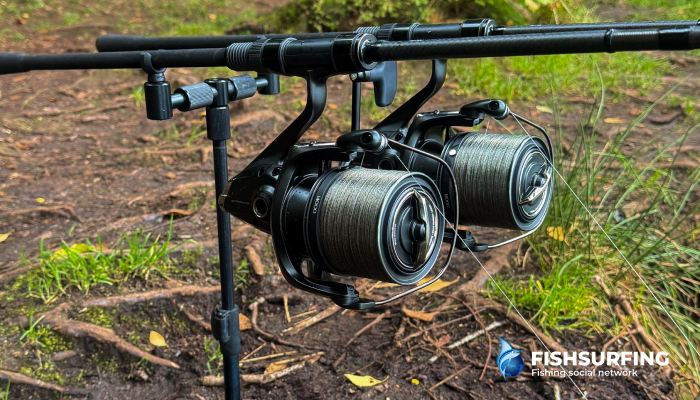
How to Use the Drag When Fishing for Carp
Carp are capable of long, powerful runs, so you’re sure to make good use of a reliable drag. Although you need sufficient pressure after a strike to get the fish under control, don’t try to stop every run immediately. If the fish is heading toward safe open water, feel free to let it go a few meters.
The situation changes when fishing near snags. There, you often need a tighter drag setting right from the start, because the first few meters determine whether the catch ends up in open water or in a sunken tree. However, this kind of power fishing requires an appropriate rod, main line, and leader. It’s simply not enough to just tighten the drag all the way.
For reels with a free-spool system (baitrunner), also keep in mind the difference between the free spool while waiting for a bite and the main fighting drag, whose setting determines the resistance during the fight.
How to Set the Drag for Spinning
When spinning, it mainly depends on the target fish and the equipment used. A delicate perch rig requires a completely different setup than a sturdier rod for pike. Furthermore, braided line has almost no stretch, so any sudden runs must be absorbed solely by the rod and the reel’s drag. That’s precisely why you should never lock the spool with braided line unnecessarily.
When fishing for pike, zander, or larger perch, also expect lightning-fast changes in direction. Especially in the fall, you may encounter truly powerful predators, and it’s not ideal to start adjusting the drag only when your first trophy pike is already pulling away from the shore with unrelenting force. So, before your first cast, it’s best to test how easily the line comes off the spool.
Front, rear, and free-spool brakes: does it make a difference?
The principle remains the same regardless of where the control is located. Both the front and rear brakes simply regulate the spool’s resistance as the line is unwound. The difference lies mainly in the design itself and in where you reach to adjust it while fighting a fish.
- The front drag is the most common on modern reels today, and you can easily fine-tune it right on the spool while fighting a fish.
- The rear drag, on the other hand, is controlled by a wheel at the back of the reel, which many anglers prefer precisely because of its quick and easy accessibility.
- The free-spool brake, or baitrunner, works a little differently. While waiting for a bite, it allows the fish to take out line with virtually no resistance. However, as soon as you turn the handle or flip the lever, the free-spool system disengages and the main drag immediately takes over. Of course, you must have the main drag properly adjusted in advance for the actual fight.
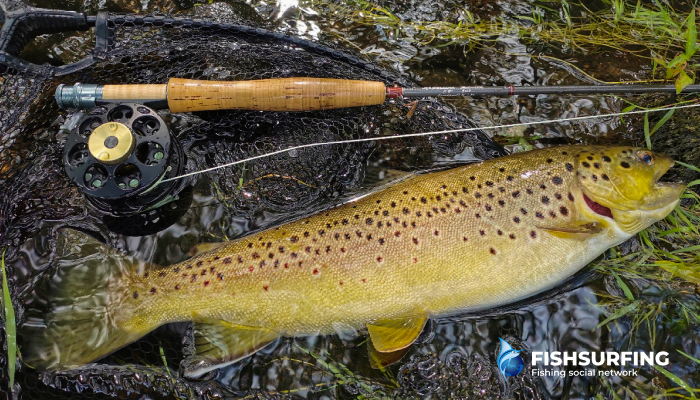
The drag is meant to work for you, not against you
A properly adjusted drag is neither tightened to the maximum nor completely loose. It should allow you to keep the fish under control while reliably dampening its strongest runs.
So before fishing, always test at what tension the spool starts to spin. Adjust the setting to match the weakest part of your rig, and make only very subtle adjustments during the fight. Once you learn to use the drag automatically, you’ll stop wrestling with the fish using brute force. Instead, you’ll start to make much better use of the rod’s flexibility, the reel’s characteristics, and the fish’s own movements as you land it.
And the moment you hook a larger catch, you’ll fully appreciate those few seconds spent adjusting the drag before your first cast.